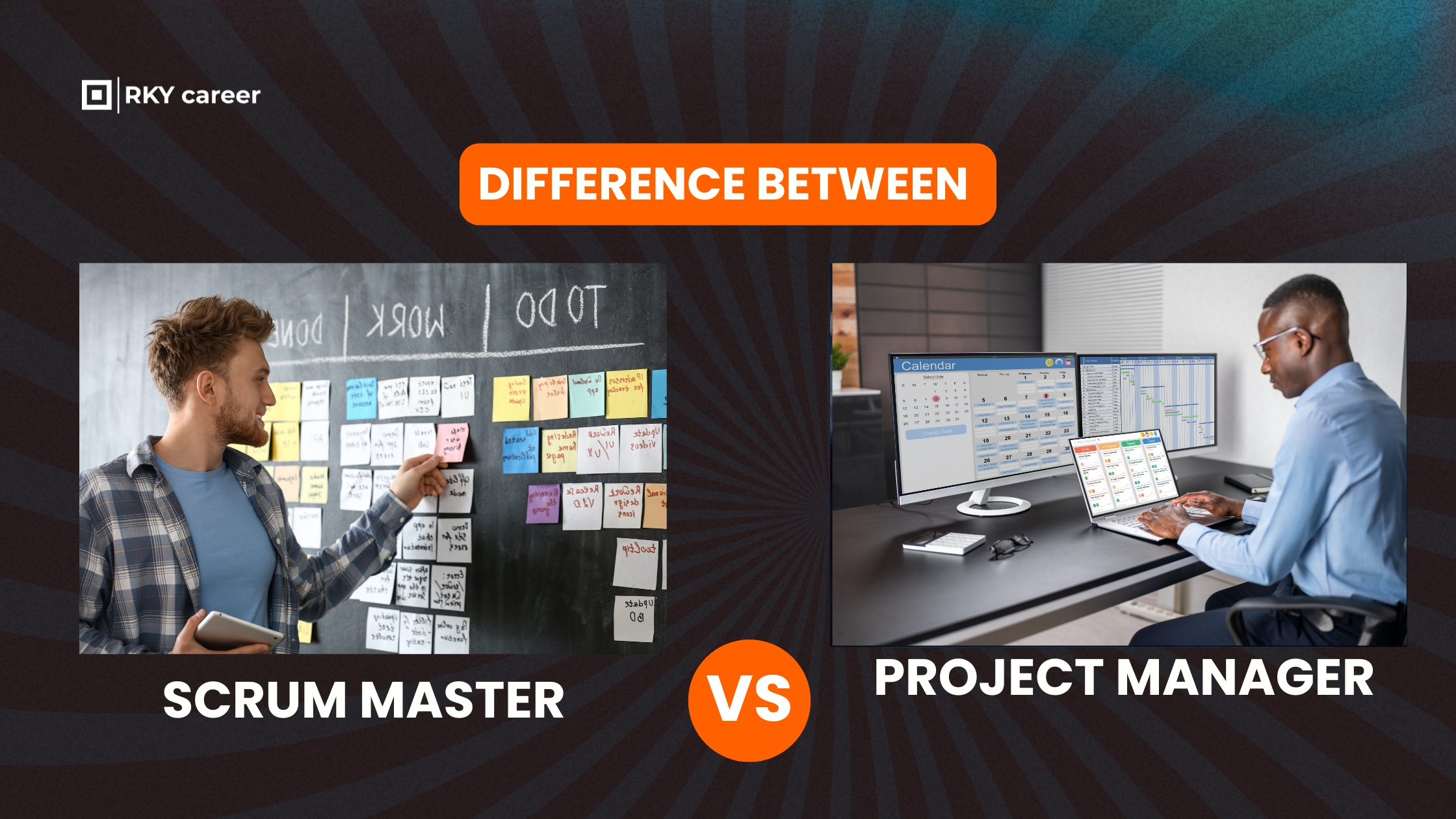
Scrum Master vs Project Manager
If you’ve ever wondered what the difference is between scrum master vs project manager, you’re not alone. These two roles often appear side-by-side in job posts, and people use the titles differently from company to company.
At first glance, they can feel like two names for the same job. But they are quite different in how they work, what they focus on, and how they help teams succeed.
This article breaks down the difference between scrum master and project manager in a simple, friendly way. You’ll get clear examples, the skills you need for each role and by the end, you’ll know which role fits your style and career goals.
Ready? Let’s jump in.
Understanding the Roles
When teams and companies talk about the scrum master vs project manager question, they are usually trying to work out who should lead what. Both roles aim to deliver value and solve problems.
But they come from different toolkits and mindsets and are categorised as one of the best paid jobs in UK. The Scrum Master comes from Agile and Scrum. Their job is to help the team practice Scrum well.
They remove blockers, coach the team, and protect the team from distractions. The Project Manager comes from classic project management and covers planning, scope, budgets, stakeholders, and risk. They make sure projects meet goals on time and on budget.
Because workplaces vary, sometimes the lines blur. Some companies split duties clearly. Others combine them into one blended role. Knowing the basic definitions helps you spot the differences in real job ads.
We’ll unpack each role next, using plain examples and trusted sources so the differences feel obvious.
Who Is a Scrum Master?
Source: Echometer
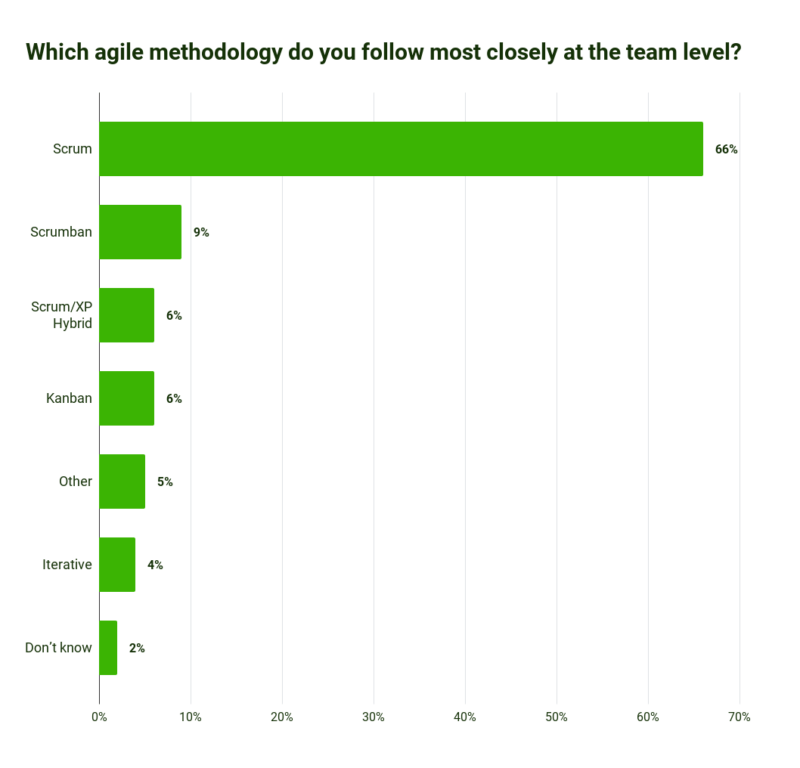
A Scrum Master is a person who helps a Scrum team follow the Scrum framework and get better at teamwork. They are a servant leader, which means they lead by helping, not by ordering. About 66% of companies use Scrum to improve delivery speed.
Scrum.org explain that the Scrum Master’s accountabilities include establishing Scrum, helping everyone understand Scrum theory and practice, and serving both the Scrum Team and the wider organisation.
In simple terms, the role of a Scrum Master is that they run and coach the team’s ceremonies (like daily stand-ups and sprint retros), clear roadblocks, and teach good team habits.
They focus on improving team performance, communication, and how the team delivers work in short cycles called sprints.
A Scrum Master is not usually the person who sets the budget or signs off on the project plan. Instead, they make sure the team can do its best work and keep improving.
Who Is a Project Manager?
A Project Manager is the professional who plans, organises, and coordinates a project from start to finish.
Their job covers the whole life of a project: defining scope, building schedules, managing budgets, handling risks, and reporting progress to leaders and stakeholders.
Project Managers use formal project tools and methods, like Gantt charts and risk logs, and may follow frameworks such as PRINCE2 or PMI standards. They act as the central point for decisions about delivery and trade-offs (time, cost, scope).
Project Managers must balance many moving parts and keep the project aligned with business goals. Unlike the Scrum Master, Project Managers often own the budget and have formal authority for project decisions.
See Also:
- How to become a Certified Scrum Master (CSM) in UK step-by-step
- How Long Should You Prepare For an Interview?
Key Differences Between Scrum Master and Project Manager
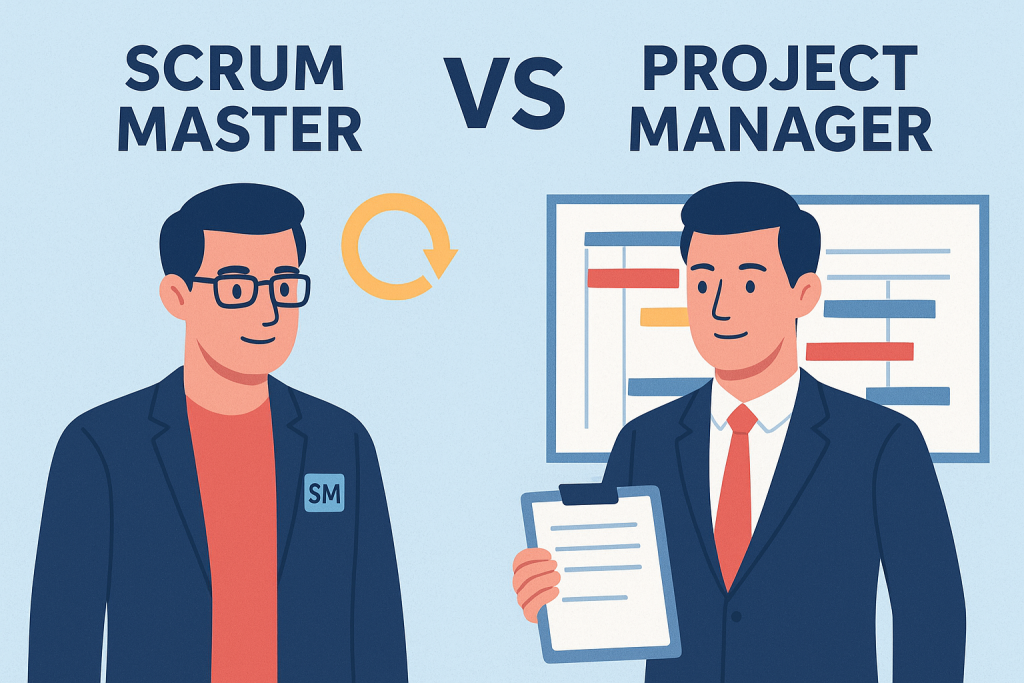
When people ask about the difference between scrum master and project manager, they usually want to know where responsibilities and power sit.
The most useful way to see the difference is to compare focus, day-to-day tasks, and decision authority. A Scrum Master focuses on team health and process within Agile frameworks.
A Project Manager focuses on delivery, budgets, schedules, and stakeholder expectations. Another point: Scrum Masters are coaches and facilitators; Project Managers are planners and owners of delivery. In practice, you might find both in the same business.
Or you might find a single person wearing both hats, especially in smaller companies. Below, we unpack three big areas where they differ. Focus, daily responsibilities, and authority.
If you are thinking of switching careers into Tech UK With No Experience, you might want to keep reading.
Focus: Agile Facilitation vs Project Delivery
The agile scrum master vs project manager distinction is strongest here. A Scrum Master focuses on enabling Agile. That means teaching Scrum, running ceremonies, and helping the team adapt and deliver value every sprint.
Their success is measured by team improvement: speed, quality, learning, and collaboration. A Project Manager focuses on delivering a defined output within constraints from scope, time, cost, and quality.
Success is measured by whether the project is completed on time and within budget while meeting stakeholder needs. So, one role optimises team flow and learning; the other optimises delivery and stakeholder alignment.
Both are valuable, but their lenses are different: scrum masters look inward at the team; project managers look outward at the project constraints and business goals.
Responsibilities and Daily Activities
In day-to-day work, the scrum master vs the project manager responsibilities look different. A Scrum Master spends time facilitating daily stand-ups, coaching team members, hosting retrospectives, removing blockers, and protecting the team from outside interruptions.
They practice servant leadership. A Project Manager spends time writing project plans, updating schedules, managing budgets, negotiating with suppliers, and reporting to stakeholders.
They raise and manage risks and ensure resources are where they need to be.
Some tasks overlap, such as communication, stakeholder management, and progress tracking, but the purpose behind each task changes. A Scrum Master tracks team health and sprint progress; a Project Manager tracks milestones, budgets, and risks.
Authority and Decision-Making Power
One of the key pieces in the scrum master vs project manager authority debate is the level of decision power each role holds. Project Managers typically have formal authority over project decisions.
They often sign off on schedules, budgets, and scope changes. Scrum Masters generally lack direct authority over budgets or final decisions; instead, they influence, coach, and guide. Scrum Masters help teams make better choices and protect them from outside pressure.
They influence the system rather than command it. In many Agile organisations, decisions are decentralised; the team decides on technical choices.
The Product Owner decides priorities, while the Project Manager may still hold formal accountability for project delivery. Understanding who has decision rights matters when choosing which role your team needs.
See Also:
Skills Required for Each Role
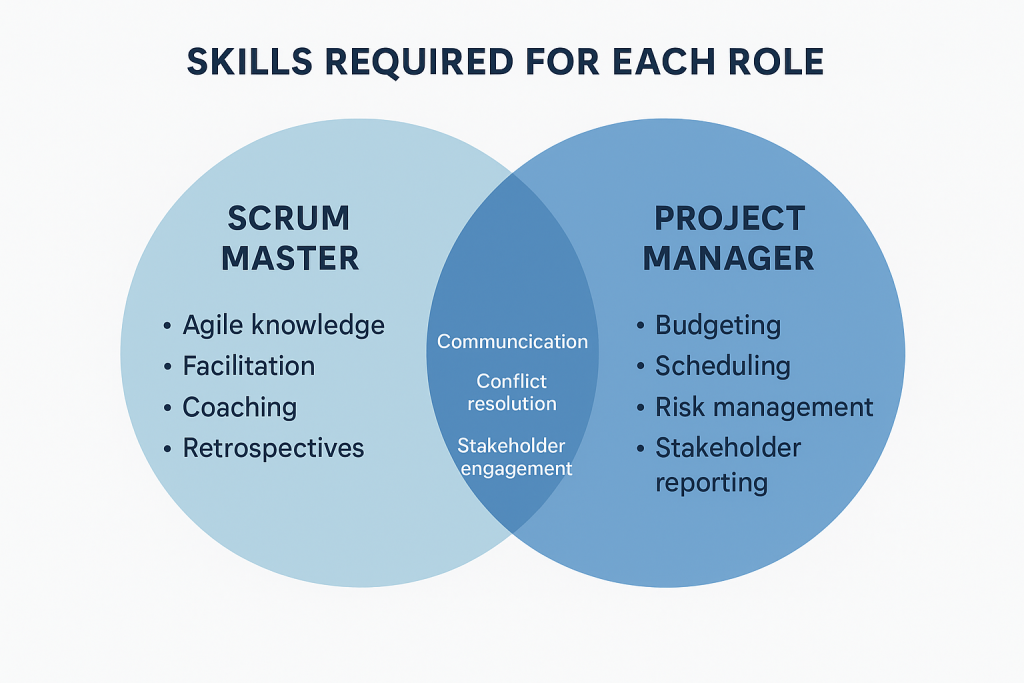
Both roles need strong soft skills, but the technical skillset is different. The project manager vs Scrum master skills comparison shows that Scrum Masters need deep knowledge of Agile practices, coaching techniques, and facilitation.
Project Managers need planning, budgeting, and risk management skills. Yet both need communication, stakeholder management, and conflict resolution.
The best organisations invest in both roles because they complement each other: one keeps the engine running smoothly (Scrum Master), the other navigates the map and keeps the ship on course (Project Manager).
Below, we list the skill sets for each role and then show the overlapping skills that help both succeed.
Scrum Master Skills (Agile, Coaching, Facilitation)
Scrum Masters need a mix of Agile knowledge and people skills. Core skills include Scrum practice knowledge (scrum roles, ceremonies, artefacts), coaching and mentoring, facilitation of meetings, conflict resolution, and continuous improvement mindsets.
They often hold certifications like Professional Scrum Master (PSM) or Certified ScrumMaster (CSM), though the real value is how well they coach teams.
A strong Scrum Master knows how to run retrospectives that lead to real change, how to unblock teams, and how to teach Agile principles to non-technical stakeholders.
Project Manager Skills (Planning, Budgeting, Risk Management)
Project Managers need excellence in planning and organisation. Core technical key skills of a project manager include scope definition, scheduling, budgeting, procurement, and risk management.
They use tools like MS Project, Primavera, or cloud PM tools, and may hold certifications like PMP or PRINCE2. They must be strong communicators, negotiators, and decision-makers.
Where Scrum Masters focus on team flow, Project Managers focus on constraints and trade-offs.
A project manager’s day can include creating a Gantt chart, running a risk workshop, negotiating vendor contracts, and updating the steering committee.
Solid PMs blend technical rigour with people skills to deliver results under pressure.
Overlapping Skills Between Both Roles
Even though the roles have different hats, they share important overlaps. Both need excellent communication, stakeholder engagement, problem-solving, and a focus on delivery.
Both benefit from empathy, conflict resolution skills, and an ability to simplify complexity.
In many teams, the Scrum Master will step into communication duties with stakeholders, and Project Managers will apply servant-leader traits to motivate teams. This overlap creates hybrid roles in some companies.
Knowing the shared skills helps professionals transition between roles. If you’re a PM who excels at coaching and facilitation, you could move into Scrum Master work.
Conversely, if you’re a Scrum Master who enjoys managing schedules and budgets, you could step into project management. The overlap is the bridge for career moves and for blended job descriptions.
See Also:
- How to Pass the Professional Scrum Master (PSM I) Exam Without Classroom in the UK
- How to Land a Job in Tech with No Prior Experience: A Step-by-Step Guide
Career Path and Opportunities in the UK
If you’re in the UK and deciding between scrum master vs project manager career path, you’ll find solid demand for both. Different industries prefer different mixes; in fact, some companies consider a scrum master as another career project manager can do.
Tech, fintech, and digital companies often hire Scrum Masters and Agile coaches. Construction, government, large engineering, and regulated sectors often hire Project Managers with PRINCE2 or PMP.
Salaries and roles also vary by city, experience, and industry.
At RKYCareers.com, we’ve designed practical, hands-on bootcamps tailored to help you thrive.
Whether you want to master Agile facilitation as a Scrum Master or lead projects confidently as a Project Manager.
Our expert-led training gives you the knowledge, tools, and career support you need to excel.
Enrol in our Scrum Master or Project Management Bootcamp today and start building the future you deserve!
Scrum Master Career Outlook and Salaries
Scrum Masters in the UK are in steady demand, especially in London and big tech hubs. Glassdoor reports an average Scrum Master salary in London of around £62,400 per year.
That figure reflects market pay in big cities and can be higher in financial services or senior roles. Job sites like Indeed also show hundreds of Scrum Master openings across the UK, reflecting ongoing demand for Agile delivery roles.
Meanwhile, with many organisations using hybrid or Agile models, which supports the demand for Scrum Masters. If you enjoy coaching teams and helping groups improve, a Scrum Master is a career with steady openings and growth.
Project Manager Career Outlook and Salaries
Project Managers have a broad market in the UK. Glassdoor reports the average Project Manager salary in the UK at about £49,377 per year, with London averages somewhat higher (around £53,442).
Many sectors need Project Managers: IT, construction, health, and finance. Professional certifications like PMP or PRINCE2 are common and can boost pay and mobility.
In fact, PMI’s salary survey finds that PMP holders earn significantly more on average, with about 33% higher median salaries than non-certified professionals in the countries surveyed.
That can make pursuing PMP worth it if you plan a PM career. The job market is broad and often values experience and a record of successful delivery.
Transitioning From Project Manager to Scrum Master (and Vice Versa)
Switching between these roles is common and possible. If you’re a Project Manager wanting to become a Scrum Master, start by learning Agile values and Scrum practices, attend Scrum Master training (PSM or CSM), and practice facilitation and coaching.
Move gradually by taking part-time Scrum Master duties while keeping PM responsibilities. If you’re a Scrum Master who wants to move into project management, strengthen your planning, budgeting, and stakeholder-management skills and consider PMP or PRINCE2 training.
The shared skills we listed earlier make transitions smoother. Employers sometimes look for hybrid candidates who can both coach teams and manage delivery, so experience on both sides is an asset when you want to create a career change action plan and stick to it.
Which Role Should You Choose?
Choosing between scrum master vs project manager comes down to what you like doing every day. Do you love coaching people, running team ceremonies, and improving team health?
Or do you prefer planning, negotiating budgets, and managing stakeholders?
Both roles are meaningful and in demand. Consider your strengths: if you enjoy empathy, teaching, and servant leadership, Scrum Master is a great fit. If you love structure, planning, and owning delivery, a Project Manager fits better.
Also consider the industry you want to be in. Tech and product teams lean to Scrum Masters; more traditional delivery-heavy industries lean to Project Managers. You can also aim for a blended role if you enjoy both.
Scrum Master for Agile and Team-Focused Careers
If your passion is building strong teams and helping people get better, the Scrum Master role fits. You’ll spend your time coaching, teaching Agile practices, and helping teams find better ways to work.
This career path often grows into Agile coaching, people leadership in delivery functions, or senior facilitator roles. It suits people who like continuous learning and who enjoy supporting others more than commanding them.
Team improvement, psychological safety, and facilitating change are the core rewards. If those things light you up, choose Scrum Master and consider certifications like PSM or CSM to boost your credibility and qualify as a Scrum Master UK.
Project Manager for Structured and Delivery-Focused Careers
If you prefer control of the big picture, like budgets, schedules, and stakeholder expectations, then Project Management may be your best choice. Project Managers get to shape how a project unfolds, negotiate trade-offs, and make formal decisions.
Career paths often lead to senior delivery roles such as Programme Manager, PMO Lead, or Director of Delivery. Certifications like PMP or PRINCE2 are widely respected and often linked to higher pay.
PMP holders, according to PMI, report higher median salaries than non-holders.
If you love responsibility for delivery and leading projects end-to-end, Project Management offers clear progression and broad industry options.
Blended Roles in Modern Organisations
Modern organisations don’t always stick to neat boxes. Many companies create blended job descriptions like “Delivery Lead,” “Agile Project Manager,” or “Technical Project Manager”, which mix scrum master vs project manager responsibilities.
These roles require both agile coaching skills and traditional planning abilities. Blended roles can be great if you enjoy varied work, but they can also create tension if expectations are not clear.
If you take a blended job, set clear boundaries and priorities with your manager so you’re not pulled in conflicting directions. Blended roles are becoming common, especially in digital transformation projects where teams need both structure and agility.
See Also:
- Alternatives to Paid Internships for UK Career Starters
- How to Land a Project Manager Role in London
Conclusion
Choosing between becoming a Scrum Master or a Project Manager doesn’t have to feel overwhelming.
Both paths open doors to incredible career growth, especially in today’s fast-paced UK job market. What truly matters is equipping yourself with the right skills and guidance to stand out.
FAQs
Is a Scrum Master higher than a Project Manager?
“Higher” depends on the organisation. A Project Manager often has formal authority over budgets and timelines.
Can a Project Manager become a Scrum Master?
Yes. A Project Manager can retrain in Agile and start coaching teams. Training (PSM/CSM) and hands-on facilitation experience help a PM become a Scrum Master.
Which role earns more in the UK: Scrum Master or Project Manager?
It depends on location and level. Average UK Project Manager pay ~£49,377, while London Scrum Master averages around £62,400, but senior Project Managers or PMs in certain industries can out-earn Scrum Masters.
Do companies still hire Project Managers if they use Scrum?
Yes. Many organisations use Scrum for teams and still hire Project Managers for budgets, large-scale coordination, vendor contracts, and cross-team delivery.