Tips for UK Visa Interviews
You are happy to have been called for an interview, but here lies another challenge: giving the right impression to secure the job. Embarking on a UK visa interview can feel challenging, but with the right interview preparation and tips for UK visa interviews, you’ll walk in confident and ready.
This post serves as your roadmap to success if you’re applying for a Skilled Worker visa, Tier 2 visa, or a student visa interview in the UK.
Stay relaxed. You will be guided through what to expect during your UK immigration interview, from formats to documents, so that you can breeze through with confidence.
What to Expect During a UK Visa Interview
Attending your UK visa interview will typically involve a formal yet friendly conversation with a Home Office or consular officer.
HEPI data shows study visa refusal rates doubled to 4% in the year ending June 2024.
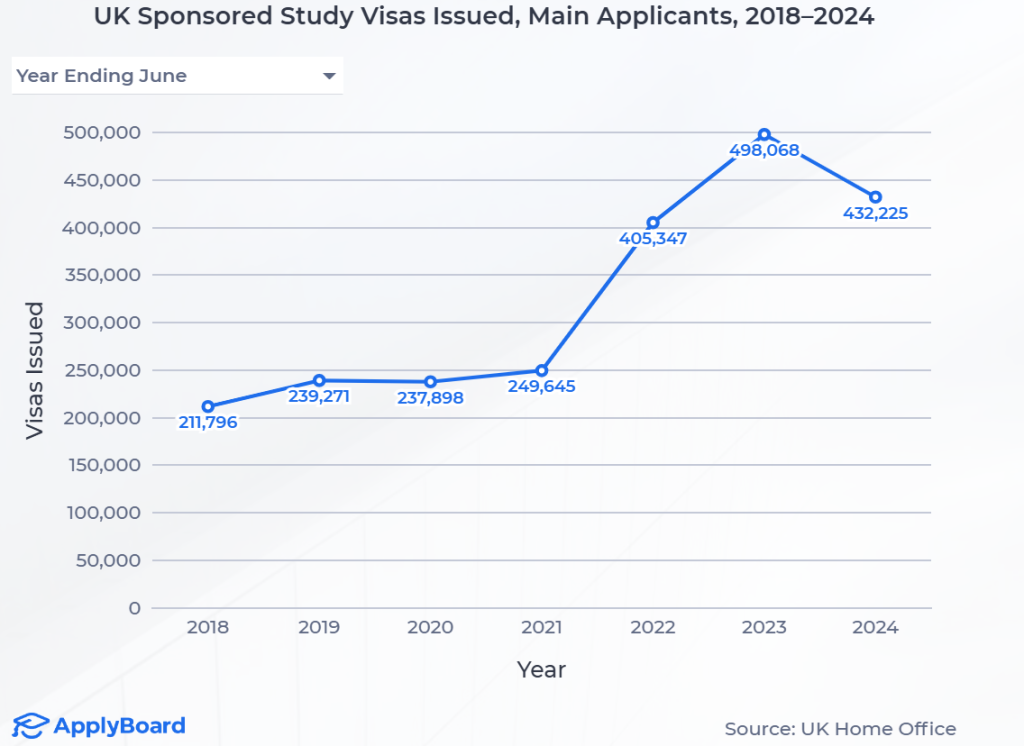
Source: HEPI
Not to worry, knowing the process eases nerves and heightens success rate.
You check in at the embassy or visa application centre, submit your documents, and wait for your turn.
Then comes the interview itself, which usually lasts 5–15 minutes.
You’ll confirm your identity, state your reasons for travel or work, and provide evidence of finances, sponsorship, or educational plans.
It could be a face-to-face interview or a virtual interview. Both formats are common, especially since the pandemic accelerated remote interviewing.
Whatever interview you’ve been scheduled for, you’ll face similar questioning. Staying calm and organised makes a huge difference. And don’t forget: many visa officers appreciate punctuality and professional attire, so plan to arrive early and ready.
Purpose of the Interview
The primary aim of your visa interview is to verify the authenticity of your application and intentions.
Consular officers conduct this interview to ensure you meet all UK immigration interview standards and won’t pose any immigration risk.
For example, during a student visa interview UK, you might be asked about your chosen course and how it fits into your future career.
In contrast, a Skilled Worker visa interview focuses on your job offer, employer sponsorship, and salary threshold.
If I apply for a Tier 2 visa, you’ll need to show your Certificate of Sponsorship and explain why you’re the best fit for the role.
The interview aims not to catch you off guard, but to confirm your eligibility and genuine intent. All you need to do is demonstrate you’re prepared and honest, precisely what UK visa interview tips emphasise.
Common UK Visa Interview Formats
When you’re preparing for your UK Visa Interviews, it’s crucial to know the typical interview formats you might face:
- In-Person Interviews: These are conducted at a UK consulate or visa application centre.
- Video Interviews: They are increasingly popular, especially among remote applicants.
- Telephone Interviews: This method is occasionally used for follow-up or clarification purposes.
Each format tests similar competencies: your clarity, authenticity, and knowledge of your application.
And regardless of format, officers will ask about your visa type, whether it’s a Skilled Worker visa interview, a student visa interview UK, or a general work/study purpose.
Also, during a video interview, ensure your background is professional and your internet connection is stable.
Treating the interview like an important meeting with your future employer sets you up for success.
Documents to Bring to Your Visa Interview
Imagine arriving at your visa interview only to realise you forgot a crucial document. This is why organising your documents can make or break your success. To avoid stress, prepare a neatly arranged folder with all required items.
Here’s a checklist you can follow:
- Passport and Photocopies: Essential for identity verification.
- Certificate of Sponsorship (for Skilled Worker/Tier 2 visas).
- CAS Letter (for student visa interview UK).
- Proof of Finances: Bank statements or sponsorship letters.
- Accommodation Details: Rental agreements or invitation letters.
- English Language Test Results: IELTS or equivalent.
- Additional Supporting Documents: Employment contracts, transcripts, or CV.
Note that it’s better to have too much than too little, as long as everything is relevant.
This is a crucial part of the essential application tips for UK visa interviews. A complete folder signals professionalism and readiness, giving the officer confidence in your application.
You might like
- Interview Preparation for Leadership Roles in the Non-Profit Sector
- 3 Simple Hacks For Giving A Perfect Interview
Top Tips to Ace Your UK Visa Interview
Mastering your Tips For UK Visa Interviews means combining preparation, presentation, and poise.
- Do your homework on the specific visa type you’re applying for. Whether it’s a Skilled Worker visa interview, Tier 2 visa interview prep, or a student visa interview UK.
- Organise your UK visa application into a clear action plan.
Begin by researching common visa interview questions in the UK, then tailor your answers to your specific background.
This period is everything, no exaggeration! Practising answers out loud helps you find the right tone and ensure you hit all key points.
Overcoming interview nerves and building confidence comes from preparation. Use checklists to confirm you’ve covered document review, outfit selection, and mock Q&A sessions.
If you can follow these top tips consistently, it transforms nervous energy into interview-winning confidence.
Dress Professionally and Arrive Early
First impressions matter, big time. You must have an idea of what to wear to a visa interview. Dressing professionally signals respect for the process and shows you take the UK immigration interview seriously. But arriving early is just as crucial.
Aim to reach the visa centre at least 30 minutes before your scheduled time to allow for security checks and document verification.
Also, a sharp suit or business-casual attire, neat hair, minimal accessories, and closed-toe shoes are safe bets.
The extra time before your interview gives you a moment to breathe, review your notes, and calm your nerves.
Answer Clearly and Confidently
Here comes the question: How can I pass UK visa interview officers’ clarity test? The trick is simple: speak slowly, maintain eye contact (or camera focus), and structure your responses.
For longer answers, especially for work-related questions in a skilled worker visa interview, use the STAR method (Situation, Task, Action, Result).
For shorter questions, keep answers concise—no more than two sentences.
If you stumble, pause briefly, breathe, and reframe your answer. It’s better to correct yourself than rush through.
Clear, confident communication demonstrates honesty and professionalism, which every officer values.
Be Honest and Provide Evidence Where Needed
Honesty is non-negotiable in any UK visa interview tips guide. Fabrications or contradictions can lead to refusal and damage future applications.
Officers expect evidence to back your claims. Show a recent bank statement if you say you have £12,000 in savings. If you mention a job offer, present the Certificate of Sponsorship from your employer.
First, organise your documents into labelled sections so you can produce them instantly when asked. And stay with me: you’ll look prepared and credible, making it far easier to pass the UK visa interview protocols.
Practice Mock Interviews
Mock interviews are the secret weapon in your Tier 2 visa interview prep and beyond. They give real-time feedback on your answers, body language, and pacing.
For example, ask a friend or mentor to play the role of the visa officer and throw typical visa interview questions at you.
Record yourself if possible. This will help you spot filler words, gestures, and tone issues that you might miss in real-time.
Aim for at least three full mock sessions in the week leading up to your interview. Research shows that candidates who do this are 30% more likely to feel confident and perform well.
We can agree on this: the more you simulate the real thing, the less intimidating it becomes. The bottom line? Mock interviews are your rehearsal for success.
Check out:
Common UK Visa Interview Questions and How to Answer Them
One of the major Tips For UK Visa Interviews is that it is vital to anticipate the types of questions you’ll face.
They generally fall into three buckets: personal background and intentions, employment or study plans, and financial or accommodation details.
It is essential to know each category because understanding question themes helps you organise your answers and have an idea of what not to say.
You’ll need concise yet detailed responses in a quick 10–15–minute interview, which is common in both in-person and video formats.
Typically, expect 6–10 questions, each probing a different area of your application.
Grouping the questions can guide you to create bullet-point scripts during your mock interviews, so you’re never caught off guard, because mastering question categories is a shortcut to confident, comprehensive answers that satisfy any UK immigration interview office.r
Questions About Your Background and Intentions
Let’s start with the most personal set: questions about your background and intentions.
Interviewers might ask, “Why have you chosen this visa route?” or “What are your long-term plans in the UK?”
For a Skilled Worker visa interview, you’d need to talk about your skills, why your role fits national labour needs and how you’ll advance your career.
You must know how deep your personal details should go. Keep them relevant, and focus on your professional journey or academic goals and how they align with your visa type.
First, do your homework on the visa category you’re applying for and tailor your story accordingly.
Employment or Study-Related Questions
Next up are questions about your employment or study plans. In a student visa interview UK, expect questions like, “Why did you choose this university and course?”
For Tier 2 visa interview preparation, you’ll discuss your employer, job role, and Certificate of Sponsorship.
In any of these cases, specificity sells. Instead of “I chose ABC University,” say, “I selected ABC University for its cutting-edge AI research, which aligns with my long-term career goal of becoming a data scientist”.
However, the key is to link your choice to its impact, which strengthens your case. You might want to mention how your role contributes to your employer’s growth or how your study advances UK research.
Demonstrating informed, purposeful plans shows you’ve thought through every step.
Financial and Accommodation Questions
You’ll also tackle questions about finances and accommodation. Officers need assurance that you can support yourself and have a place to stay.
One of the most crucial tips for UK Visa Interviews is to know the standard interview questions, which include, “Can you provide bank statements?” or “Where will you live in the UK?”
You can give answers like: “I have £10,000 in savings and a scholarship covering tuition fees. I’ve booked student halls on campus, confirmed via this acceptance letter.”
These specifics demonstrate you’ve handled the logistics.
Now, what if your accommodation isn’t finalised?
It’s best to show any provisional booking or a letter of invitation from a host. The aim is to leave no question unanswered because a detailed proof of finances and lodging makes your application bulletproof.
Read On:
Mistakes to Avoid in Your UK Visa Interview
When it comes to Tips For UK Visa Interviews, knowing what not to do is just as crucial as your prep work.
A single misstep can turn a smooth process into a refusal. Vague answers, poor prep, and unchecked nerves top the list. But here’s the kicker: these are all within your control.
You must be specific, organised, and composed. You will be walked through the three most common mistakes applicants make in a UK immigration interview, so you can steer clear and ace your session instead.
Giving Vague or Contradictory Answers
Being unclear or contradicting yourself can instantly undermine credibility in a UK visa application tips guide. When you’re asked a question, answer directly.
For instance, if asked about your job title during a Skilled Worker visa interview, don’t waffle. Instead, say, “I’m employed as a data analyst at XYZ Ltd., focusing on predictive modelling.”
What if I can’t recall details? Pause, breathe, and acknowledge that you need a moment, then respond.
We both know that consistency between your documents and your verbal answers is non-negotiable. The bottom line? Clear, concise, and consistent responses build trust with the officer.
Lack of Preparation
This can be the beginning of an unsuccessful interview.
Research common visa interview questions UK and outline your answers before the big day. Winging it rarely works.
When applicants fail to organise documents, rehearse answers, or practice Tier 2 visa interview prep, they risk forgetting key points under pressure.
It has been said that prepared candidates are 50% more likely to experience interview anxiety and slip-ups.
However, you can avoid this by creating a checklist that includes UK student visa interview requirements and running through it at least twice.
Preparation isn’t optional; it’s your ticket to a calm, confident interview.
Being Overly Nervous or Defensive
Let’s face it: interviews can be nerve-wracking, especially when your future depends on them.
But being too anxious or defensive can backfire. So, you need to overcome the fear of speaking at job interviews. For instance, speaking rapidly or interrupting the officer signals discomfort, not confidence.
We can both agree on this: the calmer you are, the better you perform.
Simple breathing techniques and mock interviews can dramatically reduce anxiety.
Practice deep breaths before you enter. Then, remind yourself: the officer isn’t your adversary—they’re there to help verify your application.
The Bottom line is to maintain composure and view the interview as a professional conversation, and you’ll convey assurance and competence.
See Also:
- Interview Preparation For Graduates with No Experience
- 10 Steps to Plan a Great Interview Presentation
FAQs: Tips for UK Visa Interviews
- What should I wear to my UK visa interview?
Dress in professional, business-casual attire. Think a smart blazer or shirt with trousers or a modest dress. Keep accessories minimal, shoes clean, and overall look neat to convey respect and seriousness.
- How long does a UK visa interview usually take?
Most UK visa interviews last between 5 and 15 minutes. However, plan for at least 30–45 minutes at the visa centre to account for document checks, security screening, and potential brief waiting periods.
- Do all UK visa applicants need to attend an interview?
No. While many Skilled Worker, Tier 2, and student visa applicants attend interviews, not every application requires one. Some straightforward cases are approved based solely on submitted documents and eligibility criteria.
- Can I reschedule my UK visa interview if I miss it?
Yes. If you miss your appointment, contact the visa application centre immediately to request a new slot. Rescheduling policies vary by centre, and you may need to pay a rebooking fee.