Difference Between SEO and SEM Explained
Search engines are the heartbeat of online visibility. The difference between SEO and SEM explained clearly, shows that while both aim to boost visibility on platforms like Google, they take different paths.
But here’s the catch: you can be confused about how they actually work for businesses, which is why when you’ve taken a career-focused SEO and PPC training courses UK is important.
SEO focuses on organic growth, helping brands build credibility over time, while SEM leverages paid campaigns for immediate results. Think of it as a marathon versus a sprint.
Whether you’re a beginner exploring SEO vs SEM examples or a UK business owner weighing strategies, knowing how each works will guide you toward smarter digital marketing decisions.
And if you are looking to Set Career Development Goals UK in digital marketing, keep reading.
What Are SEO and SEM?
SEO and SEM both help people find websites through search engines. SEO stands for Search Engine Optimisation.
It is the work you do to help your pages rank in organic search results. SEO uses content, site speed, clean structure, and links from other sites. SEM stands for Search Engine Marketing.
In most cases, SEM means paid search ads. With SEM, you pay to appear in search results for chosen keywords. SEO builds steady, organic visitors over time.
You might be wondering, SEO vs SEM which is better? Both are necessary for good traffic.
SEM gets fast visibility by buying ad space. Both aim to drive traffic. They work best when used together because SEM can bring quick data and traffic while SEO builds lasting value. This is simple SEO vs SEM explained.
Simple Definition of SEO (Search Engine Optimisation)
SEO means making your website easy to read and useful for people and for search engines. It uses the right words on each page. It also fixes technical issues so pages load fast and work on phones.
SEO has three main parts: on-page (content and headings), technical (site speed and structure), and off-page (links from other sites).
Good SEO helps your page show up in organic results without paying per visitor. It takes time, but it can deliver steady traffic for months or years. This is the difference between SEO and SEM explained.
For beginners, start with helpful content that answers real questions people type into search.
Simple Definition of SEM (Search Engine Marketing)
SEM usually refers to paid search advertising. You pick keywords people search for and create ads for those keywords. This is also a good Transferable Skills Look Good for Career Change UK.
Popular platforms are Google Ads and Microsoft Ads. With SEM, you set a budget and bid for ad placement. Ads can show at the top of search pages within hours.
You pay for clicks or impressions, depending on your campaign type. SEM is ideal for quick promotion, product launches, or time-limited sales. It gives immediate visibility and fast testing for headlines and offers.
Use SEM when speed and control matter, and use SEO to lower cost per visitor over time.
See Also:
- Certified Digital Marketing Course in the UK for Beginners
- UK Job Board Hacks to Get Noticed as Entry-Level
Key Differences Between SEO and SEM
The major difference between SEO and SEM is how you get results, how you pay, and how fast results arrive. SEO earns organic placement. You do not pay for each click. You invest in content, technical fixes, and links.
Results grow slowly but last longer. SEM buys placement. You pay for clicks or views. Results can show instantly, but stop when you stop paying. SEO builds trust and steady traffic.
SEM gives control and quick data for testing. Cost per visit is usually lower for SEO over time. A good marketing plan often uses both SEM for early traction and SEO for long-term growth.
Organic vs Paid Search Results
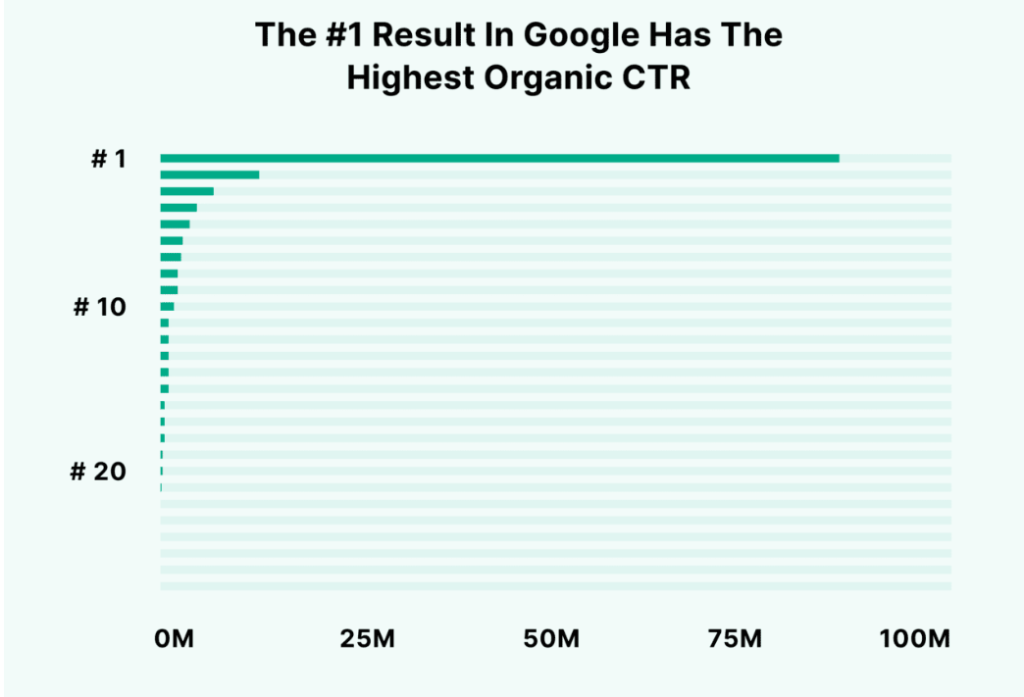
Source: Backlinko
The organic vs paid search UK, which is better and why? Well, Organic results appear because the search engine thinks those pages best answer the query. Paid results appear because advertisers paid to show them.
Studies show that top organic positions attract the majority of clicks on a search page. That makes organic traffic valuable for long-term visibility and trust. Ads, however, are useful when you want people to act now.
They are easy to turn on and off, and they allow precise targeting by region, device, and time of day. A balanced plan uses both types: organic for credibility and paid for instant reach.
Also, Research shows the top organic listings receive the lion’s share of clicks, and the number 1 organic result often gets a far higher click rate than top paid results.
Cost, Effort, and Speed of Results
SEO needs steady work. You write content, fix technical issues, and build links. It costs time and expertise. Results can take months.
SEM needs a budget and active management. You set bids, write ads, and optimise campaigns. You start seeing traffic the same day your campaign goes live.
SEM gives quick insights into which keywords and messages convert. SEO gives steady, compounding traffic that lowers cost per visitor over time.
Many businesses use SEM to test and get early sales, then invest in SEO to scale those wins organically.
Long-Term vs Short-Term Marketing Strategy
Think of SEO as a long game and SEM as a short game. SEO compounds over time; the content you publish can bring visitors months later.
SEM delivers fast results, which stop as soon as the ads stop.
If you launch a product, use SEM first for quick exposure.
Then build content and optimise pages to capture the same traffic organically.
That lowers ad cost in future. Combining both strategies gives immediate traction and long-term savings.
It also builds brand authority because people see your brand in both paid and organic results.
See Also:
When to Use SEO vs SEM
Choose tools based on your goals. Use SEO for evergreen content and long-term authority.
Use SEM for launches, sales, or urgent campaigns that need immediate traffic. There are various SEO vs SEM examples as well.
Local businesses often rely on SEM for quick local visibility. New sites can use SEM to buy initial traffic while building SEO.
A hybrid plan works best: run SEM to test which keywords convert, then publish SEO content for those winning keywords.
Over time, you will need less ad spend to get the same traffic. This combined approach is often called an integrated SEO vs SEM strategy.
SEO for Sustainable Growth and Brand Authority
SEO helps you become the trusted choice on a topic. Write clear, helpful guides and answer common questions.
When other sites link to your content, search engines see you as more trustworthy.
That helps you rank for more queries. Over time, this leads to steady traffic and more brand recognition.
SEO works well when people research before buying because many decisions start with organic search. Invest in helpful articles and FAQ pages to win long-term traffic and authority.
SEM for Quick Visibility and Targeted Campaigns
SEM gives fast reach and precise targeting. You can show ads to people in a city or to users on mobile devices only.
You can test offers and adjust bids quickly.
SEM is ideal for seasonal offers, limited-time promotions, and the launch of new products. It also helps you learn which keywords lead to actual sales.
These insights can inform your SEO content. For many businesses, SEM pays off when speed matters and precise conversion tracking is essential.
Combining SEO and SEM for Maximum Impact
The two strategies complement each other. Utilise SEM to identify the keywords and messages that drive conversions.
Then create SEO pages to capture organic traffic for those winners.
As organic traffic grows, you can reduce ad spend on the same keywords.
Also, matching messaging across ads and content improves user experience and conversion rates.
All teams benefit when paid and organic activities share data and goals.
See Also:
- Become a Job-Ready Digital Marketer in Just 3 Months
- How to Find Job Applications for Remote Roles in the UK
Tools and Techniques for SEO and SEM
When looking into difference between SEO and SEM explained, tools are important. Good tools speed up both SEO and SEM work.
And they are important to understand when looking into SEO vs SEM for beginners. For SEO, tools help find keywords, check backlinks, and find technical issues.
For SEM, ad platforms let you set budgets and test headlines. Use analytics to track what actually leads to sales.
There are various SEO vs SEM tools, but you can start with free tools: Google Search Console for SEO data and Google Ads for testing paid campaigns.
Then use paid tools like Ahrefs, SEMrush, or specialist platforms as your needs grow. Good measurement is key: track visits, leads, and sales, not just clicks.
Popular SEO Tools (Ahrefs, SEMrush, Google Search Console)
Ahrefs and SEMrush are ranked among the 10 Best SEO Tools 2025 because they provide keyword ideas and backlink data. Google Search Console shows how Google sees your site.
Source: Ahrefs
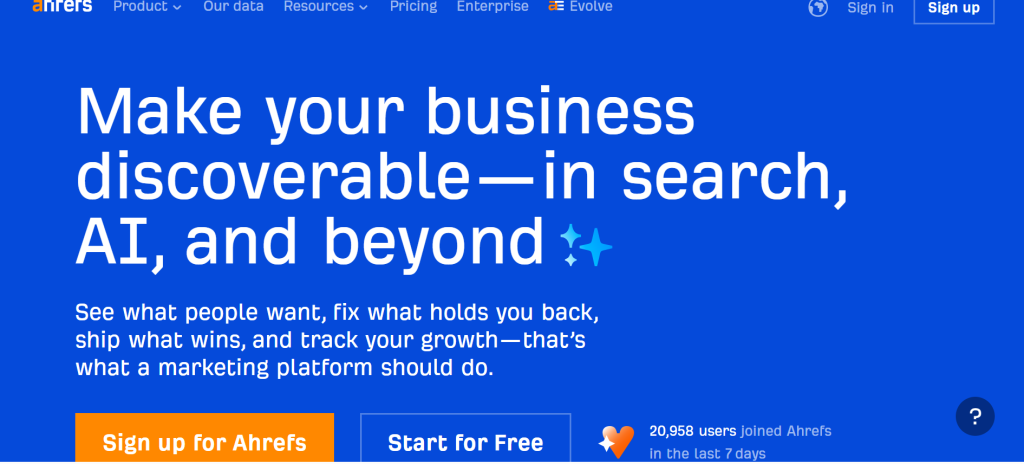
- Ahrefs: Ahrefs is a paid SEO platform best known for its backlink index and keyword research.
It provides Site Explorer to identify which pages and backlinks drive traffic, Keywords Explorer for idea generation,
It checks the Content Explorer to discover popular content, and a Site Audit and Rank Tracker for technical and ranking checks.
Source: SEMRUSH
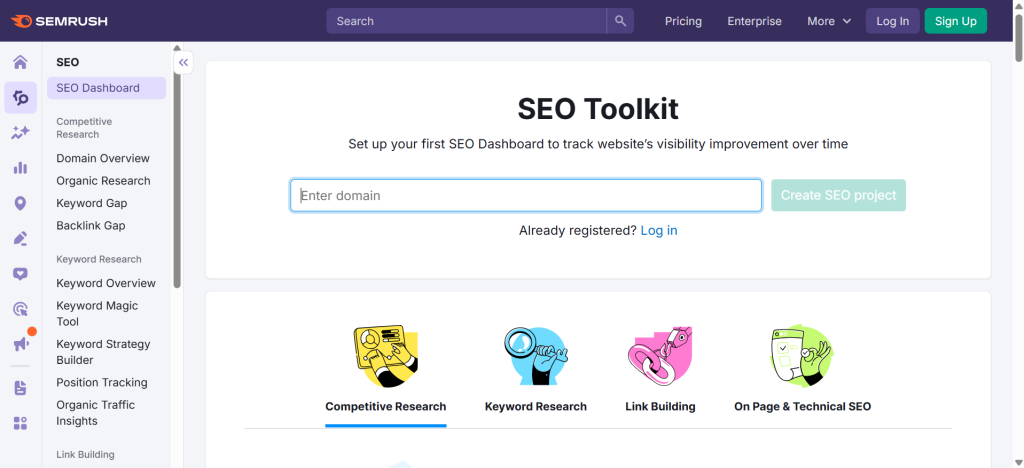
- SEMrush: SEMrush is an all-in-one SEO and marketing suite that combines keyword research, site audits, position tracking, backlink analysis, and PPC research in one dashboard.
Its Keyword Magic tool builds big keyword lists, and Domain Overview gives quick competitor snapshots.
Beginners should run a Domain Overview on their site and a main competitor, fix top technical issues with Site Audit, build a small keyword list, and set up Position Tracking for priority terms.
Source: Google Search Console
- Google Search Console: Google Search Console is a free tool from Google that shows how your site appears in Google Search, offering Performance reports (queries, clicks, impressions, average position),
Also, Coverage (indexing) status, URL Inspection, sitemap submission, and mobile/Core Web Vitals insights.
Start by verifying your site, submitting your sitemap, checking which queries and pages drive clicks, and fixing any Coverage or Mobile Usability errors shown.
Use these to find content gaps and technical faults.
For beginners, Search Console plus a simple keyword tool gives useful early data.
Paid tools speed up audits and competitor research.
Use them to plan content and to find pages that can rank faster with a few edits.
Popular SEM Tools (Google Ads, Bing Ads)
Google Ads is the main platform for search ads. Microsoft Ads (Bing Ads) reaches another slice of search users and often costs less per click.
Both platforms allow location targeting and device targeting.
- Google Ads: Google Ads is Google’s paid ad platform for search, shopping, display, and video that lets you create search campaigns.
You can set budgets and bids, target by keyword, location and audience, and measure performance with conversion tracking and remarketing.
- Microsoft Advertising (Bing Ads): Microsoft Advertising (formerly Bing Ads) runs search ads on Bing, Yahoo, and partner sites, often offering lower cost-per-clicks and different audience segments.
It supports search campaigns, remarketing, device/location targeting, and useful imports from Google Ads to save setup time.
Use conversion tracking to see which ads create real business results.
A clear landing page and aligned ad copy improve conversion rates and lower cost per acquisition.
Measuring Success in SEO vs SEM Campaigns
Google processes billions of searches per day, and estimates suggest roughly 6.3 million searches per minute, highlighting how much opportunity exists in search.
Measuring your success after the application of the SEO vs SEM strategy is important.
Track business outcomes: leads, sales, and signups. For SEO, monitor organic traffic, ranking keywords, and pages that convert.
For SEM, track click-through rates, cost per click, and cost per acquisition. Use UTM tags and analytics to tie ad clicks to conversions.
Compare the cost of paid traffic with the long-term value from organic traffic. Make decisions using actual return on investment.
See Also:
Career Opportunities in SEO vs SEM
Both SEO and SEM offer clear career paths. In understanding the Difference between SEO and SEM explained, career paths must be put into consideration.
Both SEO and SEM are major parts of marketing as one of the future jobs in demand in the UK. You can work in an agency, at a company, or as a freelancer, and there’s room for progression plan.
SEO roles often involve content strategy, technical audits, and link building.
SEM roles focus on campaign setup, bid management, and testing ads for performance. Hybrid roles do both.
Employers value practical results: show how you raised organic traffic or improved return on ad spend. Learn tools, practise on real projects, and build a portfolio.
So if you are looking into Switching Career into Tech UK With No Experience, this might be a good start.
Skills Needed for SEO Specialists
SEO specialists need clear writing skills and basic technical knowledge.
- Learn to use tools for keyword research and site audits.
- Know how site speed and mobile friendliness affect rankings.
- Practice writing helpful and concise content.
- Learn to check backlinks and fix common SEO issues.
These skills help pages rank better and attract the right visitors.
Skills Needed for SEM Specialists
SEM specialists must be data-savvy and good at testing.
- Learn to create and optimise campaigns in Google Ads
- Understand bidding strategies, audience targeting, and ad extensions.
- Practice writing short ad text that persuades.
- Learn to build landing pages that convert clicks into leads or sales.
- A/B testing and conversion tracking are core skills.
Salary Outlook and Job Demand in the UK
The SEO vs SEM marketing in the UK is booming as search skills are in demand. There are tonnes of SEO vs SEM job roles with Uncommon Marketing Job Titles and Career Paths to Lookout For.
The UK digital ad market reached about £35.5 billion in 2024, showing strong ad investment that drives SEM hiring.
- Entry / Junior roles (SEO Executive / PPC Executive / Junior Paid Search)
Expect to see starting salaries roughly in the £22k–£30k band for truly junior roles, with some variation by city and company size; general digital-marketer entry averages sit around the high £20ks.
These roles are common at small agencies, in-house marketing teams at startups, and e-commerce SMEs, where you’ll learn hands-on campaign setup, simple on-page SEO, and basic reporting.
- Mid-level specialists (SEO Specialist / PPC Specialist / Paid Search Exec)
Mid-level specialists typically sit around £30k–£45k depending on experience and location.
These roles appear across agencies (SEO/PPC teams), in-house at retailers and ecommerce brands, and SaaS companies.
- Manager level (SEO Manager / PPC Manager / Digital Marketing Manager)
Managers usually command £35k–£50k+, with Indeed averages for SEO Manager and PPC Manager falling in the mid-£30ks to mid-£40ks, with London often paying a premium.
Managers run teams or oversee campaigns, so these jobs are common at mid-sized agencies, larger in-house teams (retail, travel, finance, B2B SaaS), and fast-growth startups.
- Senior / Head / Director roles (Head of SEO, SEO Director, Head of Paid Search, Digital Director)
Senior leadership roles typically range from ~£55k to £90k+ at big companies or top agencies.
These roles exist in enterprise ecommerce, large agencies, consultancies, and major publishers.
- Freelance / contractor rates
Freelancers and contractors vary widely: median contractor day rates for SEO consultants are often quoted around £400–£500 per day in the UK IT/contract marketplaces.
PPC freelance rates show a similar spread; expect lower entry freelance rates and much higher consultant rates for strategic audits or paid-ad strategy. Use daily or retainer packages for predictable billing.
Conclusion
Now that you clearly understand the difference between SEO and SEM explained, the next step is putting that knowledge to work. Not just reading about it, but running real campaigns, testing ideas, and seeing what actually moves the needle.

That’s precisely what the RKYcareers Digital Marketing Bootcamp helps you do. Think of the bootcamp as a hands-on classroom where theory meets practice.
You’ll learn SEO and SEM side-by-side: how to build content that ranks, how to set up and optimise paid campaigns, how to measure real outcomes, and how to combine both strategies into a winning plan.
You’ll complete practical projects that become portfolio pieces, get mentorship from people who’ve worked in the field, and receive guidance on interviews and career positioning, especially useful if you’re aiming for roles in the UK market.
Enrol in the RKY Careers Digital Marketing Bootcamp today to build your skills, your portfolio, and your future.
FAQs: Difference between SEO and SEM
What is the main difference between SEO and SEM in simple terms?
SEO is earned, organic traffic from search. SEM is paid traffic from search ads.
Which is better for small businesses in the UK: SEO or SEM?
Use SEM for quick local visibility. Invest in SEO for long-term traffic and authority.
Can SEO and SEM work together for digital marketing?
Yes. Use SEM to test what converts and use SEO to grow the same wins organically.
How long does it take to see results from SEO compared to SEM?
SEM can show results in hours to days. SEO often needs 3-6 months for strong gains.