Become a Job-Ready Digital Marketer in Just 3 Months
Hvae been hunting for a career that combines creativity, analytics, and real-world impact? What if i told you there is a way to become a job ready digital marketer in just 3 months.
First of all, digital marketing isn’t a niche skill; it’s the engine driving modern business growth.
In fact, the global advertising industry is set to surpass $1 trillion in 2024, with digital channels alone accounting for 73% of that total by 2025.
That means unprecedented opportunities for skilled practitioners.
And yes, you don’t need to spend forever learning digital marketing, and you definitely don’t need a marketing degree either.
All you need is a structured roadmap and hands-on practice.
The beautiful part is that anyone can step into this high-demand role fast, whether you’re a complete career-changer or someone upskilling for a promotion.
In this article, you’ll get to know how you can learn digital marketing fast and become the next big name in digital marketing within 3 months.
Why Digital Marketing Is a High-Demand Career Path
The digital realm is expanding rapidly, and businesses require savvy navigators to guide their brands effectively through it.
The global digital marketing market reached US$322.2 billion in 2023 and is projected to reach US$689.8 billion by 2032, an astonishing 13.62% CAGR.
In other words, companies are pouring more budget into online channels than ever before, from SEO and content to paid ads and social media.
You don’t need a traditional degree to get in on the action. With the proper training and hands-on practice, you can claim your slice of this booming field in just 12 weeks.
Digital Marketing Job Growth in the UK & Globally
Marketing has gone global and digital, and the numbers support this trend.
In the UK, employment in the advertising and marketing economy grew from 148,000 in 2011 to 253,000 in 2023, an increase of over 70% in just twelve years.
The information sector as a whole is projected to grow 6.6 % from 2022 to 2032, driven by surging demand for digital content and services.
It is a global movement. Whether you’re in London or Los Angeles, digital marketing skills will open doors to a rapidly expanding job market.
Entry Points for Beginners Without a Marketing Degree
You can get started as a beginner in digital marketing without a marketing background.
- Grab free industry certifications: Google’s “Fundamentals of Digital Marketing,” HubSpot Academy’s “Inbound Marketing,” and Meta Blueprint’s ads courses are prime examples.
- Build mini‑projects: Set up a mock Google Ads campaign, craft an SEO-optimised blog post, or run a small Instagram ad test.
Real‑world practice beats theory every time. Best of all, these entry points require zero degree credentials, only curiosity and persistence.
You’ll have tangible results to showcase, proving that you can become a job-ready digital marketer in just 3 months without spending years in school.
Career Flexibility: Remote Work, Freelance & In-House Roles
One of the biggest reasons people pivot into digital marketing isn’t just the money, it’s the freedom.
Do you want to work from your sofa in Manchester or a café in London, or do you prefer handling projects for multiple clients instead of one employer? Or maybe you’d rather join a structured team with clear growth paths?
The choice is yours. Digital marketing gives you career flexibility on your terms.
1. Remote Work
You’re sipping coffee in your pyjamas, running Facebook Ads for a fintech brand in Manchester while sitting in your living room in London.
- No commuting hassles: Save time and money (and stress).
- Global job opportunities: Apply for UK, US, or European roles without relocation.
- Better work-life balance: Work during your most productive hours.
2. Freelance Gigs
Freelancing is a perfect way to start as a digital marketer
- Pick your clients: Work with ecommerce brands, coaches, tech startups, or beauty influencers, you decide.
- Set your own rates: The more results you get, the higher your price.
- Build multiple income streams: From content writing to ad management, you can earn across services.
You’re tired of being underpaid and overworked. Freelancing lets you take back control.
Many of today’s highest-earning marketers started as freelancers with no prior experience.
3. In-House Roles
No pressure there. In-house jobs offer structure and clear growth ladders.
- Team collaboration: Work with designers, developers, and product teams.
- Consistent income: Steady salary + benefits (pension, healthcare, paid time off).
- Career growth: Climb from marketing assistant to digital marketing manager within a few years.
See also:
Month-by-Month Breakdown of What to Learn

Breaking the curriculum into three focused phases, you’ll build a strong foundation, add advanced tactics, and finish with real‑world projects that will enbale you to beconme a digital marketer in just 3 months.
Month 1 dives into core concepts, SEO, content strategy, and analytics, so you understand where digital marketing begins and how to measure success.
In Month 2, you’ll master paid ads, social media, and email marketing to drive traffic and conversions.
Month 3 is all about building a portfolio and practising with live tools like Google Ads, Facebook Business Manager, and Mailchimp.
This is a total digital marketing career guide package. This step‑by‑step progression ensures you’re not overwhelmed and that each new skill builds on the last.
Month 1 – Core Concepts: SEO, Content & Analytics
Month 1 sets the foundation for everything else on your journey to become a job-ready digital marketer in just 3 months.
If you don’t understand how online visibility works. Without SEO, content, and analytics, your campaigns are like arrows shot in the dark.
It’s a month that gives you clarity, strategy, and control. Here’s what you should be learning:
- Search Engine Optimisation (SEO)
- Learn how search engines work
- Conduct keyword research using tools like Ubersuggest and Google Keyword Planner.
- Optimise on-page elements: meta titles, headers, alt tags, etc.
- Understand off-page SEO: backlinks, guest blogging, and domain authority.
- Content Strategy
- Define your audience using buyer personas
- Map content to each stage of the customer journey
- Learn blog formatting, CTA placement, and storytelling frameworks
- Use content calendars to stay consistent
- Analytics Fundamentals
- Set up and explore Google Analytics & Google Tag Manager
- Understand key metrics: traffic sources, bounce rate, session duration
- Create basic dashboards in Google Looker Studio
- Interpret performance data to inform future campaigns
By the end of Month 1, you’ll have written SEO-optimised blog content, completed a site audit, and created your first analytics dashboard.
Month 2 – Paid Ads, Social Media, and Email Marketing
Month 2 takes you from “foundation builder” to “traffic driver.” You’ll go hands-on with the channels that brands pay top dollar to master.
Social ads, PPC, and email are what turn browsers into buyers.
- Google Ads (Search and Display)
- Learn about ad groups, keywords, and bidding strategies
- Write compelling ad copy that converts
- Monitor quality scores and optimise for performance
- Use Google Ads Editor for campaign management
- Social Media Advertising (Facebook, Instagram, LinkedIn)
- Set up Facebook Business Manager and LinkedIn Campaign Manager
- Build custom audiences and use lookalike data
- Test ad creatives, placements, and budget settings
- Track conversions using pixels and insights
- Email Marketing Automation
- Understand list segmentation and personalisation
- Write subject lines and email copy that drive opens and clicks
- Set up automated workflows using Mailchimp, HubSpot, or ConvertKit
- A/B test campaigns to improve performance over time
Each week, you’ll run a mini live campaign. By the end of Month 2, you’ll have executed a complete ad strategy and built a functioning email funnel. At this stage, you’re no longer “learning.” You’re marketing.
Month 3 – Build a Portfolio & Practice with Real Tools
Let’s be honest: you can have all the knowledge in the world, but if you can’t show what you’ve done, it won’t count.
That’s why Month 3 focuses on building a professional, job-ready portfolio and mastering the actual tools you’ll use in the real world. Here’s how you do it:
- Build Your Portfolio Case Studies
- Select your strongest campaigns from Months 1 & 2
- Write clear summaries: objectives, tools used, KPIs, and results
- Use visuals like charts, ad screenshots, and email performance data
- Package everything in PDF or web format (Notion or a personal website)
- Capstone Projects (Live Briefs)
- Create a full-funnel campaign for a real or mock brand
- Conduct a PPC audit for a business using Google Ads
- Write and schedule a complete email sequence
- Present your findings as if you were pitching to a client
- Hands-On With Industry Tools
- Use Semrush or Ahrefs for advanced keyword analysis
- Optimise and scale with Facebook Ads Manager
- Explore CRM tools like HubSpot for managing email + automation
- Track and report performance via Google Data Studio
By the end of Month 3, you won’t just talk like a digital marketer, you’ll think and operate like one.
Read on:
Must-Have Tools and Certifications
Think about it: to “Become a job‑ready digital marketer in just 3 months,” you need more than theory—you need the right toolkit and badges of credibility.
From Google Analytics, which remains non-negotiable with over 90% of U.S. marketers saying it’s essential for measuring campaign performance, to Canva.
Mastering these platforms fast‑tracks you from zero to portfolio‑ready.
In addition, you’ll work with Meta Ads Manager for paid social, HubSpot or Mailchimp for email automation, and a CRM like HubSpot or Salesforce for lead management.
And the best part? Each of these tools offers free tiers or trial versions, so you can practise without breaking the bank.
Google Analytics, Meta Ads, Canva, Mailchimp & More
Tools are the lifeblood of a modern digital marketer. You can’t become a job-ready digital marketer in just 3 months without mastering a solid toolkit.
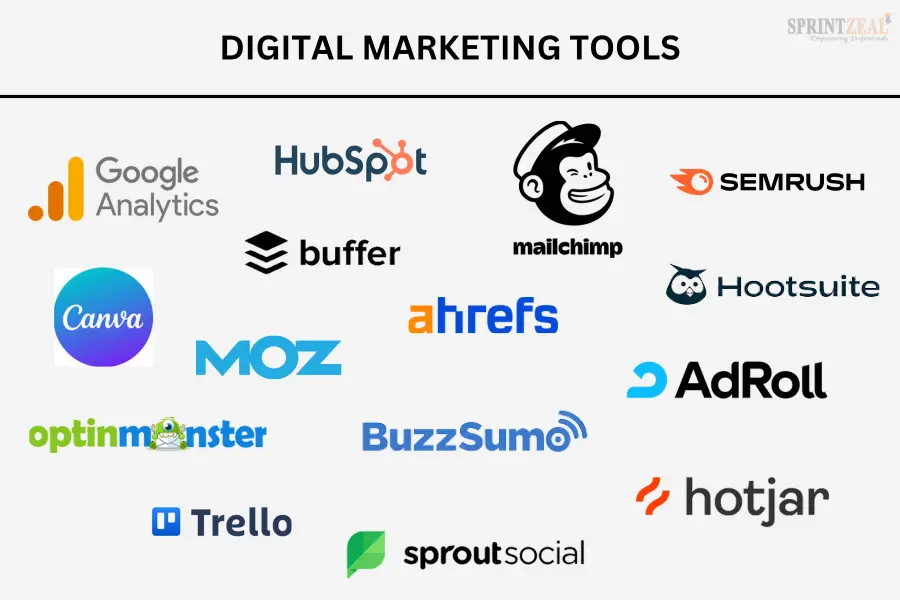
So what are the must-haves? Here’s a curated list of the most relevant tools you’ll need to build campaigns, track results, and wow employers:
Analytics & Tracking
- Google Analytics 4 (GA4) – Website performance insights
- Google Tag Manager – Adds tracking codes without touching website code
- Hotjar – Heatmaps, session recordings, and user feedback
Paid Ads & Campaign Management
- Meta Ads Manager – Facebook/Instagram advertising
- Google Ads – Search, display, and YouTube ad campaigns
- LinkedIn Campaign Manager – For B2B ad targeting
Content Creation & Design
- Canva – Easy drag‑and‑drop visuals for ads, social posts, and blog banners
- Adobe Express – For more advanced creatives
- CapCut or InVideo – To edit video creatives (great for TikTok & Instagram Reels)
Email Marketing & CRM
- Mailchimp – Build campaigns and automation
- MailerLite – Clean, beginner-friendly automation
- HubSpot CRM – End‑to‑end email and contact management
- Brevo (formerly Sendinblue) – Smart workflows and SMS
SEO & Keyword Research
- Semrush – All‑in‑one SEO and competitive research
- Ubersuggest – Affordable keyword tool
- AnswerThePublic – Topic ideas based on real search queries
You can use any of these tools during your mini projects, giving you hands-on confidence that goes straight on your CV.
Free Certifications from Google, HubSpot & LinkedIn
OK, I know what you’re thinking… “Can I stand out without a marketing degree?” The answer? Absolutely. You can get some marketing certifications for beginners. And some of these certifications are free.
1. Google Digital Garage – Fundamentals of Digital Marketing
- Covers SEO, SEM, email, and analytics basics.
- Includes 26 modules with real-world examples.
- Comes with a globally recognised certificate, great for your LinkedIn profile.
2. HubSpot Academy – Inbound Marketing
- Teaches lead generation, content strategy, and lifecycle marketing.
- Highly interactive, with quizzes and practical exercises.
- Employers love HubSpot-trained candidates (trust me).
3. LinkedIn Learning – Social Media Marketing & Email Marketing
- Bite-sized lessons taught by industry pros.
- Certificates auto-sync with your LinkedIn profile.
- Topics range from ad strategy to community building and analytics.
4. Meta Blueprint – Meta Ads Certification
- Learn how to plan, build, and optimise Facebook & Instagram ads.
- Great prep for managing small to mid-budget campaigns.
5. Google Analytics Certification (GA4)
- Master interpreting dashboards, goal tracking, and funnel analysis.
- Often required for entry-level data-driven marketing roles.
These certifications are 100% free, self-paced, and globally trusted.
So what’s stopping you? Start stacking those credentials now, and you’ll have proof of skill before you even walk into an interview.
Read on:
Building Real-World Experience with Mini Projects
Picture this: you’re showing potential employers a live Instagram ad that hit a 3% click‑through rate or a Google Ads campaign that improved ROI by 17 % because you practised on mini projects from day one. This portrays you as someone with job-ready marketing skills.
- Audit a friend’s website using GA4, then build a simple landing page in Canva and drive traffic with a mock Meta Ads campaign.
- Craft an email drip sequence in Mailchimp, watch opens and clicks climb as you A/B test subject lines.
You don’t need a real client; you can work with non‑profits, student clubs, or personal passion projects.
By the end of 12 weeks, you’ll have 3–5 polished case studies showcasing measurable wins, exactly what recruiters want to see.
And that’s how you transform theory into a portfolio that lands interviews.
How to Land Your First Digital Marketing Job
You’ve got your toolkit and portfolio ready, but how do you score that dream role to actually become a job-ready digital marketer in just 3 months?
What’s the secret to getting noticed by hiring managers?
Landing your first digital marketing job is about three things: visibility, proof of skill, and proactive outreach.
You don’t need to wait for perfect timing or a golden contact. In other words, you can start applying strategically right now.
Here’s something we can both agree on: a tailored CV and LinkedIn profile will get you in the door, a strong portfolio will keep you there, and targeted applications to internships or freelance gigs will get your foot in.
Optimise Your CV and LinkedIn for Marketing Roles
Have you ever found yourself tweaking your CV endlessly without results?
Well, that’s because generic resumes don’t cut it in digital marketing. But you can fix that.
- Mirror the language in job postings for SEO roles. Use keywords like “Google Analytics,” “SEO audit,” and “ROI optimisation.”
- Punch up your LinkedIn headline and summary with power words (“Growth-Driven Marketer,” “Data-Backed Strategist”).
Don’t forget to request recommendations from peers or instructors to add credibility.
Build a Job-Ready Portfolio (Even Without Experience)
You’re in an interview, and the hiring manager asks for campaign examples. You’ve got them.
But what if you’ve never worked with real clients? That’s where the right strategy and tools come in.
Here are some top digital marketing portfolio tips to help you build credibility from scratch
- Start with Mini Projects
Create mock Google Ads, SEO audits, or social media campaigns. Document your process and results even if they’re hypothetical. Show your thinking, targeting, and projected outcomes. - Use These Portfolio Platforms
- Notion – A free, flexible workspace to showcase case studies and results.
- Webflow – Build a visually stunning portfolio site without coding.
- Behance – Great for creative campaign visuals and social media designs.
- Journo Portfolio – Explicitly built for writers and marketers.
- Google Sites – Simple and free for quick digital marketing portfolios.
- Highlight Metrics That Matter
Whether it’s click-through rates or improved keyword rankings, quantify results. Numbers pop. - Structure Each Project Like a Case Study
Include project goal, tools used, strategy applied, and final result. Use visuals where possible. - Update Regularly
Keep it fresh. Add new projects, even volunteer work or freelance gigs, as you grow.
Apply for Internships, Freelance Projects or Entry-Level Roles
Proactive outreach accelerates your job search. Don’t just click “apply”, reach out directly.
For internships, target agencies listed on LinkedIn and send a concise pitch showcasing your mini‑project results. Please attach a one-page portfolio snapshot to your email.
For freelance gigs, browse platforms like Upwork or Fiverr, but focus on specialist communities (e.g., GrowthHackers, Dribbble).
If you’re looking for entry-level digital marketing roles, try using Boolean searches on LinkedIn Jobs (e.g., “digital marketing” AND “junior” AND “remote”). You can also use Indeed UK, Glassdoor to uncover hidden listings.
Many startups hire quickly when they see initiative, so a personalised message highlighting how you’d solve one of their pain points can land you an interview fast.
Become a Job-Ready Digital Marketer in Just 3 Months. It’s within your reach. But you don’t have to go it alone.
RKY Careers’ Digital Marketing Bootcamp packs our proven month‑by‑month roadmap into an intensive live program, complete with expert mentorship, peer feedback, and real client briefs.
Want to know the best part? You’ll graduate with a polished portfolio, industry-recognised certifications, and a direct pathway to interviews with top employers.
Don’t let another opportunity slip by.
Now it’s your turn: enrol in RKYcareers Digital Marketing Bootcamp today and transform your career—fast.
Spaces fill up quickly, so secure your spot now and start your journey to becoming a job‑ready digital marketer!
See also:
FAQs: Become a Job-Ready Digital Marketer in Just 3 Months
1. Can I become a digital marketer in 3 months?
Yes. With a focused 12-week roadmap, combining free certifications, hands-on mini-projects, and live campaigns, you’ll gain the core SEO, social, analytics, and paid-ads skills employers demand.
2. Do I need a degree to get a digital marketing job?
No. Employers value proven skills and results. Free industry certifications and a strong portfolio of case studies often outweigh formal degrees.
3. What are the best free digital marketing courses?
Google Digital Garage (Fundamentals of Digital Marketing), HubSpot Academy (Inbound & Content), Meta Blueprint (Facebook & Instagram Ads), and LinkedIn Learning’s Social Media Marketing.
4. How do I build a portfolio with no real work experience?
Create mini‑projects: conduct website SEO audits, design mock ad campaigns, draft email sequences for a hypothetical brand, or help nonprofits and student groups achieve measurable results.