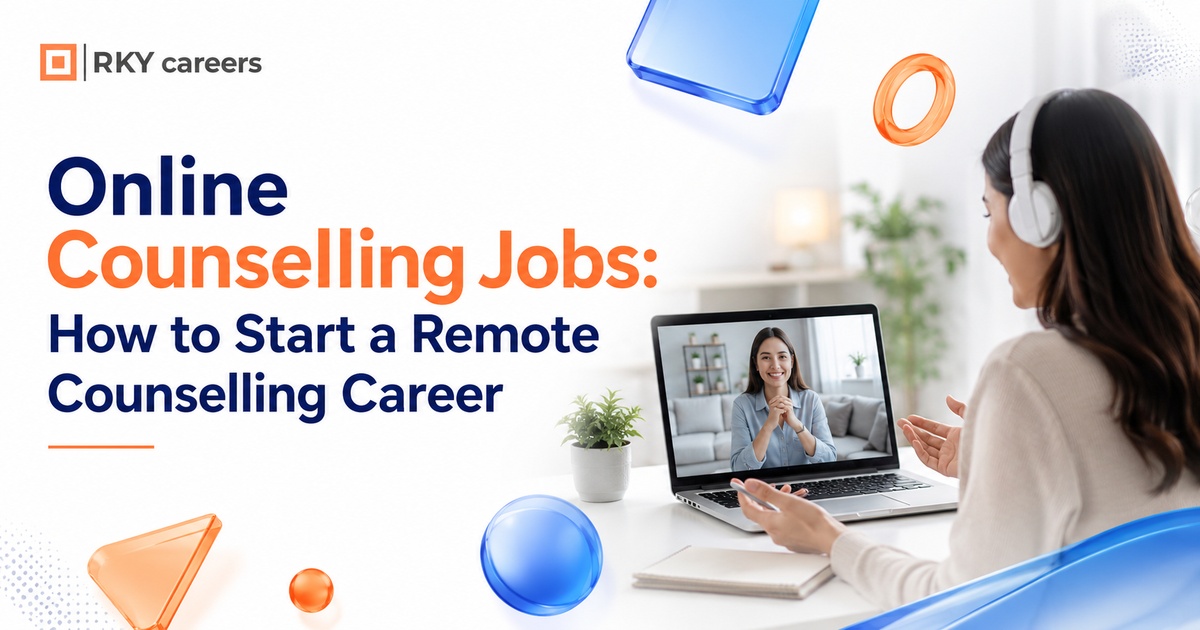
Online Counselling Jobs: How to Start a Remote Counselling Career
Online counselling jobs may appeal to you if you feel stuck, underused, or exhausted by office routines. Could your listening skills, professional experience, and desire for meaningful work support a remote career? Perhaps you want flexibility but worry about qualifications, credibility, income, or finding legitimate opportunities.
I have seen career changers hesitate because the route into counselling can appear confusing. This guide breaks that journey into clear, practical steps you can follow with confidence. You will learn about training, remote practice skills, job searching, applications, and long-term career growth in the UK.
Why Online Counselling Is Becoming a Serious Career Route

Remote care has moved from emergency workaround to established service model across UK mental health support. That shift creates more work from home counselling jobs, online therapist jobs, virtual counselling careers, and remote mental health jobs.
However, you still need to understand what these opportunities involve before changing direction professionally.
What Online Counselling Work Actually Looks Like
Online counselling can happen by secure video, telephone, or approved digital platforms. Some roles are employed, while others use sessional, contract, or self-employed arrangements. That means online counselling jobs can offer different schedules, caseloads, and levels of independence.
NHS Talking Therapies recorded 500,034 Internet Enabled Therapy sessions during 2024 to 2025. This shows digital delivery remains part of mainstream mental health support, rather than a temporary experiment.
Look: flexibility does not remove clinical responsibility. You still need clear contracts, confidential records, safeguarding processes, supervision, and secure technology. Before pursuing remote counselling jobs, consider which working model suits your career and lifestyle.
Why Demand for Counselling Remains Strong
Demand is shaped by more than remote-work trends. People increasingly recognise counselling as support for work, relationships, grief, anxiety, and life changes.
BACP reported that 35% of people surveyed in 2025 had received counselling or psychotherapy previously. That suggests a sizeable public market alongside NHS, workplace, charity, university, and digital-health services.
However, greater demand also raises professional expectations. Employers advertising online counselling jobs may request recognised training, registration, supervised experience, and remote-practice competence.
Is a Remote Counselling Career Right for You?
Career changers often bring useful experience from teaching, healthcare, HR, social care, or management. Yet transferable skills become valuable only when combined with proper counselling training.
You may suit virtual counselling careers if you can:
- Listen without rushing to solve every problem
- Stay calm during emotionally difficult conversations
- Respect confidentiality and professional boundaries
- Reflect on feedback without becoming defensive
- Work independently while using supervision properly
Online therapist jobs can provide meaningful work, but the emotional load remains significant. If you value purposeful work and disciplined boundaries, remote mental health jobs may offer a credible next chapter.
Related reading: Signs It’s Time to Change Your Career | Best Online Courses for Job Seekers in 2026
Get Qualified Before Applying for Remote Counselling Roles
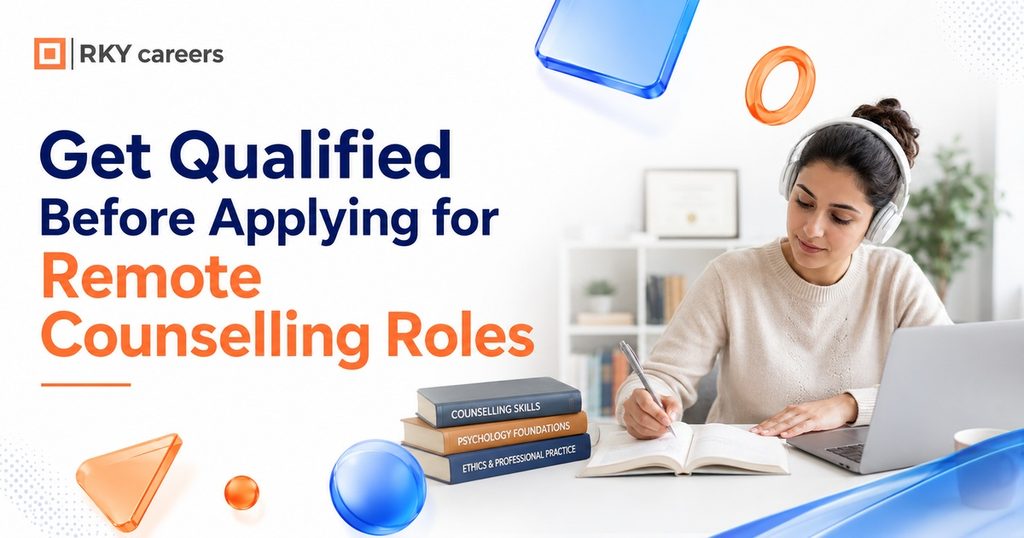
Interest alone cannot qualify you for remote counselling jobs, because employers must protect vulnerable clients. Before targeting work from home counselling jobs, online therapist jobs, virtual counselling careers, or remote mental health jobs, you need suitable training, supervised practice, ethical awareness, and credibility.
Your route starts with recognised standards first.
Understand the UK Counselling Training Route
Your first major decision is training. BACP recommends a three-stage route that can take three or four years.
The pathway includes an introductory course, counselling-skills certificate, then core practitioner training. BACP says core training should normally reach at least Level 4 for relevant membership routes. It must also include substantial guided study and supervised client experience.
Therefore, avoid buying a short certificate simply because it promises quick access to online counselling jobs. Check the course level, awarding body, placements, supervision, and professional recognition before paying.
Courses delivered solely online currently do not satisfy BACP membership training requirements.
Know Which Professional Titles and Registrations Matter
In the UK, counsellor, therapist, and psychotherapist are not protected HCPC titles. However, counselling psychologist is legally protected and requires appropriate HCPC registration.
Here’s the deal: legal permission and professional credibility are different matters. Employers, insurers, directories, and commissioned services may still require recognised professional registration.
When reviewing remote counselling jobs, check whether employers request BACP, UKCP, NCPS, HCPC, or another body. Never use a protected title that your qualifications do not support.
Professional honesty protects your clients, reputation, and future career opportunities.
Prepare for Online Practice Standards
Remote counselling creates extra responsibilities around identity, location, emergencies, privacy, and technology. BACP updated its Online and Phone Therapy competence framework in August 2026. The update includes current guidance around remote practice and risk management.
Before applying for online counselling jobs, develop competence in:
- Confirming the client’s identity and location
- Planning for technology failure
- Assessing risk remotely
- Protecting client records
- Creating safeguarding procedures
- Working within your competence
You may be wondering: can excellent face-to-face skills simply transfer online? Not always. Remote work changes how you observe distress, silence, interruptions, and immediate safety concerns.
BACP has also launched its 2026 Ethical Framework. It becomes mandatory for BACP members on 3 November 2026.
Related reading: Are Remote Jobs Going Away in 2026? The Truth Explained | How Do I Land a Remote Job in 2026?
Build the Skills and Setup Needed to Counsel From Home

Once qualified, remote practice demands more than good conversation through a screen or telephone. Work from home counselling jobs, online therapist jobs, virtual counselling careers, and remote mental health jobs require digital confidence, privacy awareness, boundaries, crisis planning, and documentation.
Building these habits early makes you safer and more employable.
Create a Private and Reliable Remote Workspace
A professional remote setup should protect clients from interruptions and avoidable privacy risks. You need a quiet room, dependable internet, suitable headphones, and secure devices.
For work from home counselling jobs, test your camera, microphone, connection, and room privacy beforehand. Keep family members, smart speakers, and visible personal information away from your counselling space.
Online therapist jobs also require a backup plan. Agree what happens when a video connection fails during an important conversation.
For example, your service may approve telephone continuation or session rescheduling. Clear technical procedures prevent clients carrying the burden of poor preparation.
Strengthen Your Remote Communication and Documentation
Good remote counselling depends on more than technology. You must communicate warmth clearly when several physical cues become harder to observe.
Notice tone, pacing, facial expression, silence, and sudden changes in client engagement. In virtual counselling careers, clear communication can reduce uncertainty before deeper therapeutic work begins.
Explain confidentiality, session timing, cancellations, boundaries, and emergency procedures using simple language.
You should also become comfortable documenting sessions promptly and objectively. Remote mental health jobs may involve digital records, referrals, outcome measures, and safeguarding notes.
Accurate documentation matters because another professional may later depend upon your record.
Protect Your Wellbeing and Professional Boundaries
Working from home can blur the boundary between professional care and personal recovery. Therefore, create a deliberate closing routine after your final appointment.
Useful boundaries include:
- Fixed session and administration hours
- Regular clinical supervision
- Protected breaks after difficult sessions
- A separate work device where possible
- Clear limits around client messaging
- Planned CPD and reflective practice
Online counselling jobs can offer flexibility, but flexibility without structure becomes exhausting.
The bottom line: your wellbeing supports safe practice. When your attention or emotional capacity declines, your judgement can decline too. Sustainable practitioners build recovery time into their working week before burnout demands it.
Related reading: Jobs With NHS England | How to Mass Apply for Jobs on LinkedIn
Find Legitimate Online Counselling Jobs and Compare Employers
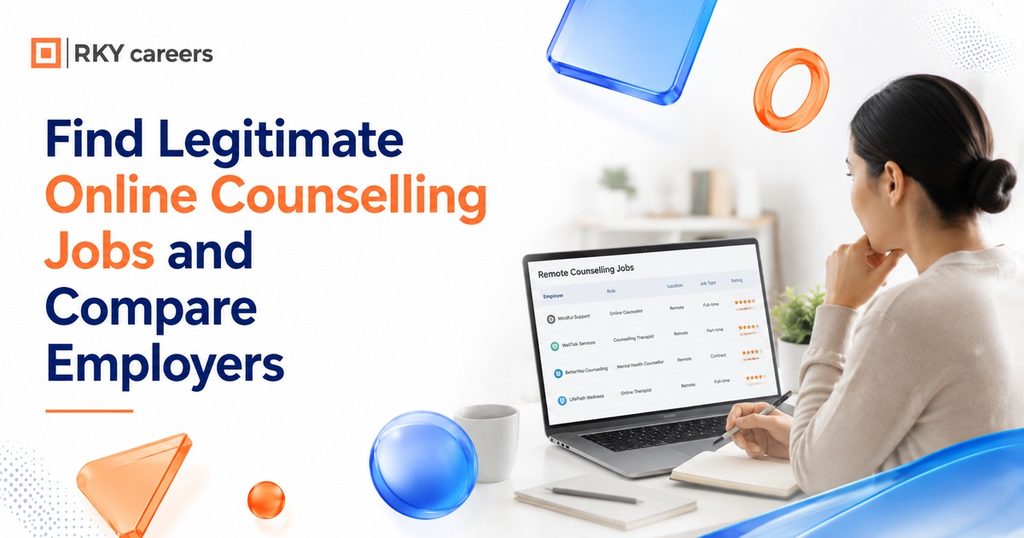
Finding vacancies becomes easier when you search beyond one job title or platform. Work from home counselling jobs, online therapist jobs, virtual counselling careers, and remote mental health jobs appear across charities, digital health providers, universities, employee assistance programmes, practices, and NHS services.
A focused search helps you spot opportunities.
Search Beyond the Job Title “Counsellor”
Search broadly because employers use different titles for related work. Try counsellor, remote counsellor, therapist, wellbeing practitioner, EAP counsellor, and student counsellor.
Online counselling jobs can appear through NHS organisations, charities, universities, digital providers, and private clinics. Some positions remain fully remote, while others require occasional face-to-face attendance.
Set alerts using several keyword combinations rather than repeating one search.
Also check whether each role serves adults, young people, couples, employees, or specialist populations. Your qualification and experience must match that population, even when every appointment happens online.
Check the Employment Details Before Applying
Do not judge a vacancy simply because it says remote. Read its clinical, contractual, and workload details carefully.
Check:
- Employment status and guaranteed hours
- Expected weekly caseload
- Supervision arrangements
- Registration requirements
- Safeguarding and escalation support
- Technology supplied
- Administration expectations
- Cancellation policies
- Professional indemnity requirements
For remote counselling jobs, confirm whether you may work from any UK location. Some organisations restrict geography because of commissioning, insurance, or service arrangements.
A vacancy can appear flexible while hiding unpaid administration or difficult caseload expectations. Compare the complete offer, rather than concentrating only on hourly pay.
This filter saves time when comparing online counselling jobs.
Explore NHS and Wider Mental Health Career Routes
NHS Talking Therapies received 1.81 million referrals during 2024 to 2025. The scale demonstrates continuing demand within structured mental health services.
Not every referral becomes counselling. However, the numbers explain why mental health career pathways remain important.
When exploring remote mental health jobs, consider adjacent roles while completing your training. Employment support, wellbeing services, care coordination, and digital service delivery can build valuable experience.
That approach matters for career changers. You can gain healthcare knowledge without claiming to be a qualified counsellor.
Later, this experience can strengthen applications for online therapist jobs involving referrals, confidentiality, and multidisciplinary working.
Related reading: CV Mistakes That Cost You Interviews | How to Build a ‘Hire-Me’ Presence Online in 30 Days
Position Yourself to Win Interviews and Job Offers

Qualifications may open the door, but your application must show why an employer should choose you. For work from home counselling jobs, online therapist jobs, virtual counselling careers, and remote mental health jobs, recruiters assess communication, safeguarding judgement, digital readiness, maturity.
Your evidence must make those strengths easy to recognise.
Build a Counselling CV Around Evidence
Your CV should prove readiness rather than merely list past responsibilities. Start with qualifications, registration, client groups, delivery modes, and supervised experience.
For online counselling jobs, describe evidence such as remote sessions, safeguarding processes, risk assessment, or digital documentation. Never invent statistics or client outcomes that you cannot support.
Career changers should translate previous experience carefully. Teaching can demonstrate communication and safeguarding, while HR may show confidentiality skills.
RKY Careers provides CV optimisation and Career Advisory services for professionals positioning transferable experience for new roles.
Explore RKY Careers Career Advisory if you need clearer career positioning before applying.
Make Your LinkedIn Profile Support Your Career Story
Your LinkedIn profile should support the same professional story presented within your CV. Use accurate credentials, relevant training, and a focused summary.
For virtual counselling careers, credibility matters more than flashy personal branding. Never share confidential client stories or make unrealistic treatment promises publicly.
RKY Careers’ LinkedIn Optimisation service focuses on improving professional positioning and alignment with target roles.
Explore RKY Careers LinkedIn Optimisation Service when your profile no longer reflects your intended direction.
A strong profile cannot replace registration or experience. However, it can help recruiters understand your value faster when reviewing remote counselling jobs.
Prepare for Remote Counselling Interviews
Prepare for questions about risk, confidentiality, boundaries, supervision, remote technology, and difficult client situations. Employers want to understand your judgement, not hear memorised definitions.
Build concise examples covering:
- A safeguarding concern
- A difficult conversation
- Feedback received through supervision
- An ethical boundary
- A remote-session disruption
- Collaboration with another professional
Explain what happened, what you did, and what you learned afterwards.
RKY Careers offers one-to-one Interview Preparation for professionals preparing for competitive recruitment processes.
Explore RKY Careers Interview Preparation to practise presenting your experience with greater structure and confidence.
Related reading: How David Landed a Business Analyst Role After RKY’s PM/BA Bootcamp | How RKY’s Alumni Interview Preparation Helped Land a Project Administrator Role
Broaden Your Career Options With RKY Careers’ Project Management and Business Analysis Bootcamp
A counselling pathway can also reveal wider opportunities across health, wellbeing, projects, and service improvement. Work from home counselling jobs, online therapist jobs, virtual counselling careers, and remote mental health jobs increasingly operate inside structured programmes.
Broader business skills can strengthen options, especially if you want leadership and coordination responsibilities.
If your goal is therapeutic practice, complete recognised counselling training first. The RKY Careers Project Management and Business Analysis Bootcamp is not a counselling qualification.
It should never replace clinical training, professional registration, supervision, or online-practice competence.
However, the programme can support a broader career strategy around healthcare and mental health services. Many services need professionals who can coordinate projects, understand processes, manage stakeholders, and improve delivery.
Those skills may complement clinical experience if you later pursue programme or service-management responsibilities.
RKY Careers describes its Business Analysis Bootcamp as practical and focused on real business challenges. Learners undertake virtual projects, work with peers, and receive career-support sessions.
The wider RKY Careers training model also includes practical projects, job-search guidance, interview preparation, and CV support.
The programme can help you develop:
- Project planning and delivery skills
- Business analysis and problem-solving methods
- Stakeholder communication and reporting
- Experience working through practical projects
- Stronger interview and job-search preparation
- Broader options beyond one job title
This matters if online counselling jobs form only one part of your long-term plan. You might later explore wellbeing programme coordination, healthcare projects, service improvement, or business analysis.
Those routes can complement remote mental health jobs without blurring important professional boundaries.
Explore RKY Careers’ Project Management and Business Analysis Bootcamp if those wider skills match your plans.
If you remain unsure, begin with RKY Careers Career Advisory. You can clarify your experience, target roles, skill gaps, and next steps before investing in training.
Starting a remote counselling career does not require reckless reinvention. It requires the right qualification, ethical practice, remote-ready skills, targeted applications, and patience.
Build those pieces in order, and your career change becomes far more manageable. When you are ready to position your wider professional experience strategically, RKY Careers can help you turn that preparation into a focused UK career plan.