

Best Free SEO Tools for Beginners 2025
Finding the best free SEO tools for beginners 2025 can be a game-changer for anyone looking to grow their online presence. Now, more than ever, mastering SEO is crucial for driving traffic and boosting search engine rankings.
Fortunately, several powerful SEO tools, like Google Analytics, Ahrefs Free, and Ubersuggest, offer beginner-friendly features. These features simplify keyword research, competitor analysis, and content optimisation.
So, if you’re eager to improve your website’s search performance and climb Google rankings, this guide will walk you through the top free SEO tools to use in 2025.
Why Every Beginner Needs SEO Tools in 2025
In 2025, anyone launching a website or blog will quickly realise that they cannot simply publish pages and expect traffic. Beginners need guidance and data, and that is where free SEO tools for beginners come in.
If you lack insight into which pages perform, which keywords to target, or which links bring value, you’re flying blind. Selecting the best free SEO tools for beginners 2025 is essential to plan, monitor, and refine your site for search engines.
The importance of SEO in digital marketing
Search engine optimisation drives most traffic to websites. When someone types a question or a keyword in Google, the sites that rank higher are the ones with good SEO.
In 2024, 91% of survey respondents said SEO positively impacted their site performance.
As more businesses get online, competition rises, and you need SEO to stand out. Early use of free SEO tools for beginners helps you learn how search engines view your site. You test titles, meta descriptions, site speed, mobile friendliness, content relevance, and backlinks.
Over time, those minor improvements will compound.
Read also:
Benefits of using free SEO tools
Choosing free tools means you can begin without financial risk. A free tool can help you research keywords, audit your pages, check backlinks, and monitor rank.
Another benefit is that many free tools are lightweight, easy to use, and come with simple interfaces, making them ideal educational resources. Because they cover core functions, you can test ideas and build confidence.
How free tools compare to premium versions
While free versions are typically limited in scope, restricting the number of queries, the depth of results, or the frequency of use. Premium tools offer full access to data, historical metrics, advanced filters, and in-depth competitor analysis.
For example, a free on-page SEO checker tool may display a handful of suggestions, while the premium version gives dozens of page optimisation ideas.
Nonetheless, free tools are sufficient for beginners to get started. As you grow, premium tools become more valuable. But starting free gives you a safe path into SEO without overspending.
Best Free SEO Tools for Beginners in 2025
Here is a curated list of eight top free tools you can use right away. These tools assist with keyword research, auditing, backlink checking, generating content ideas, and tracking rankings.
Whether you are launching a personal blog or a small business site, these selections represent the best free SEO tools for beginners 2025. Use them in tandem, compare their outputs, and learn which one suits your style.
Read also:
Google Search Console — for performance and indexing insights
Google Search Console is one of the essential Google SEO tools for beginners. It helps you understand how Google indexes your site, which pages appear in search results, and which queries lead users to your pages.
Google commands ~90.38% of global search engine market share. As such, it is an essential tool for begineers.
Through the performance report, you see clicks, impressions, and average positions for keywords. You also receive alerts for indexing issues, mobile usability problems, and core web vitals errors.
This visibility gives you direct feedback from Google itself. Beginners should set up Search Console immediately and submit their sitemap.
Google Analytics 4 — track website traffic and conversions
Google Analytics 4 complements Search Console by providing detailed data on how users interact with your site. It shows how visitors arrive (organic search, social, direct), which pages they visit, how long they stay, and where they leave.
You can also set up conversion events, such as form submissions or purchases. For beginners, this type of insight uncovers which content resonates and which pages need improvement.
Over time, you can correlate your SEO changes with behaviour changes.
Ubersuggest — keyword research and site audits
Ubersuggest offers both free keyword research tools and audit features in its free plan. You can enter a seed keyword and get related suggestions, search volume, and difficulty estimates.
That informs which keywords you should target. It also allows you to scan your website and receive SEO health scores, as well as internal linking suggestions.
This dual capability makes Ubersuggest a strong option for beginners. Because it merges both keyword and site audit functionality, you reduce tool overload.
Ahrefs Webmaster Tools — backlink and domain analysis
Ahrefs Webmaster Tools (AWT) is a free offering from Ahrefs that provides access to backlink checker free functionality and domain analysis data. You can verify your site and view your top incoming links, referring domains, and metrics, including Domain Rating (DR).
Even in the free tier, AWT shows outbound link issues, broken links, and content performance. It also performs a site audit to highlight technical issues.
Beginners can use AWT to see how competitors link, which content earns links, and to detect negative or spammy links.

Unlock your potential with RKY Careers Digital Marketing Bootcamp.
A hands-on, career-focused programme designed to transform beginners into in-demand marketing professionals.
Learn SEO, analytics, and strategy from industry experts while gaining practical experience that employers value.
Moz Free SEO Tools — on-page optimisation and rank tracking
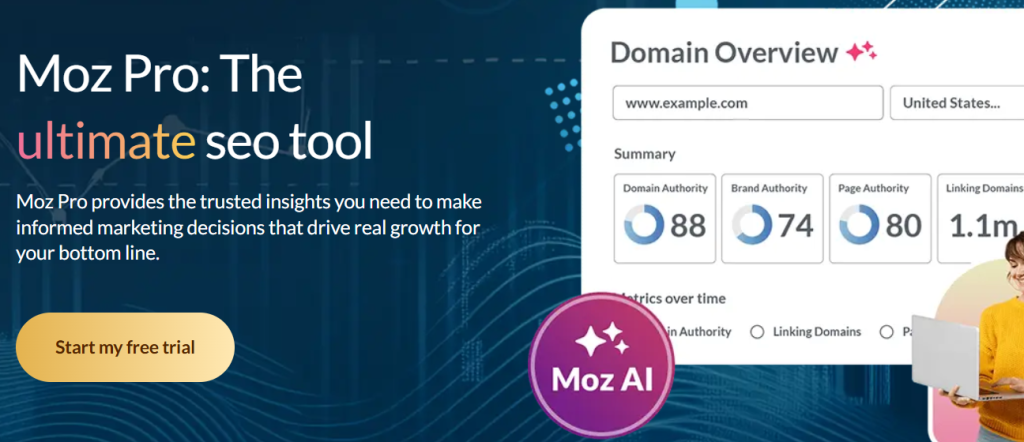
Moz offers a selection of free features through Moz Free SEO Tools, such as an on-page SEO checker tool and limited rank tracking options for free users.
You can enter a URL and view suggestions for optimising title tags and meta descriptions. Moz’s domain analysis tools also show domain authority and page authority scores.
For beginners, Moz’s clear feedback and friendly guidance make it an ideal choice. Because Moz is well respected in the SEO industry, its metrics carry weight as benchmarks.
Screaming Frog SEO Spider (free version) — site crawl and errors
Screaming Frog SEO Spider, in its free version, is a desktop crawling tool that lets you scan up to 500 URLs. It catches broken links, duplicate content, redirect chains, missing metadata, image issues, and more.
This is a hands-on tool that allows you to dig deep into site structure and identify hidden errors that may not be visible in simpler tools.
You download the app and run a crawl of your domain, as it provides filters, export options, and insights that let you act on issues.
It’s a great companion tool in the set of best free SEO tools for beginners 2025 to strengthen your website’s technical foundation.
KeywordTool.io — keyword ideas for Google, YouTube, and Bing
KeywordTool.io is a simple yet effective free keyword research tool that provides you with hundreds of keyword ideas (although in free mode, you mostly see suggestions rather than metrics).
That helps you expand content ideas, identify long-tail keywords, and tailor your strategy to multiple platforms.
Beginners can use the suggestions and then validate them via tools like Ubersuggest or Search Console. Because it supports multiple platforms, it broadens your reach beyond Google.
Read also:
AnswerThePublic — content ideas and search intent
AnswerThePublic is a creative tool that visualises questions, prepositions, comparisons, and related searches people make around a keyword. It helps you tap into search intent and discover content topics you may not have considered.
While it doesn’t replace in-depth keyword metrics or audits, it excels at sparking ideas and aligning your content with what users are asking. Beginners can use it to find blog post titles, FAQs, and subtopic clusters.
It’s one of the free SEO tools for beginners that enhances your content research side. You input a base term and immediately see dozens of question phrases.
How to Use Free SEO Tools Effectively
Having tools is only half the battle; knowing how to use them effectively is equally important. You need to go beyond random checks and create a workflow.
Learn to compare outputs, spot patterns, and act. Integrate performance, crawl, content, and backlink data.
Over time, this disciplined approach yields gains.
Combining multiple tools for deeper insights
No single tool is perfect. By combining tools, you can fill gaps.
For example, use Google Search Console for query performance, Google Analytics for user behaviour, Ubersuggest or KeywordTool.io for keyword ideas, and Screaming Frog for technical crawling.
This approach provides you with overlapping data sets to cross-verify your findings. One tool may miss a broken link that another flags, or one may suggest metadata fixes that another overlooks.
Tracking keywords and backlinks consistently
Consistent tracking is vital. After you identify target keywords with free keyword research tools, you need to monitor how they rank over time using free rank tracking tools.
Likewise, use backlink checker free tools like Ahrefs Webmaster Tools to monitor new links, lost links, and the quality of referring domains.
This helps you spot algorithm shifts, content underperformance, or negative SEO attacks. Always keep a log of rank and backlink changes. Pair that with site audit data and user behaviour metrics to adjust your content strategy.
Analysing user behaviour to improve ranking
Data from Google Analytics 4 and other tools gives you clues about how users interact with your site. Watch bounce rates, session durations, pages per session, exit pages, and conversion funnels.
If a page ranks but users bounce quickly, that signals misalignment between the title, meta description, or content and user intent. Use that insight to refine on-page elements, reorganise content, or improve readability.
In addition, search tools may indicate which queries drive traffic; if the content doesn’t fully satisfy that need, consider expanding or adjusting it.
Common Mistakes Beginners Make with SEO Tools
Many beginners misuse or misunderstand free tools. They conduct audits once and then forget about them, or they chase metrics instead of relevance.
They may over-optimise or rely too heavily on one tool’s data without cross-checking. Some ignore actual user behaviour in favour of chasing rankings. Below are common pitfalls that novices often fall into, along with strategies to avoid them.
Ignoring analytics data
Some beginners launch tools and focus only on keywords or backlink counts, while ignoring analytics.
That is a mistake: metrics about how real people interact with your content are among your most valuable assets. If you ignore bounce rate, session times, exit pages, and conversion funnels, you overlook whether your content truly satisfies visitors.
A page may rank, but if users leave immediately, Google sees it as low quality over time. Always pair SEO tool findings with analytics insight from GA4 or similar tools.
Over-optimising keywords
When using free SEO tools for beginners, novices sometimes overuse keywords. They stuff titles, headings, and body text with keywords in a rigid attempt to improve their ranking.
Search engines now favour content that reads naturally and satisfies user intent rather than mechanical optimisation. If you over-optimise, you risk penalties or lower rankings.
Utilise free tools to identify keywords, but then incorporate them smoothly into your content. Let the keywords appear where they make sense.
Read also:
Not setting measurable SEO goals
Some newcomers use SEO tools aimlessly, without clear goals. Without measurable objectives, such as ranking in the top 10 for five keywords, you won’t know if your efforts succeed.
Always begin with targets: a desired rank, traffic level, or conversion rate. Then use your website audit tools free, backlink checker free, and rank trackers to monitor against those goals.
Adjust your tactics based on progress. Setting measurable goals gives direction and focus, preventing wasted effort, random testing, or tool fatigue.
How to Level Up from Free to Paid SEO Tools
Once your site gains traction and budgets allow, upgrading to paid SEO tools can unlock deeper data, more queries, competitor intelligence, and automation.
The next section explores when to upgrade, some affordable options for SEO tools for small businesses, and how to evaluate the ROI of investing in premium SEO platforms.
When to consider upgrading your toolkit
Consider upgrading your SEO toolkit when free versions begin to limit your progress. If you manage many pages, if your free crawling limit is exceeded, or if you constantly hit query caps, that’s a sign.
Additionally, when you require historical data beyond the last few months, more in-depth competitor analysis, API access, or team collaboration features, you may need more advanced capabilities.
At that point, the best SEO tools 2025 premium plans might deliver time savings and insights you can’t manually replicate.
Affordable paid SEO tools for small businesses
Fortunately, many paid SEO solutions offer affordable entry tiers. Tools like Semrush’s lower-tier plans, Ahrefs Lite, Moz Pro’s entry level, Serpstat, and Ubersuggest’s paid plan often cost in the tens of dollars per month.
Some include small team seats, daily keyword tracking, full site audits, competitor analysis, backlink monitoring, and content idea engines.
These are great stepping stones.
Upgrading from free rank tracking tools to a paid version gives you more frequency, alerts, and historical data.
ROI of investing in premium SEO platforms
Investing in premium SEO platforms should yield a return. The ROI comes from greater efficiency, deeper insights, a competitive advantage, and uncovering opportunities that might be missed with free tools.
If a tool helps you rank one extra keyword in the top ten, or fix technical issues that improve traffic by five per cent, the value may outweigh costs.
Before upgrading, estimate the potential gains, such as additional traffic, conversions, and clients, and compare them to the subscription cost.
FAQs: Best Free SEO Tools for Beginners 2025
What is the best free SEO tool for beginners in 2025?
The best free SEO tool for beginners in 2025 is Google Search Console. It offers essential insights into keyword performance, indexing, and website health. Beginners can easily monitor clicks, impressions, and ranking positions.
Can I do SEO for free without paid tools?
Yes, you can. Numerous free SEO tools are available for keyword research, backlink analysis, and on-page audits. Tools such as Google Search Console, Google Analytics, and Ubersuggest’s free plan provide enough features to optimise SEO performance.
Which free tool is best for keyword research in 2025?
In 2025, Ubersuggest remains one of the best free keyword research tools. It provides keyword ideas, volume data, competition levels, and related search terms. Beginners can also explore KeywordTool.io for generating long-tail keyword suggestions.
Are Google’s free SEO tools enough for small businesses?
Yes, Google SEO tools for beginners, such as Google Analytics 4 and Google Search Console, are often sufficient for small businesses starting. They help you track performance, identify site errors, and understand user behaviour.


