
How to Write a Product Roadmap
There’s no product without a road map. How to write a product roadmap may sound like a tough skill, but guess what, it’s easier than most people think. A product roadmap is simply a story about your product’s journey.
It shows where you’re heading, why it matters, and what steps you’ll take along the way. Imagine planning a road trip: you set the destination, pick the best route, and mark stops that keep you on track.
That’s precisely what a roadmap does for your product. Additionally, a clear roadmap helps everyone move in the same direction, including teams, leaders, and even customers.
Without one, it’s like driving without a map. Ready to learn how to create a product roadmap that actually works? Let’s get right into it.
What Is a Product Roadmap?
A product roadmap is a clear plan that shows where your product is going, especially when you want to launch a product. It tells everyone what you want to build, why it matters, and when you hope to deliver essential bits.
Think of it like a journey map: you decide the destination (vision), set waypoints (milestones), and plan the route (features, timelines). When teams know this, they move together, stay on track, and avoid going off course.
Guess what? Knowing how to write a product roadmap helps you lead with purpose. It keeps the team and stakeholders aligned. It also prevents building features just because someone asked, rather than because they bring value.
For a product roadmap for startups, this is extremely important: with fewer resources, every move needs to count. Additionally, the roadmap connects business goals, customer needs, and what you build next. Without it, people may work hard, but in different directions.
Definition and Purpose in Product Management
In product management, a product roadmap is a high-level guide. It outlines the product vision, business objectives, major features or themes, and roughly indicates when each will be implemented.
Its job is to help everyone, from designers to sales, understand why certain things matter. It’s not a list of every single task or bug; that kind of detail goes in the backlog. The roadmap stays at a higher level.
Here’s the thing: the roadmap gives purpose. It helps with decisions like what to build first, what to delay, and what to skip. It also sets expectations. Stakeholders want to know what direction the product is taking. And these are also transferable skills good for career change.
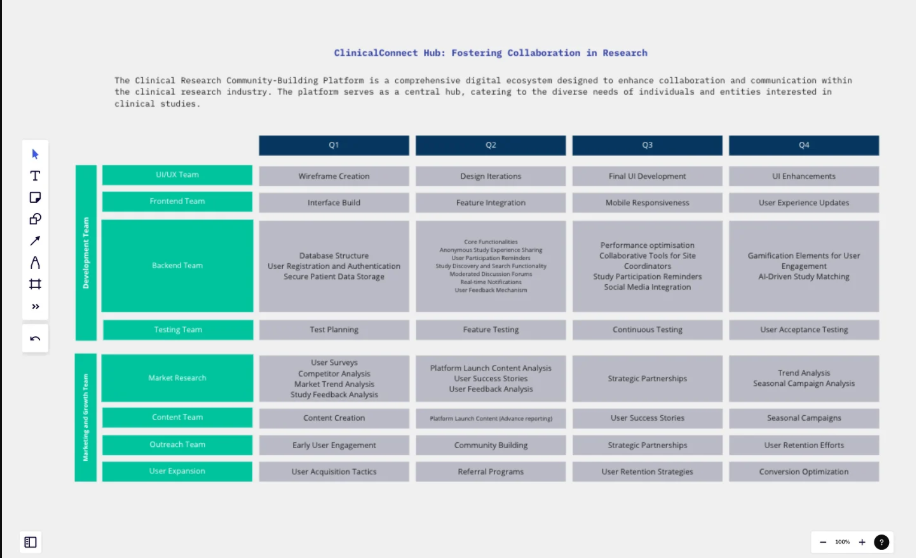
Customers or internal teams want to see what’s coming. And you need a way to measure success later. So the roadmap helps tie work to outcomes. and this is why it is important to know How to Write a Product Roadmap because it keeps the strategy visible.
Difference Between a Product Roadmap and a Backlog
A product roadmap vs product backlog comparison is essential. The roadmap is strategic and long-term, highlighting major themes, vision, and milestones.
The backlog is tactical, short-term, showing detailed work items, tasks, bug fixes, and user stories. The roadmap says what and why, backlog says how and when in finer detail.
Additionally, roadmaps are usually less detailed, granular, and less volatile and meant to guide rather than execute directly. Backlogs change constantly due to new bugs, tasks, and changes in feature work.
So, when writing a product roadmap, you set direction, decide what’s ahead; then the backlog handles the daily work. Keeping the roadmap and backlog separate helps everyone know what belongs where and reduces confusion.
See Also:
Key Elements of a Product Roadmap
When learning How to Write a Product Roadmap, a great product roadmap needs several pieces to work well. Together, these elements help you make a plan that people believe in and can follow.
You need vision and business objectives, themes/epics/features, timelines/milestones, and metrics to track success. When all four are in the roadmap, it tells a full story.
Vision and Business Objectives
Vision is the big picture: why your product exists, what change you want to bring. Business objectives are measurable goals that support the vision.
For example: increase user retention by 25% in one year, or reduce response time in the app by half. These objectives help you know what success looks like.
From the TPG Product Management Survey 2024, 89% of respondents said that their company’s strategic goals are a main input for prioritisation.
Also, 67% said customer requests are another major input. That shows how business objectives and knowing what customers want link together. For product roadmap for startups, being clear on vision and objectives helps you spend time wisely.
Themes, Epics, and Features
Themes, epics, and features are a way to group work. Themes are big areas (like “User Onboarding” or “Mobile Experience”).
Under each theme, there are epics: larger chunks of work. The features are specific things you build. Organising work this way makes the roadmap easier to understand.
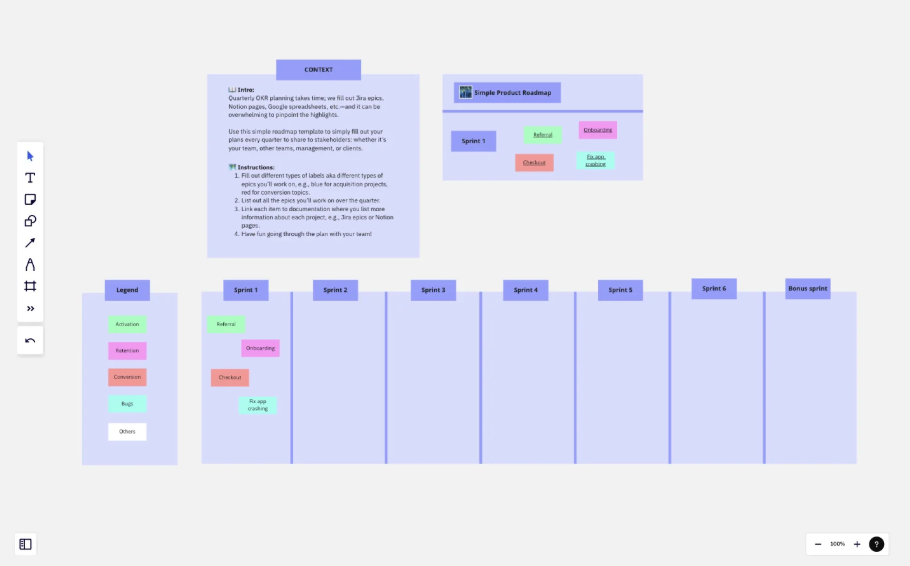
When you practice writing a product roadmap step by step, you’ll pick a few themes, then decide epics under them, then decide actual features inside epics. A product roadmap example might use colour code to group features into themes.
This works because people can see how small features map up to big goals. It also helps with prioritisation: you may choose features that support a theme strongly aligned with the vision, rather than ones that are easy but not fitting.
Timelines and Milestones
You also need to show roughly when things happen, and what the big achievements will be. Timelines might use months or quarters. Milestones are key moments (for example, launching a beta version, reaching a certain user number, or shipping version 1.0).
That tells you that many roadmaps do not focus too much on what gets done, rather than the value it delivers. prioritising tasks and managing time effectively helps hit good milestones, and tying them to outcomes helps avoid delay.
Metrics to Track Success
Metrics are the way you measure whether roadmap actions are working. For each objective or milestone, pick something measurable: user growth, retention, crash rate, customer happiness (like NPS), revenue. Use both leading metrics (early signs) and lagging ones (final results).
Additionally, good metrics help decision-making. If the metric tied to a feature doesn’t move after release, you can rethink. If you launch a feature but the related metric doesn’t move, that’s your signal to rethink priorities.
This is how important it is to tie every roadmap item to a clear, trackable outcome. The golden rule? Avoid vanity metrics that look good but don’t actually prove success. Stick with measures that directly reflect progress toward your vision.
Step-by-Step Guide to Writing a Product Roadmap
Here is a hands-on path for how to write a product roadmap. Follow these steps, and you’ll end up with a roadmap that guides well, communicates clearly, and helps everyone stay focused.
Define Product Vision and Goals
Step 1 is to define product vision and goals. Ask: What is our product for? Who uses it? What problem do we solve? That is vision.
Then set measurable goals: for example, “gain 5,000 new users in 6 months”, “reduce churn by 15%”, or “increase revenue by 20%”. You want your goals to be realistic but inspiring.
For a product roadmap for startups, this step matters a lot. When resources are smaller, you must pick objectives that matter.
Also, simple goals help everyone understand and align. Once you know vision + goals, everything else (themes, features, timelines) flows more naturally.
Gather Inputs From Stakeholders and Customers
Step 2: Collect what different people want or need. Stakeholders may include sales, marketing, engineering, and support. Customers are people using the product or waiting to use it. Use surveys, interviews, or feedback from support.
Guess what? What customers ask is really important. Also, business goals matter even more in many cases. Listening helps you build features people care about and avoid building what people ignore.
Prioritise Features Using Frameworks (MoSCoW, RICE, Kano)
Step 3: You’ll have more ideas than you can build. So you need a system to pick what comes first. This also helps in boosting productivity. Some frameworks:
- MoSCoW (Must, Should, Could, Won’t)
- RICE (Reach, Impact, Confidence, Effort)
- Kano (basic features, performance features, delighters)
These are key skills and frameworks to know. Using one of these helps you decide which features move the needle most, which are nice but not urgent. This can also be of help when setting career development goals.
For example, something with high impact and low effort might go before something with low impact and high effort. This is how to prioritise features in a product roadmap. It also helps when trade-offs are needed.
Create a Visual Roadmap With Clear Phases
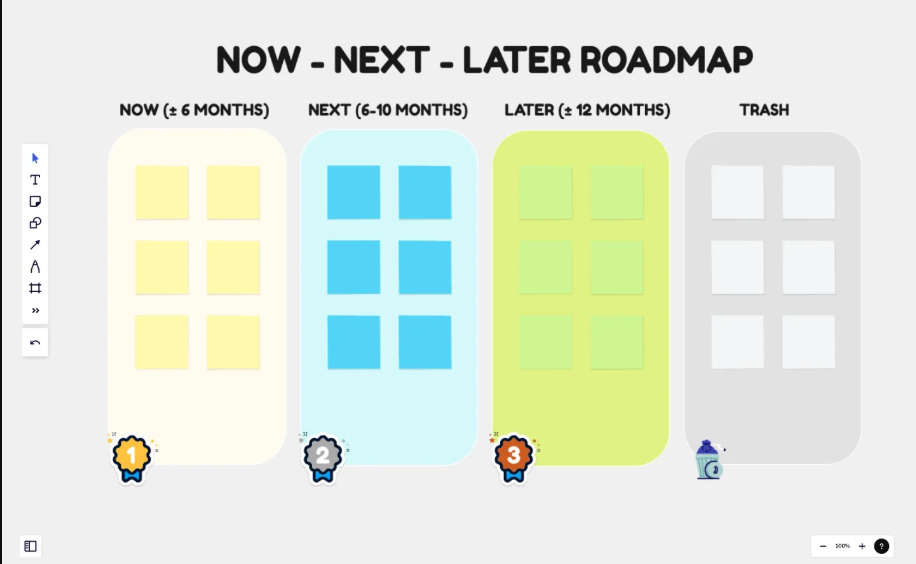
Step 4: Draw or build a visual version of your roadmap. Use phases (Discovery, Build, Launch, Stabilise) or timeline buckets (e.g. Q1, Q2, Q3).
Use a product roadmap template or product roadmap example to help with layout. Show themes, epics, features, with milestones, dependencies, and metrics.
Additionally, keep visuals simple. Use colours or tags. Make sure phases are clear. People should see at a glance what’s coming in near term vs far out. A good roadmap visual helps everyone stay aligned.
See Also:
Tools for Building Product Roadmaps
You need tools to build, share, and update your roadmap, even when switching careers into tech UK with no experience. The right tools help with visual clarity, collaboration, and scheduling when learning How to Write a Product Roadmap. They don’t have to be expensive. I’ll show tools for agile teams, dedicated product roadmap software, or simple spreadsheets.
Having the right tools can make roadmap building less stressful and more collaborative. A tool is not just for drawing lines and boxes; it’s what keeps everyone on the same page.
With tools, you can visualise priorities, adjust timelines, and make updates visible instantly. Whether you’re running a large agile team or just getting started at a small startup, there’s a solution that fits your needs.
Jira and Confluence for Agile Teams
For teams already deep into agile practices, Jira and Confluence are popular choices. Jira manages tasks, epics, and sprints, while Confluence works as a documentation and collaboration hub.
Together, they connect your product roadmap vs product backlog, letting you show high-level strategy in Confluence and day-to-day backlog items in Jira. This makes it easier for developers and business teams to stay aligned.
These tools support agile product roadmap best practices, which are good tools for beginners as well. For instance, when you reprioritise features, Jira helps reflect that immediately in sprint planning.
Confluence can then display updated roadmap visuals for stakeholders. The combination creates transparency, which helps reduce friction when priorities shift.
Productboard, Aha!, and Roadmunk for PMs
If you need software built specifically for roadmapping, tools like Productboard, Aha!, and Roadmunk stand out.
They offer drag-and-drop visual roadmaps, feedback collection, and prioritisation frameworks all in one place. Unlike generic project trackers, these platforms focus on strategic planning and communication.
Here’s the thing: these product roadmap tools also integrate with issue trackers, analytics, and customer feedback channels.
That means the roadmap isn’t just a static file; it becomes a living document that adjusts as inputs come in. When stakeholders want updates, you don’t need to start from scratch. You simply point them to the shared roadmap view.
Simple Roadmaps in Excel or Google Sheets
Sometimes, you don’t need fancy tools. A spreadsheet in Excel or Google Sheets can be surprisingly effective.
By setting up rows for themes or epics and columns for time periods, you can quickly design a clear roadmap. Colour coding, milestone markers, and notes make it easy to follow.
For startups, especially, this approach is cost-effective and flexible. The catch, of course, is maintenance. Unlike product roadmap software, spreadsheets don’t update automatically, so you’ll need discipline to keep them accurate.
Still, for teams experimenting with how to create a product roadmap, this is a simple and approachable option.
See Also:
Best Practices for Maintaining a Product Roadmap
Learning How to Write a Product Roadmap is one thing; keeping it useful is another. Best practices help your roadmap stay relevant, trusted, and helpful. This section covers flexibility, communication, and staying aligned with the market and strategy.
Keeping Roadmaps Flexible and Updated
Your roadmap is not rigid. When new information arrives (customer feedback, tech changes, market shifts), adjust. Many teams review their roadmaps quarterly. Some do so more often. Frequent reviews help catch drift.
ProductPlan’s 2023 report says that “over 50% of large product teams (50 people or more)” list “keeping roadmaps and processes consistent” as their biggest growing pain.
That shows consistency is hard. Many teams struggle because roadmaps aren’t updated often enough. So plan review cycles, share changes, and be ready to adjust items as you learn more.
Communicating Roadmaps to Stakeholders Clearly
Even a clear roadmap fails if people don’t understand it. Use simple visuals. Use clear labels. Avoid over-technical terms.
When you compare product roadmap vs product backlog, highlight which one shows strategy (roadmap) and which one shows precise items to build now (backlog).
Additionally, clarity matters. Avoid jargon when you present. Use simple visuals and highlight differences between your product roadmap vs product backlog.
This way, stakeholders know the roadmap shows strategy, while the backlog shows execution. Regular communication builds trust, and trust is what keeps everyone moving in the same direction.

Aligning the Roadmap With Market Trends and Business Strategy
Markets change. Tech changes. Competitors move. Your business strategy might shift. So align the roadmap with market trends and strategy. Regularly check competitor moves, customer behavior, new tools or regulations.
Agile product roadmap best practices encourage frequent realignment. You’re not rewriting the vision, you’re checking if the vision still matches reality.
If data shows customer adoption lags, or if competitors gain traction with a feature you lack, your roadmap should evolve. In short, your roadmap must serve both the long-term business vision and the changing world around it.
See Also:
- Discover How To Successfully Transition To Tech In 2022
- How i Landed a Most Coveted Product Owner Role Right After The Rky Careers Tech Accelerator Program; Ahmed’s Success Story
Conclusion
When you know How to Write a Product Roadmap, your roadmap becomes more than a plan, it’s a living guide that keeps everyone aligned, focused, and working toward the same goal.
But here’s the thing: knowing the steps is one part, actually applying them in real projects is another. If you want hands-on guidance, mentorship, and proven frameworks, the RKYCareers Product Owner Bootcamp is a perfect next step.
At the bootcamp, you’ll learn how to:
- Build product roadmaps that align with real business goals.
- Use frameworks like MoSCoW and RICE to prioritise effectively.
- Apply agile product roadmap best practices in fast-moving environments.
- Communicate your roadmap with confidence to stakeholders.
Additionally, you’ll get real-world product roadmap examples, templates, and software walkthroughs that you can start using right away. It’s designed for aspiring product owners and even product roadmaps for startup teams that want clarity and results.
Guess what? Many professionals who joined the RKYCareers Bootcamp walked away with not just theory but skills that boosted their careers
If you’re ready to go beyond just reading about how to write a product roadmap.
Check out the RKY Careers Product Owner Bootcamp today. Your roadmap to success might just start there.
FAQs
What should be included in a product roadmap?
A product roadmap should include your product vision, business objectives, major themes/epics/features, roughly when things will happen (timeline or phases), key milestones, and metrics to track success.
What is the best tool for writing a product roadmap?
It depends on your team’s size, budget, and how detailed you need to be. For agile teams, Jira + Confluence are solid.
How often should a product roadmap be updated?
Many teams update their roadmaps quarterly (every 3 months). Some do monthly or after major releases. If your market is fast-moving, more frequent updates help.
What is the difference between a product roadmap and a strategy?
Product strategy is long-term. It describes why you’re doing things; what your aims are, who you serve, and how you compete.