What is a Marketing Funnel?
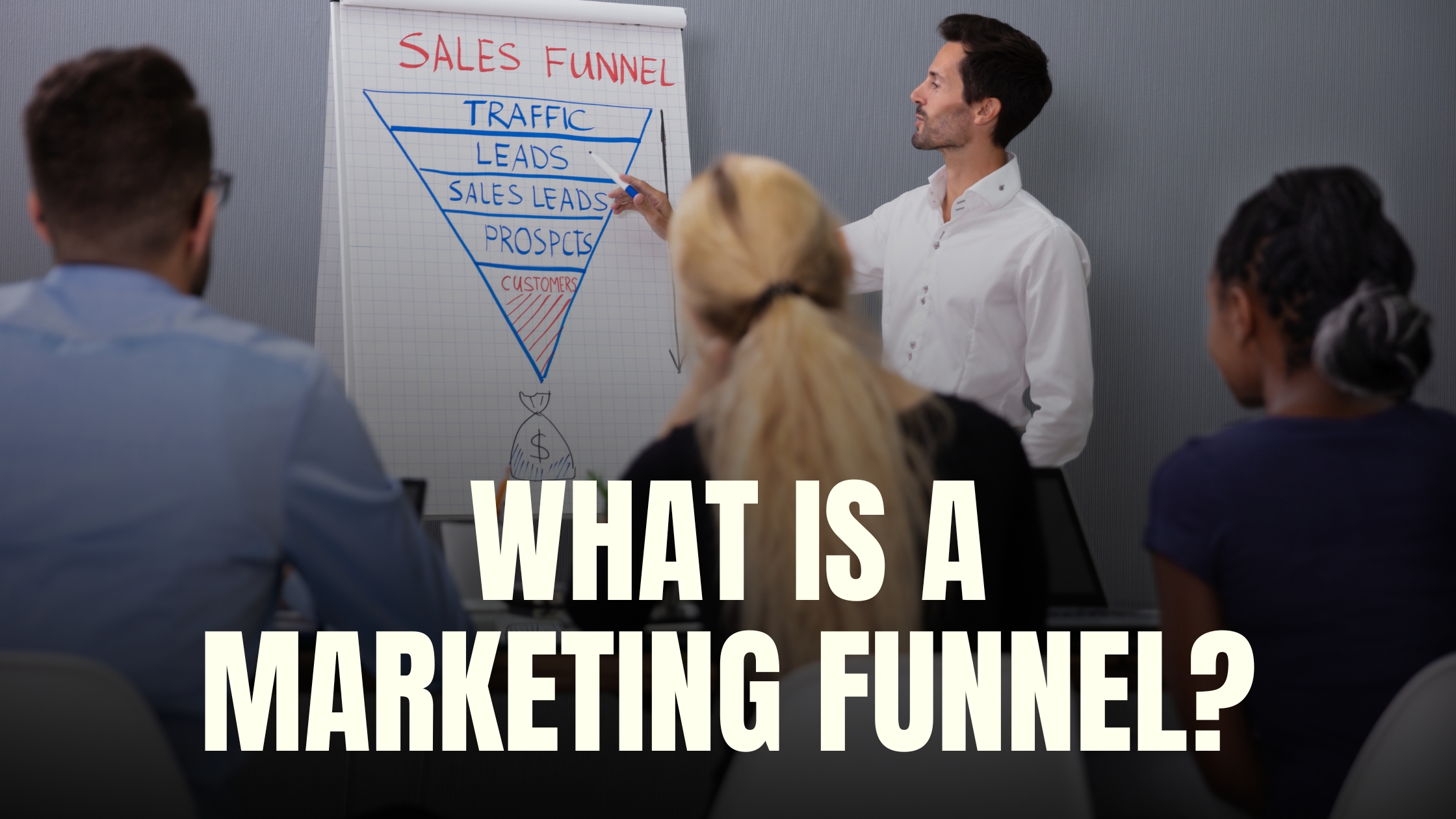
What is a marketing funnel? It’s the simple yet powerful framework that explains how strangers become paying customers and loyal fans.
If you’ve ever wondered why some businesses seem to attract the right clients while others struggle. Your answer often lies in how well they use this funnel.
Think of it as a roadmap. At each stage, your audience takes another step closer to trusting you, choosing your product, and sticking around for the long term.
Without a funnel guiding that journey, you’re leaving too much to chance, which in an ever competitive market, isn’t enough.
So, once you understand how a marketing funnel works, you can unlock strategies that bring clarity, consistency, and growth to your career or business.
Simple Definition of a Marketing Funnel
A marketing funnel explained is essentially a visual map of how your potential customers progress. From discovering your brand, to considering your offerings, to buying, and finally to staying loyal and recommending.
It aligns with the customer journey funnel by breaking this process into clear stages, which are awareness, consideration, conversion, retention & advocacy. This is so you can tailor content and engagement at each step.
When you understand each stage of a marketing funnel, you can predict more precisely how many leads will convert and which marketing funnel tools to use to improve those numbers.
In a UK government-commissioned research report, online marketplaces now make up nearly 30 % of all retail sales. That means a huge portion of retail customer journeys happen fully or partially online.
Making digital marketing funnels critically important. Also, from Ruler Analytics analysis over 100 million data points, the average conversion rate across fourteen industries globally is 2.9 %.
This gives you a benchmark that without a reliable funnel strategy, many leads are slipping away before you even know it.
How the Funnel Explains the Buyer’s Journey
Imagine walking into a shop for the first time. You look around, see something interesting, ask a few questions, maybe even try it out before you decide to buy. That process is what the buyer’s journey looks like.
And the marketing funnel is simply a clear way of mapping it out.
The marketing funnel explained is simply a map of how people move from discovering your brand to becoming loyal customers. It mirrors the buyer’s journey, showing each stage where prospects shift from awareness to consideration
Then to conversion and finally to advocacy. By viewing the customer journey funnel this way, you can understand their needs at every step and use the right funnel strategy UK to guide them forward.
Read also:
Why Businesses Use Marketing Funnels
A marketing funnel explained is more than just a theory. It is a practical framework that helps businesses create order in what could otherwise be a chaotic process. Customers rarely buy instantly.
They need information, reassurance, and value before they make a decision, and the funnel provides a structured way to meet those needs.
Businesses rely on the customer journey funnel to track how people interact with their brand over time. By doing so, they can predict behaviour, personalise messaging, and allocate resources more effectively.
This focus ensures that marketing and sales teams are aligned and working toward the same goal.
Here’s why marketing funnels are so widely used:
- They help you understand customer behaviour, showing where leads drop off and where they stay engaged.
- They provide clarity for both marketing and sales teams, ensuring everyone knows which stage of the funnel a prospect is in.
- They enable better targeting, allowing campaigns to be crafted around the needs of each stage in the funnel strategy UK.
- They improve conversion rates, because you’re no longer guessing—you’re guiding prospects step by step.
- They build long-term loyalty, as full funnel marketing takes into account not just the first sale but also retention and advocacy.
Key Stages of a Marketing Funnel Explained
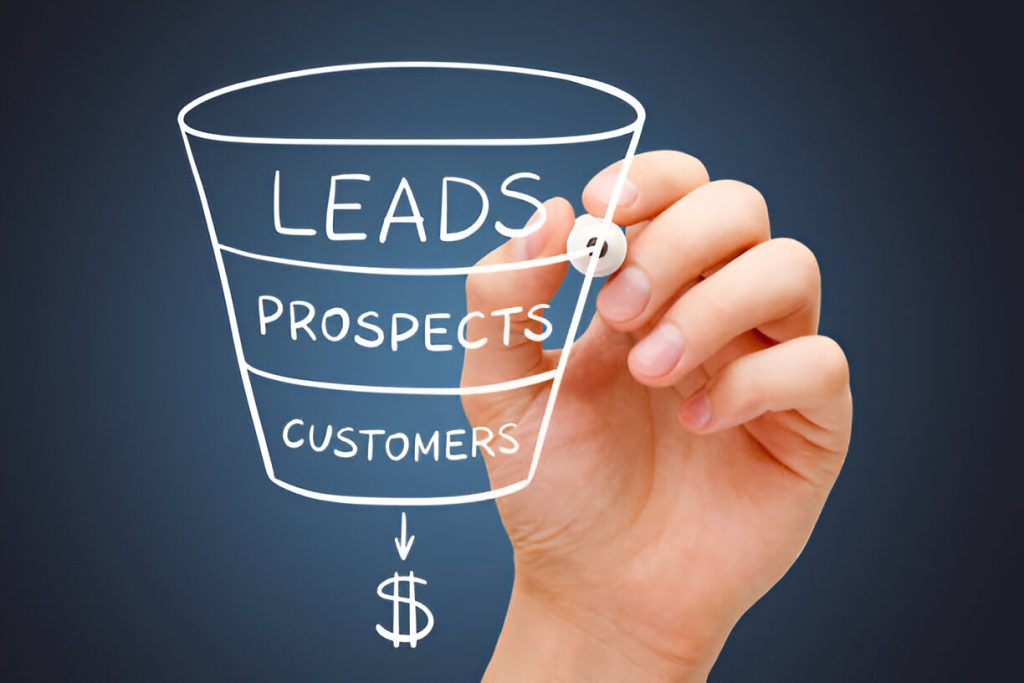
Every marketing funnel explained has a series of stages that represent the customer journey funnel from start to finish. These stages help you understand what your audience is thinking and feeling at each point, and they give you a clear plan for guiding them forward.
Awareness – Attracting Potential Customers
This is the very top of the funnel, where people first discover your brand. They might see a social media post, read a blog (like YOU are doing right now), or hear about you from a friend.
The goal here isn’t to sell but to spark curiosity. By creating content that solves small problems or answers questions, you make strangers stop and pay attention. Think of awareness as your chance to wave and say, “Hey, we’re here, and we can help.”
Consideration – Nurturing Leads With Value
Once people know you exist, they start asking, “Can this brand really solve my problem?” This is where you build trust. Sharing useful guides, case studies, or digital marketing funnel examples shows your expertise and makes you memorable.
At this stage of the marketing funnel, you need to give without asking too much in return. The more value you add, the more your audience begins to see you as the obvious choice.
Conversion – Turning Prospects Into Customers
Well, this is where interest turns into action. Conversion is the stage where your prospect finally says “yes” and becomes a customer. Maybe they buy your product, sign up for your service, or enrol in a programme like RKY Careers’ Digital Marketing Bootcamp.
At this point, clear calls to action, smooth processes, and persuasive messages make all the difference. Therefore, if you’ve guided them well through awareness and consideration, conversion feels natural, not forced.
Retention & Advocacy – Keeping Customers Loyal
But the funnel doesn’t end with conversion, it evolves. Retention is about keeping customers happy so they return, while advocacy is when they start spreading the word about you.
Loyalty programmes, personalised support, and ongoing communication all play a role here. When done right, this stage transforms satisfied buyers into brand ambassadors who recommend you without being asked.
That’s the magic of full funnel marketing: it doesn’t just win customers, it keeps them for life.
Read also:
Types of Marketing Funnels Used Today
Not all funnels are created equal. Depending on your audience, industry, and goals, the customer journey funnel can take different forms. Knowing these variations helps you choose the right funnel strategy UK to match your needs and market.
B2B vs B2C Marketing Funnels
| Aspect | B2B Funnel | B2C Funnel |
|---|---|---|
| Decision-Makers | Multiple stakeholders, longer approval | Individual customer, faster decision |
| Funnel Length | Longer, multi-stage process | Shorter, often direct to purchase |
| Content Needed | Case studies, demos, whitepapers | Ads, reviews, social proof |
| Sales Cycle | Weeks or months | Minutes to days |
| Example | Software company selling to enterprises | Clothing brand selling to individuals |
B2B funnels tend to be longer and more detailed because businesses usually need time to evaluate before making a purchase. There are multiple stakeholders, meetings, and comparisons involved.
On the other hand, B2C funnels are often shorter and faster, since customers usually make personal buying decisions more quickly.
Understanding this difference is vital. Because the way you communicate in a B2B funnel (case studies, whitepapers, demos) will not be the same as in a B2C funnel (ads, product reviews, social proof).
Digital Marketing Funnels (Email, Social, SEO, PPC)
| Channel | Role in the Funnel | Example Use Case |
|---|---|---|
| Email Marketing | Builds trust, nurtures leads | Sending product tips or discounts |
| Social Media | Drives awareness and engagement | Instagram reels, LinkedIn posts |
| SEO | Attracts organic traffic at the awareness stage | Blog posts answering common questions |
| PPC Advertising | Creates instant visibility and conversions | Google ads for quick sales |
Now, this is where modern marketing really shines. Digital marketing funnel examples show how brands use email campaigns, social media content, search engine optimisation, and pay-per-click ads to guide people through the funnel.
For instance, an engaging Instagram video might spark awareness, while a targeted email campaign nurtures consideration. Each digital channel plays a role in moving people closer to conversion, and the best results happen when they all work together in one full funnel marketing plan.
Full-Funnel Marketing vs Short Funnels
| Funnel Type | Focus Area | Strengths | Limitations |
|---|---|---|---|
| Short Funnel | Awareness and conversion only | Quick wins, simple execution | Misses retention and advocacy |
| Full-Funnel Marketing | Awareness, consideration, conversion, retention, advocacy | Long-term growth, loyal customers, strong brand equity | Requires more planning and resources |
Some businesses prefer to focus only on a short funnel, targeting just awareness and conversion. It works for quick sales but often misses the bigger picture.
Full funnel marketing, on the other hand, captures everything. From attracting attention to retaining loyal customers and turning them into advocates.
The bottom line is that Short funnels may give you quick wins, but full funnel marketing creates long-term growth and stronger customer relationships.
Benefits of Using a Marketing Funnel
At this point, you already know that a marketing funnel is more than just a diagram. It’s a strategy that brings order and predictability to how you attract, engage, and retain customers.
Without one, your marketing feels scattered, but with it, every stage of the customer journey funnel becomes a stepping stone toward lasting growth.
Let’s break down the key marketing funnel benefits that make it so valuable.
Understanding Customer Behaviour
One of the biggest strengths of a funnel strategy UK is that it helps you truly understand how your audience behaves. You see where they engage, where they hesitate, and where they drop off.
This insight allows you to refine your messaging, fix gaps in your approach, and create a smoother journey that keeps prospects moving forward.
Aligning Marketing and Sales Teams
Here’s the deal: when marketing and sales teams work in silos, opportunities are lost. The marketing funnel explained provides a shared framework that aligns both teams around the same goals.
Marketing knows when a lead is ready to be handed over, and sales knows exactly how warm that lead is. The result is better collaboration and a stronger conversion process.
Read also:
Improving ROI Through Structured Campaigns
Without structure, campaigns are just shots in the dark. A funnel gives you a blueprint for targeting, nurturing, and converting, which naturally improves your return on investment.
By using digital marketing funnel examples such as email automation or social media ads at the right stage, you spend less and achieve more. Therefore, it is safe to say that a structured funnel strategy pays you back with measurable results.
Tools to Build and Track a Marketing Funnel
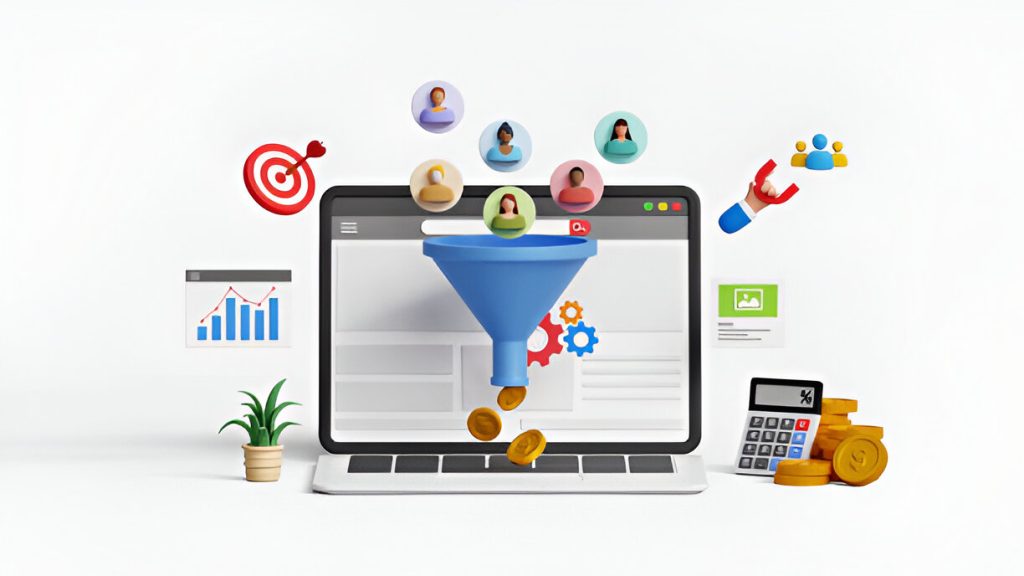
Even the best funnel strategy UK won’t work without the right tools to support it, right? Think of tools as the engine that keeps the customer journey funnel running smoothly. They help you capture leads, track performance, and optimise every stage of the marketing funnel explained.
CRM and Email Automation Platforms
Customer Relationship Management (CRM) systems are the backbone of many funnels. They store customer information, track interactions, and make sure no lead slips through the cracks.
Add email automation to the mix, and you can send personalised messages that nurture leads at scale. Platforms like HubSpot, Salesforce, or Mailchimp are excellent marketing funnel tools for keeping communication consistent and effective.
Analytics Tools for Funnel Tracking
Now, imagine knowing exactly how people move through your funnel. Analytics tools give you that power by showing where users drop off and where they convert.
Google Analytics, Hotjar, and Mixpanel are great examples that help you refine your full funnel marketing efforts. With data in hand, you can identify weak spots and make decisions that actually improve performance.
A/B Testing for Funnel Optimisation
Did you know that even small tweaks can create big wins? A/B testing allows you to compare two versions of a page, email, or ad to see which performs better. Over time, these tests help you optimise every stage of the funnel, from awareness to conversion.
It’s a simple but powerful way to ensure your marketing funnel benefits keep growing with each campaign you run.
Take Your Skills Further with RKY Careers’ Digital Marketing Bootcamp

Learning how a marketing funnel works is powerful, but applying it with expert guidance is what truly sets you apart.
RKY Careers’ Digital Marketing Bootcamp is designed to give you exactly that.
A hands-on, career-focused experience where theory meets practice. No prior experience is required, just the drive to learn and grow.
Here’s what makes this bootcamp different:
- Virtual, expert-led training with live interactive sessions.
- 2-in-1 bonus course package across bootcamps.
- Practical UK work experience through live projects.
- Access to an easy-to-use LMS with recordings for flexible learning.
- Expert CV and LinkedIn optimisation to help you stand out.
- Mentoring and interview prep sessions for career success.
- UK work reference and certificate to strengthen your profile.
- Globally recognised certificate of completion (CPD, ActD, UKRLP).
- Join from anywhere in the world with remote accessibility.
- Learn in-demand tools and methodologies used by top marketers.
- Post-bootcamp support and webinars to keep you updated.
- Opportunities to position for visa sponsorship and high-paying roles.
- Free Artificial Intelligence module to future-proof your skills.
FAQs on What Is a Marketing Funnel?
What are the 4 main stages of a marketing funnel?
The four main stages are awareness, consideration, conversion, and retention or advocacy. Each stage represents a step in the customer journey funnel, guiding prospects closer to becoming loyal customers.
How is a marketing funnel different from a sales funnel?
A marketing funnel explained focuses on attracting and nurturing leads, while a sales funnel deals with closing the deal and turning those leads into paying customers. In short, marketing brings people in, sales seals the agreement.
What is the best tool to create a digital marketing funnel?
Popular marketing funnel tools include CRM systems like HubSpot or Salesforce and automation platforms like Mailchimp. These tools help manage leads, personalise communication, and track progress across the funnel strategy UK.
Can small businesses in the UK use marketing funnels effectively?
Yes, absolutely. Small businesses benefit greatly from using a structured funnel because it helps them maximise limited resources. With digital marketing funnel examples like social media ads or targeted email campaigns, even small teams can guide customers from awareness to advocacy.