Turning Your LinkedIn into a Job Magnet in 2026
If you’re serious about career growth, then turning your linkedin into a job magnet in 2026 is no longer optional. We’ve worked with professionals who sent out hundreds of applications with no results, yet they started receiving recruiter messages within weeks after fixing their LinkedIn strategy.
That shift is not luck. It’s understanding how LinkedIn actually works and using it intentionally.
In this guide, you will learn how to position your profile so opportunities come to you, whether you’re a mid-career professional, career changer, or job seeker targeting the UK or global roles.
Why LinkedIn Is Still the #1 Job Search Platform in 2026
Despite new platforms and AI hiring tools, LinkedIn remains a dominant force in professional recruitment. According to Gitnux’s 2025 social media reporting statistics, 87% of recruiters globally rely on LinkedIn as their primary sourcing platform.
That single insight explains why turning your linkedin into a job magnet continues to outperform traditional job boards. LinkedIn isn’t just a platform; it’s where hiring decisions start.
Further reinforcing this, SQ Magazine’s 2025 linkedin statistics summary found that active LinkedIn users receive significantly more recruiter attention and are up to 4.2× more likely to be contacted than less engaged candidates.
How recruiters use LinkedIn to hire in 2026
Recruiters no longer “browse” profiles casually, they search with precision, using filters, keywords, and insights to find candidates who match exact role requirements.
In fact, around 72% of recruiters use LinkedIn regularly to find higher-quality candidates, according to a recent industry summary by StraightIn.
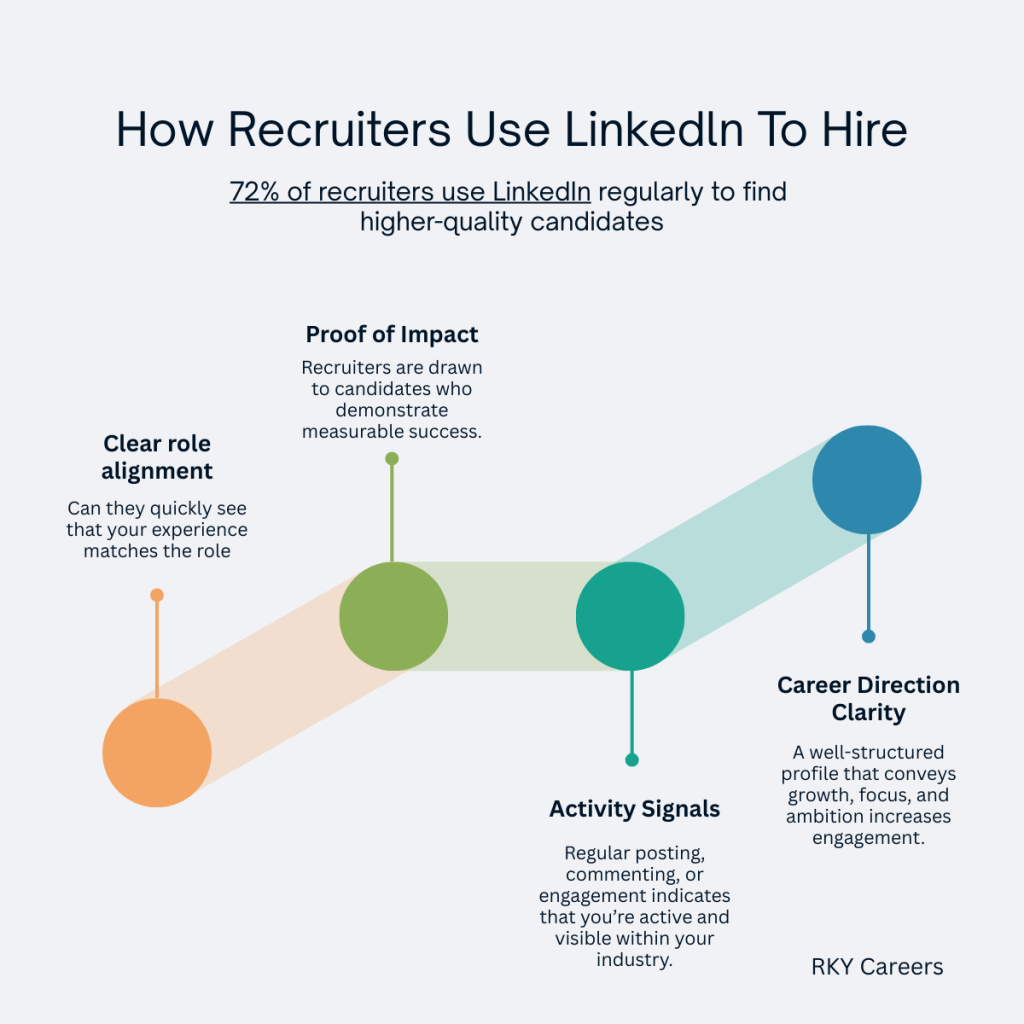
Recruiters typically look for four key signals when evaluating candidates:
- Clear role alignment – Can they quickly see that your experience matches the role? Generic titles or vague summaries are ignored.
- Proof of impact – Metrics, results, and achievements show real contribution. Recruiters are drawn to candidates who demonstrate measurable success.
- Activity signals – Regular posting, commenting, or engagement indicates that you’re active and visible within your industry.
- Career direction clarity – Recruiters want to understand your professional trajectory. A well-structured profile that conveys growth, focus, and ambition increases engagement.
If your profile doesn’t immediately answer the question, “Why should I speak to this person?”, you may remain invisible to recruiters, even if your CV is excellent.
What makes a LinkedIn profile rank in recruiter searches
LinkedIn functions like a sophisticated search engine, ranking profiles according to relevance, completeness, and engagement. This is why optimisation is key, without it, even strong candidates can remain hidden.
Profiles rank higher when they:
- Use role-specific keywords naturally – Include job titles, skills, and industry terms that recruiters search for. Avoid keyword stuffing; context matters.
- Show consistent activity – Posting content, sharing insights, or commenting regularly signals engagement and expertise.
- Have complete experience sections – Fully detailed roles with responsibilities, achievements, and dates increase credibility and search ranking.
- Earn profile engagement – Likes, comments, and shares on your posts contribute to profile visibility, helping your account appear higher in searches.
Turning your LinkedIn into a job magnet starts with optimisation, not random posting. A strategic, fully optimised profile ensures recruiters can find you and immediately recognise your value.
Read Also:
Remote Jobs 2026: How to Get Hired Fast
Interpersonal Skills In The Workplace
Core Elements of a Job-Magnet LinkedIn Profile
A job-magnet LinkedIn profile isn’t designed to impress everyone, it’s designed to attract the right people, including recruiters, hiring managers, and industry peers.
Every element of your profile should be optimised to signal credibility, demonstrate expertise, and highlight your career trajectory.
By focusing on these core elements, you position yourself to turn your LinkedIn into a job magnet rather than waiting for opportunities to stumble upon you.
Headline, summary, and keyword optimisation
Your headline is your LinkedIn SEO title, it’s the first thing recruiters see in search results. A weak, generic headline like:
- “Experienced Professional | Open to Work”
…does little to attract attention. Instead, make it role-specific and keyword-rich, for example:
“Data Analyst | SQL, Power BI, Healthcare Analytics | UK-Focused Roles”
Research by Growleads shows that Turning Your LinkedIn into a Job Magnet in 2026 is crucial as profiles that are fully optimised, including clear headlines, strategic keywords, and complete sections, receive up to 71% higher interview callback rates than less optimised ones, demonstrating the tangible impact of LinkedIn optimisation on recruiter engagement
Your summary section should clearly communicate your value proposition:
- State who you help – Define the audience, team, or business problems you solve.
- Show measurable outcomes – Highlight achievements with metrics or results wherever possible.
- Signal career direction – Outline your trajectory and professional goals to guide recruiters’ perception.
This structured approach ensures recruiters immediately understand your expertise, impact, and career focus, rather than guessing your value. It makes the process of turning your linkein into a job magnet easy
Profile photo, banner, and first impression strategy
First impressions on LinkedIn are critical. Profiles with a professional headshot can receive up to21× more profile views than profiles without photos.
A strong photo signals credibility, professionalism, and approachability. These are key factors in getting recruiters to click through to the rest of your profile.
Your banner image is equally important. It should visually communicate:
- Your role – Make it clear what function or domain you work in.
- Your tools – Highlight the software, methodologies, or skills you specialise in.
- Your industry focus – Include cues that reflect your sector, e.g., finance, healthcare, tech.
A well-crafted combination of photo and banner ensures that recruiters instantly understand who you are and what you do, increasing the likelihood they will engage with your profile.
How to Turn Your LinkedIn into a Job Magnet Step-by-Step
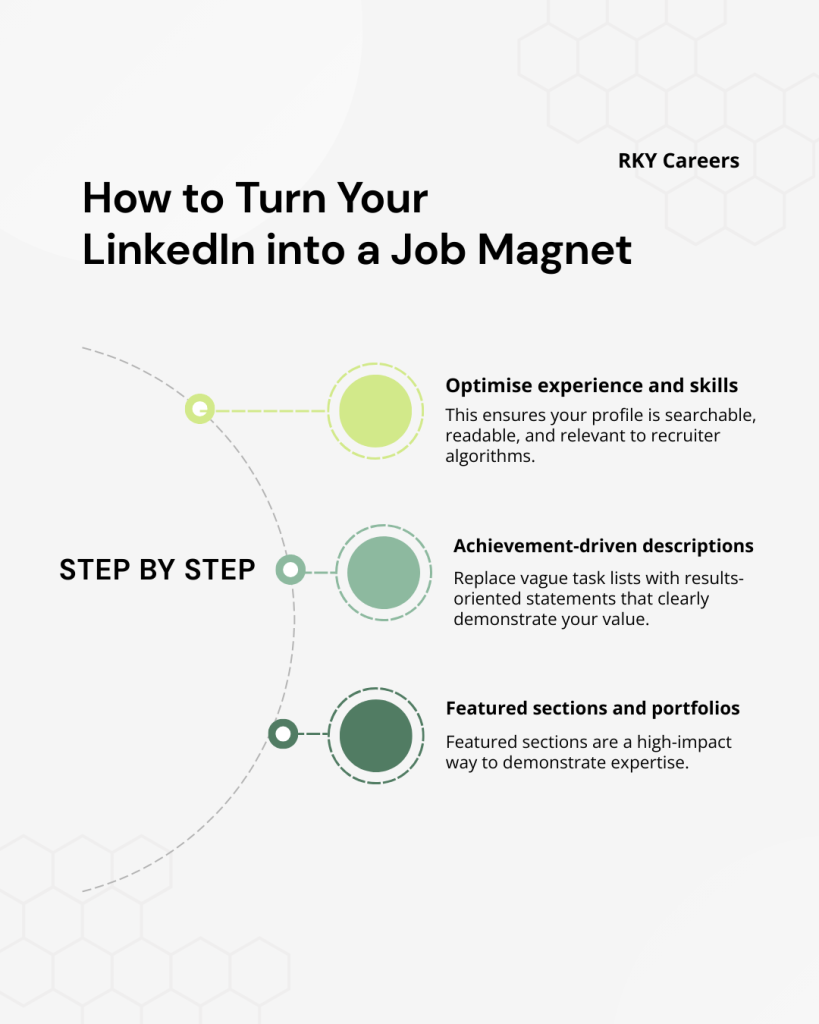
By systematically optimising your profile, you ensure recruiters not only find you but also quickly recognise your value.
Optimising experience and skills for recruiter algorithms
Optimising your experience and skills ensures your profile is searchable, readable, and relevant to recruiter algorithms.
For each role, make sure to include:
- Clear job title – Use the exact titles recruiters search for in your target industry.
- Tools used – Highlight software, methodologies, or systems you leveraged to deliver results.
- Business outcomes – Quantify your contributions with metrics, e.g., efficiency improvements, revenue gains, or cost reductions.
- Industry context – Provide enough context so recruiters can quickly see how your experience applies to their sector.
Read Also:
How to Build a Strong Tech Portfolio in 2026
2026 Career Paths in Healthcare, Tech, Finance, and Creative Industries
Writing achievement-driven LinkedIn descriptions
Recruiters are looking for impact, not responsibilities. Replace vague task lists with results-oriented statements that clearly demonstrate your value.
For example:
- ❌ “Responsible for data reporting”
- ✅ “Built dashboards that reduced reporting time by 45% across three teams, improving cross-department decision-making.”
This mirrors the approach recruiters expect in interviews: evidence of results, not just job duties. Strong achievement-driven descriptions make it easier for recruiters to justify reaching out to you.
Read Also:
Difference Between a Job and a Career
How to Discover Career Pathway and Why It Counts
Using featured sections and portfolios effectively
Featured sections are a high-impact way to demonstrate expertise.
Use featured sections to showcase:
- Case studies – Demonstrate problem-solving and results.
- GitHub or portfolio links – Provide tangible proof of technical or creative work.
- Articles or thought leadership pieces – Show industry knowledge and engagement.
- Project screenshots or presentations – Give recruiters a visual sense of your capabilities.
This is especially effective for career changers targeting UK roles, as it provides tangible evidence of skills and expertise even if your previous experience is in a different industry.
Content Strategy That Attracts Recruiters on LinkedIn
Posting content on LinkedIn isn’t just about staying active, it’s about strategically demonstrating your expertise, professionalism, and availability.
Recruiters evaluate candidates not only by their profiles but also by their activity.
A well-crafted content strategy signals credibility, thought leadership, and engagement.
The key is to balance visibility with professionalism. You want recruiters to notice your insights and achievements without making posts appear self-serving or desperate.
What to post to signal expertise and availability
To position yourself as an expert and active candidate:
- Share industry-relevant insights
Post articles, summaries, or commentary on trends in your field. For example:- “Here’s how AI is transforming healthcare analytics in 2026 and what professionals should focus on to stay competitive.”
- Showcase your achievements
Highlight recent projects, certifications, or completed training that demonstrate tangible results. Use metrics when possible:- “Implemented a dashboard that cut reporting time by 35%, improving decision-making speed across teams.”
- Curate content thoughtfully
Share and comment on posts from industry leaders to signal that you’re informed and engaged. - Indicate your availability subtly
You don’t need to explicitly announce you’re job hunting. Instead, demonstrate openness by adding context to achievements or sharing learning experiences that naturally imply career growth:- “Excited to apply these new skills in analytics to solve complex business challenges.”
This combination signals expertise while positioning you as approachable and proactive, increasing recruiter interest without overtly “selling” yourself.
How to stay visible without sounding desperate
Visibility is critical, but over-posting or overly promotional content can backfire. Follow these strategies:
- Maintain consistency, not quantity
Aim for 2–3 high-quality posts per week rather than daily updates. Regular, focused content keeps your profile active without overwhelming your network. - Engage with your network authentically
Comment on posts, congratulate milestones, and participate in discussions meaningfully. Avoid generic phrases like “Great post!”; instead, provide insight or a thoughtful question. - Leverage multimedia content
Videos, charts, and infographics are highly engaging and increase the likelihood of recruiter attention. For example, sharing a 1–2 minute video explaining a recent project result can showcase both expertise and communication skills. - Avoid overt job-seeking language
Phrases like “Looking for a job” or “Please hire me” reduce credibility. Focus on thought leadership, learning, and career development instead.
Read Also:
Personal Branding for Job Seekers: What Matters Most in 2026
Legit Remote Jobs in the UK for Overseas Workers
LinkedIn Networking Techniques That Lead to Interviews
Proper networking on Linkedln not only increases your visibility but also opens doors to opportunities that aren’t publicly advertised.
Effective LinkedIn networking is strategic. This is because it focuses on building relationships with hiring managers, industry leaders, and peers while creating meaningful interactions.
Professionals who implement these techniques consistently are far more likely to convert LinkedIn connections into actual interviews, boosting the ROI of every hour spent on the platform.
How to connect with hiring managers strategically
Connecting with hiring managers requires a thoughtful approach:
- Identify the right contacts
Use LinkedIn search filters to find hiring managers in your target roles, departments, or companies. Pay attention to their activity, posts, and shared content to understand their interests and priorities. - Engage before connecting
Before sending a request, like or comment on a few of their posts. This makes your connection request more familiar and less cold. - Send personalised connection requests
Avoid the default LinkedIn message. Instead, include:- Your reason for connecting
- Shared interests or experiences
- Value you bring to the connection
- Maintain professionalism
Avoid asking for a job in your initial request. Your goal is to start a relationship, not a transactional conversation.
By following these steps, you position yourself as a credible professional, increasing the chance that hiring managers will view your profile and engage with you. This is how turning your linkedin into a job magnet actually delivers interviews.
Message templates that open real conversations
Once your connection is accepted, the next step is initiating meaningful conversations. Here’s how to do it effectively:
- Reference their content or expertise
Start the conversation by highlighting something they’ve shared or achieved. “I saw your post on predictive analytics in finance. Your insights on streamlining reporting were impressive.” - Introduce your relevant experience
Briefly explain your current work or recent achievements. “I recently implemented a reporting dashboard that reduced processing time by 35% across multiple teams.” - Ask for guidance, not a job
Phrasing your message as a request for advice or insight is far more effective than directly asking for employment. “I’d love your perspective on how professionals in this space can best showcase analytics skills to hiring teams.” - Follow up strategically
If there’s no response, wait for a few days before sending a polite follow-up. Avoid pushing for a job, it can damage credibility.
Common LinkedIn Mistakes That Kill Job Opportunities in 2026
Even the best LinkedIn strategies can be sabotaged by simple mistakes that go unnoticed. Recruiters skim profiles quickly, and a single error or oversight can prevent you from being considered for roles.
In 2026, avoid profiles with incomplete information or generic content. This is because thay are far less likely to receive recruiter attention.
Here are some frequent mistakes and how to avoid them.
Keyword stuffing, vague profiles, and inactivity
One of the most common errors is overloading your profile with keywords without context. While it’s important to include relevant skills and job titles, keyword stuffing makes your profile read unnaturally and may lower your search ranking on LinkedIn.
Equally problematic is a vague or generic summary. Recruiters need to understand what you do, what you’ve achieved, and how you add value within seconds of landing on your profile. For example:
- ❌ “Experienced professional open to opportunities.”
- ✅ “Data analyst with 5 years in healthcare analytics, building dashboards that improved reporting efficiency by 45%.”
Finally, inactivity can silently kill opportunities. Profiles with no posts, updates, or engagement for months are deprioritised in recruiter searches. Regular engagement signals that you are active, professional, and up-to-date with industry trends.
What recruiters immediately skip
Recruiters are busy and make split-second decisions about whom to engage with. Even strong candidates can be overlooked if they fall into common traps:
- Empty or incomplete summaries – no context about your career goals or achievements
- Unexplained gaps – missing education or career history raises red flags
- Mismatched or misleading job titles – titles that don’t reflect actual responsibilities can cause confusion
- Lack of profile engagement – recruiters are more likely to skip profiles with no activity or posts
By fixing these issues, you improve both your discoverability in searches and the likelihood of recruiters clicking through to your experience and portfolio.

At RKY Careers, we help professionals like you optimise LinkedIn profiles, build portfolios, and map career paths that attract recruiters. Our personalised bootcamps and career branding services give you the tools and guidance to land UK and global roles faster.
BOOK A CONSULTATION WITH US TODAY
Read Also:
Best Tech & Digital Skills to Learn for 2026
FAQs: Turning Your LinkedIn into a Job Magnet in 2026
How long does it take to start getting job offers from LinkedIn?
Most professionals begin seeing recruiter messages within few weeks after optimising their profile and becoming active. Job offers depend on role demand, experience alignment, and networking quality, not just profile changes.
Turning your LinkedIn into a job magnet in 2026 doesn’t happen overnight, but consistent activity significantly increases your chances of attracting offers.
Which LinkedIn keywords attract recruiters the fastest?
Recruiters search using job titles, tools, and industry-specific terms. Use keywords that match real job descriptions, especially in your headline, experience, and skills sections. This is a critical step in turning your LinkedIn into a job market that naturally draws recruiter attention.
Should I enable “Open to Work” in 2026?
Yes. When used strategically, visibility to recruiters increases, but ensure your profile positioning remains professional and value-driven to avoid appearing desperate.
How often should I update my LinkedIn profile for best results?
Update your profile every 30–60 days, especially after gaining new skills, completing projects, or shifting career direction. Consistent updates help maintain recruiter visibility.