Career Change Bootcamp Success Story UK
Switching careers can feel scary, but it can also feel simple with the right steps. In the UK, the career change bootcamp success story is a motivation for many to start their career journey.
The career change bootcamp success story has helped many people move fast. Hearing other stories of how they learned usable skills, built portfolios, and got linked to employers might just be what you need to kick-start your tech career journey.
This article explains why bootcamps are growing, shows real UK career change bootcamp success stories, lists what made those moves work, and offers practical advice for choosing a course even if you want to make a career change at 40.
See Also:
- Career Change for Stay-at-Home Parents in Birmingham
- Fateemah’s UK Civil Service Product Manager Interview Success
Why Career Change Bootcamps Are Gaining Popularity in the UK
Bootcamps have become popular because hiring habits in the UK changed. Employers now value real skills and work samples. For that reason, short, practical courses fit well.
Also, national schemes and funding have expanded opportunities. For example, government-backed Skills Bootcamps offered guaranteed interviews and strong pathways into jobs.
As a result, more people see bootcamps as a fast route to paid work. Moreover, bootcamps focus on portfolios and interview prep, not just theory. So, career changers get real tasks and proof of ability.
These realities help explain why bootcamps rose quickly in the UK during 2024–2025 and why career change bootcamp success story rose as well.
Rise of reskilling and upskilling in 2025
Reskilling programmes UK are now widely promoted. Employers face digital change and need staff who can hit the ground running.
For this reason, many adults choose bootcamps to learn data, code, design, or marketing skills.
Also, national announcements and funding increased bootcamp places and trust in these short courses. People who wonder how to switch careers in the UK 2025 find bootcamps an affordable option.
In short, reskilling and upskilling grew because the market favours demonstrable work. Bootcamps meet that need by focusing on project work, mentor feedback, and employer links.
Why professionals are turning to short, intensive training
Many mid-career professionals cannot take years off to study. So they choose short, intensive training. Bootcamps pack practical learning into weeks or months.
They include hands-on labs, real projects, and mentor feedback. Also, they add career services that help with CVs and interviews.
Therefore, professionals can learn while working or minimise time away from income. Furthermore, the best bootcamps for career changers UK offer part-time and evening options.
As a result, people can often switch paths with much less disruption than a degree would cause. This speed and focus make bootcamps attractive for busy professionals.
Sectors with the highest bootcamp job placements
Not every field has equal demand, but some sectors show strong placement for bootcamp grads.
Tech roles such as software engineering, data analytics, UX design, cybersecurity, and digital marketing often top placement charts. This is why a number of people opt for Affordable Digital Marketing Bootcamps in London.
For instance, data analytics bootcamp success UK shows solid employer demand when a course teaches real-world tools and portfolio projects. This has listed data analysis has one of the Best Career Paths in 2026.
Similarly, coding bootcamp job success UK is common, where bootcamps include full-stack projects and interview prep.
Digital marketing bootcamp UK reviews often highlight quick freelance or junior roles for grads who ran real campaigns. Always check each provider’s outcome report to see verified placement rates for the exact track you want.
Real UK Career Change Bootcamp Success Stories
Real Career change bootcamp success story help us see what works. Below, four graduates share short, clear journeys. Each story shows the practical moves, the skills learned, and the hiring step.
Also, each story shows how mentorship, demo days, and portfolios helped. Read the profiles as templates. Then copy the steps that fit your life and target role.
These are practical examples of UK career change bootcamp success stories you can model when planning a move in 2025.
Multiple Visa Sponsorship roles after PM/BA Bootcamp— RKY Careers
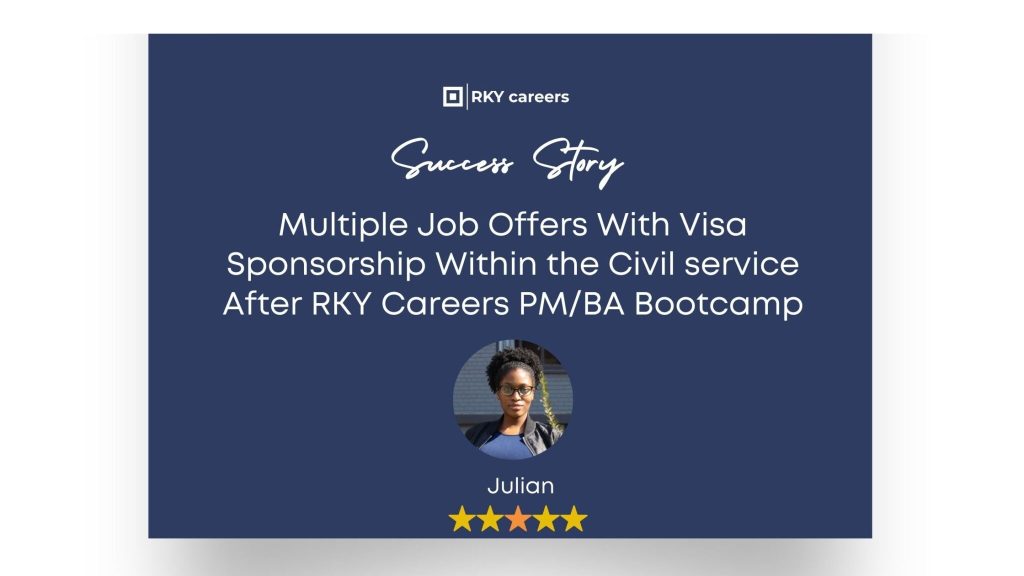
The story of Julian is what we always love to hear in a career change bootcamp success story. Julian has been searching for roles but with no results.. She enrolled in a PM/BA Bootcamp at RKY Careers, which offered real-time project and incident-response practice.
She completed a simulated project and a capstone that mimicked real work. Mentors advised her on CV language and interview tasks.
She practiced technical answers and used her capstone as proof in interviews. Within months, she started getting interview calls in the civil service industry with visa sponsorship offers..
Her path shows that bootcamps with practical projects can move career changers into specialist roles fast when learners focus on hands-on tasks and outcomes.
Read Also:
What Made Their Career Transition a Success
Across these stories, five factors repeat. First, clear, project-based learning built proof of skill. Second, structured mentorship gave fast feedback and job tips.
Third, portfolio work converted learning into evidence that employers could judge. Fourth, career support, such as CV checks and demo days, connected grads to hiring teams.
Finally, personal effort and consistency turned small wins into job offers. In sum, training plus proof plus support equals higher hiring odds.
If a bootcamp offers all three, it greatly raises your chances of a successful career change in the UK market.
How structured mentorship made the difference
What thing common in most career change bootcamp success story is Mentorship. Mentors do more than teach. They show what hiring managers look for. They review projects and suggest small, high-impact changes. They run mock interviews and improve CV wording.
For many learners, mentors also provide industry context and introductions. That network effect matters.
A mentor’s practical feedback often cuts months off a job search. Mentors also help learners shape capstone projects to be interview-ready.
In short, structured mentorship reduces guesswork, builds confidence, and focuses effort on what gets hires. That is why mentorship appears in so many UK career change bootcamp success stories.
Importance of career support and job guarantees
Career services often decide outcomes. Good teams run CV clinics, mock interviews, and employer matchmaking.
Some bootcamps link graduates to hiring partners or run demo days. A few providers even offer a bootcamp job guarantee UK-style promise, though terms vary.
For learners, a job guarantee can reduce risk if the eligibility rules are fair. However, verify what “placed” means and read the fine print.
Government-backed Skills Bootcamps also promise interviews with local employers upon completion, which can speed hiring for many learners. For instance, you can take an Intensive Data Analysis Bootcamps with Career Support UK.
Career support and transparent outcomes are vital when choosing a bootcamp.
Networking and building a portfolio during bootcamp
Networking and a strong portfolio work together can land you your next 6 Figure Remote Jobs 2026. Bootcamps often schedule guest talks, demo days, and hiring events. These let learners meet employers and show their work.
Also, a clear case study that explains tools, process, and impact is more persuasive than vague claims. Employers want proof and context.
In many sectors, recruiters prefer portfolios over degrees when the evidence is strong. So, attend events, request mentor introductions, and publish clean case studies.
That combination often leads to interviews and job offers faster than applying blind to roles.
See Also:
Lessons Learned from UK Bootcamp Graduates
Bootcamp grads repeat a few clear lessons. First, break big goals into small, daily wins. Second, keep projects short and public. Third, practice interviews early and often.
Fourth, use LinkedIn to show progress and ask for introductions. Fifth, treat the job search as a sprint after graduation: outreach, networking, and portfolio updates.
These simple steps reduce imposter feelings and speed job returns. Finally, be patient and steady; most graduates secure roles in months, not weeks, depending on market conditions and effort.
Overcoming imposter syndrome
Imposter syndrome is common, yet beatable. Overcoming Imposter Syndrome in Your Career Journey is a necessity for growth. Finish one project, then another. Share progress with peers and mentors.
Mentors normalize mistakes and give targeted fixes, helping you to Overcome Interview Anxiety and Project Confidence. Also, public case studies let recruiters see real results, not just claims.
Over time, evidence replaces doubt. That steady proof and regular feedback are why many graduates move from “I can’t” to “I did.”
For career changers, the shift from learner to hireable candidate often happens as soon as the first portfolio piece is completed and shown to someone in the industry.
Balancing bootcamp intensity with full-time work
Balancing study with a job takes planning. Choose a bootcamp with part-time or evening tracks if needed.
Time-block daily learning and protect those slots. Use focused sprints and weekend project time. Also, tell family and colleagues about your schedule to reduce interruptions.
When employers sponsor time or offer flexible hours, use that support. Bootcamps with clear timelines and recorded lessons make the task easier.
In effect, planning and a supportive program let learners keep income while reskilling, which reduces financial stress during a career switch.
Using LinkedIn and personal branding to get noticed
LinkedIn is a practical job tool, and you need to understand Best Practices for LinkedIn Posts. Post short project summaries and screenshots. Use clear headlines that show new skills.
Also, publish mini case studies and tag mentors or alumni. Recruiters search for relevant skills and portfolio links.
A concise profile and active posts help you appear in searches and messages. Ask alumni for endorsements and connections.
Finally, reach out with a short message and a single portfolio link when contacting potential employers. This simple approach often generates replies and interviews faster than long, cold emails.
See Also:
- From Support Worker to Onboarding Advisor After RKY’s UK Compliance Bootcamp; Oluwatosin’s Success Story
- From Overwhelmed to Offer: Mrs Adefioye’s Digital Transformation Test Lead Success
Choosing the Right Career Change Bootcamp in the UK
Picking a bootcamp is a practical step and can help you Decide What Career Is Right For you.
First, match the curriculum to the job role you want. Second, check mentor access and career services. Third, verify published outcome data and alumni reviews.
Fourth, review funding options and guarantee terms. Fifth, speak to current students and alumni on LinkedIn. Doing this homework reduces risk.
Also, pick a format that matches your life: full-time for fast changes or part-time for steady learning. Ultimately, the right bootcamp balances clear projects, good mentorship, and honest career support.
What to look for in course structure and duration
Look for hands-on projects, mentor feedback, and a final capstone that employers value. Also, check the weekly time commitment and whether part-time options exist.
A practical course mixes short lessons with daily coding or project time. Mentor-to-student ratio matters; more access means more feedback.
Good courses also include mock interviews, portfolio reviews, and demo days. For busy learners, recorded lessons and flexible deadlines help.
In short, course length matters less than whether the structure leads to demonstrable outcomes employers can assess.
Checking alumni outcomes and employment rates
Ask providers for current outcome reports and definitions of “placed.” Trusted bootcamps publish verified placement rates, median time-to-hire, and salary ranges.
For public programmes like Skills Bootcamps, government data shows completions and outcomes, and many reports note positive employment moves after training.
Always read these reports and confirm with alumni on LinkedIn. If outcome data is missing, be cautious. Transparent employment rates and clear reporting are strong signs of a trustworthy bootcamp.
Funding options and flexible payment plans
Bootcamps offer varied funding: payment plans, loans, income-share agreements, scholarships, and government-funded Skills Bootcamps.
Some government schemes reduce or remove fees for eligible learners and may include guaranteed interviews. Income-share agreements let some learners pay later based on earnings.
Always read terms, refund policies, and job guarantee conditions. If cost is a barrier, search for Skills Bootcamps or employer-funded reskilling that reduces upfront cost. Comparing the total cost with the likely time-to-hire helps judge value.
Is a Bootcamp Worth It for Career Changers in 2025?
A bootcamp can be worth it when it combines good projects, mentorship, and transparent career support.
In many UK cases, Skills Bootcamps and reputable private providers led to positive outcomes and quick job moves. That said, the market varies by role and year.
Always weigh cost, time, and outcome data. If you need speed and practical work, a bootcamp often beats a long, costly degree.
However, vet providers carefully and plan to do steady outreach and portfolio updates after graduation. With the right choice and effort, a bootcamp remains a practical route to a new career in 2025.
Comparing ROI with traditional education
ROI depends on time-to-hire and salary uplift. Degrees often take years and more money. Bootcamps aim to shorten the time to job-ready skills and therefore can offer quicker returns.
Some reports and government studies show that many bootcamp graduates gain useful skills and positive job outcomes. Yet ROI varies by provider, role, and local demand.
To judge ROI, compare total cost, expected starting salary, and realistic months-to-hire. For many mid-career changers, a shorter bootcamp yields faster payback than redoing a full degree.
How long does it take to land a job after graduation
Time-to-hire varies, but outcome reports commonly use a six-month window for placement figures. Many top bootcamps report median hires within 60–180 days when market demand is strong.
For active sectors like data and development, employers often hire within 2–3 months of graduation if portfolios are strong.
That said, your timeline depends on networking, portfolio quality, interview practice, and market conditions.
Plan for several months of active job search and use freelance or short contract work to bridge income while hiring.
Combining bootcamp training with freelancing or internships
Combining short freelance projects or internships with bootcamp work helps build experience and income. Small client projects create portfolio pieces and show you can deliver.
Internships add workplace routines and hiring references. Many bootcamps encourage live briefs that mimic client work. Doing this work while learning helps convert skills into paid tasks.
In tight markets, this approach often leads to faster hires or steady contract work until a permanent role appears. It is a practical bridge between learning and employment.
Read Also:
- How the RKY Careers UK Compliance Bootcamp Marked a Turning Point in My Career: Ikechuwku’s Success Story
- Why Career Progression Is Important
Conclusion
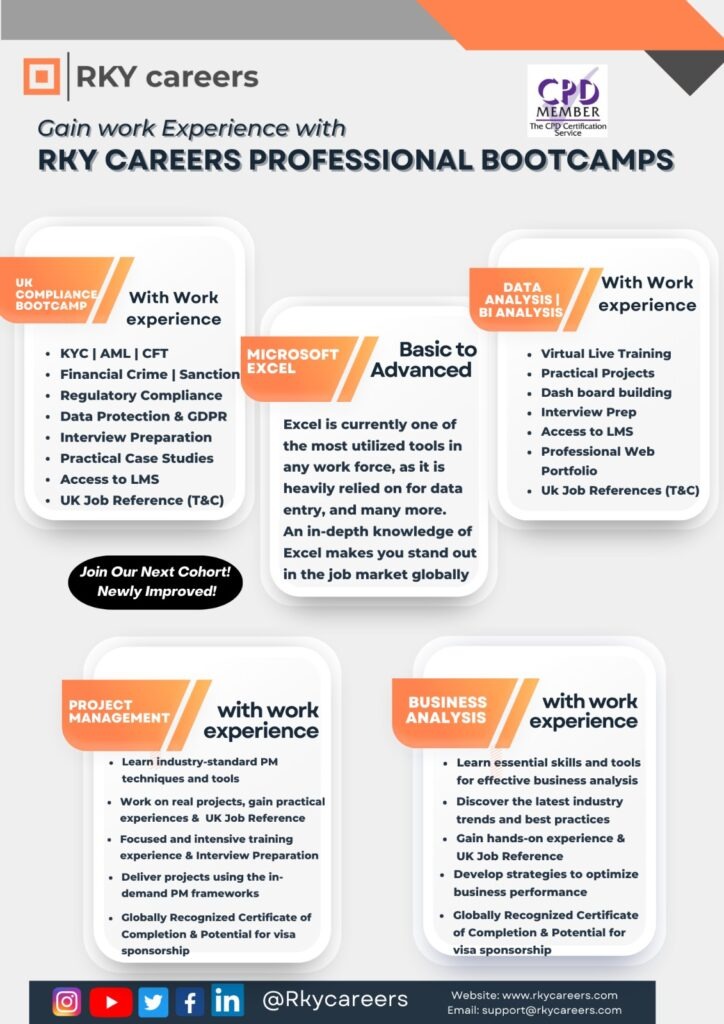
A career change in 2025 does not have to feel uncertain when the right support is in place. RKY Careers Bootcamp is built for outcomes, not theory.
Learners work on real-time projects, simulated incidents, and role-specific capstones that reflect actual UK job demands.
With hands-on mentorship, targeted CV positioning, and interview prep aligned to UK employers, graduates gain proof, not promises.
This is why many begin attracting interviews, including civil service and visa-sponsored roles, within months.
If the goal is speed, clarity, and real employability, now is the time to act.
Explore RKY Careers Bootcamp today. Book a consultation, review the curriculum, and take the first confident step toward a new career path.
FAQs
Do career change bootcamps in the UK guarantee a job?
Some providers offer job guarantees or refund schemes, but terms vary. Government-backed Skills Bootcamps may guarantee employer interviews on completion. Always read the eligibility rules and fine print.
How long does it take to switch careers through a bootcamp?
Most bootcamp courses run from weeks to a few months. After graduation, job searches commonly take 2–6 months. Time varies by field, portfolio strength, and networking.
Which UK bootcamp has the best success rate in 2025?
Outcome reports change year to year. Look for providers with transparent, verified outcomes. Established names and government-backed Skills Bootcamps often publish strong, audited results.
Are career change bootcamps worth the cost for professionals?
They can be, if the course provides real projects, strong mentorship, and honest career support. Compare cost, time, and verified outcomes to judge ROI.