Project Management Professional Certification
If you have spent any time looking at high-level job descriptions in the UK recently, you have likely seen four letters appearing everywhere: PMPC, meaning project management professional certification.
The Project Management Professional (PMP) certification has moved beyond a “nice-to-have” add-on. It is now a must-have for those who want senior roles.
Having observed many people who feel stuck in middle management. They wonder why their years of work do not lead to more pay or bigger roles. Often, the missing piece is a way to prove their skills to a UK employer.
In the current job market, the competition is high. Firms want to see that you can lead projects well. They want to know you can save them time and money. This is even more true for immigrants and career changers who may not have a local track record yet.
In today’s blog, you get to see everything you need to know about the project management professional certification. From rules to apply and the benefits for your career in 2026.
So, whether you are changing careers, maybe you are looking for Project Manager Job or are an expert lead moving to the UK, sit tight! This is how you reach your next goal.
What Is the Project Management Professional Certification?
The project management professional certification is a badge of honour. It is known all over the world and shows that you can lead and direct projects from start to finish. This is not just a piece of paper but also a proof that you know the best ways to work in a modern business.
Overview of the PMP certification and PMI
The PMP comes from the Project Management Institute (PMI). This group is based in the US but has a huge reach in the UK. The PMI sets the rules for how projects should be run. These rules are kept in a book called the PMBOK Guide.
In 2026, the focus has shifted. It is no longer just about following a plan. It is about being flexible. Modern projects use Waterfall methods, which are step-by-step.
They also use Agile methods, which are fast and iterative. When you get this certificate, you learn both.
You learn a language that big firms in London, Manchester, and Birmingham all speak. This makes you a global professional who can work in any sector, from tech to healthcare.
Who the PMP certification is designed for
Although project management is a no-code Tech Careers for Beginners in 2026, the question if this is only for people with “Project Manager” in their title is often asked. And the answer is no. This certification is for anyone who leads work.
You might be an Operations Manager, a Team Lead, or an Engineer. If you run a team or a budget, this is for you.
Specifically, it is great for:
- Mid-career pros who want to become Senior Managers.
- Career changers moving from tech or admin into leadership.
- Immigrants who need a UK-recognised way to show their skills.
For an immigrant moving to the UK, the PMP is a game-changer. It removes the lack of UK experience barrier. It tells a hiring manager that you meet the same high standards as any local lead.
At RKY Careers, we focus heavily on this. We help you translate your international work into terms that the PMI and UK bosses understand.
See Also:
Why the PMP Certification Matters for Professionals
The PMP certification benefits go far beyond simply adding letters to your name. In a world where AI is taking over basic tasks, the human element of project leadership is becoming more valuable.
This certification demonstrates that you have soft skills such as negotiation and conflict resolution that machines cannot replicate.
It gives you a seat at the table where big decisions are made. For many, it is the difference between being a member of a team and being the person who leads it.
Global recognition and career credibility
The PMP works everywhere. It is used in over 200 countries. If you move from London to Dubai, your skills still count. In the UK, having this on your CV tells bosses you are serious. It shows you have the grit to pass a hard test.
This certificate is like a stamp of trust. It says, “I don’t just guess how to work. I follow a proven path.” This trust is vital when you are applying for high-paying roles in the UK.
When a recruiter sees those letters, they know you have already been vetted by a world leader in project management.
How PMP certification impacts salary and roles
If you are looking for a financial reason to pursue this, the data is very convincing. The salary Project Managers Earn in the UK is quite promising. According to the PMI Earning Power report, PMP holders earn a median salary that is 33% higher than those without it.
In the UK market, the 2025 APM Salary Survey showed that the average salary for a project professional has reached £52,500.
For those in senior or lead roles with the PMP, that figure often climbs well above £70,000, especially in high-demand sectors like FinTech or Energy.
Beyond the immediate pay rise, the PMP opens doors to more strategic roles. You are no longer confined to being a Project Coordinator.
You can aim for positions like Program Manager, Portfolio Manager, or Head of PMO. These roles involve making decisions about which projects a company should even start, rather than just managing the ones that are already running.
This shift from tactical to strategic work is the hallmark of a high-earning career path in the UK.
Beyond the pay, you get access to better jobs. You can work in any industry of choice, like:
- FinTech: Where projects move very fast.
- Construction: Where budgets are huge and roles are stable.
- Healthcare: Where digital tools are changing lives daily.
See Also:
PMP Certification Requirements You Must Meet
Before you start a PMP course, you must check the rules. The PMP certification requirements are designed to be a barrier to entry for those without real-world experience.
You cannot simply read a book and take the test; you must prove that you have already done the work. This strictness is what maintains the value of the certification.
If everyone could get it, it wouldn’t be worth much. By setting these high standards, the PMI ensures that the PMP remains a prestigious mark of a true professional who has spent years perfecting their craft.
Education, experience, and training hours
To qualify, you need to satisfy three main pillars: formal education, professional experience, and specific training.
You need a secondary degree (high school diploma) or a four-year university degree.
Second, you need to show either 36 months (for degree holders) or 60 months (for diploma holders) of experience leading and directing projects.
This experience must be unique, meaning you cannot count two projects you worked on at the same time as double experience. You must show a clear timeline of your leadership over the years.
Third, you must complete 35 contact hours of formal project management education. This is where a dedicated PMP course comes in.
These hours must be earned before you submit your application. It is important to choose a training provider that covers the entire Exam Content Outline (ECO).
I recommend looking for courses that provide a certificate of completion, which you will need if your application is selected for an audit, like the RKYcareers project management bootcamp.
This training ensures you understand the theoretical side of the PMI’s frameworks before you test your practical knowledge. It also help you gather the necessary Key Skills of a Project Manager.
Eligibility criteria for degree and non-degree holders
Project management is one of the Best Tech & Digital Skills to Learn for 2026. The application process requires you to break down your experience into specific domains. You will need to describe your role in initiating, planning, executing, monitoring, and closing projects.
For degree holders, the 36 months of experience is a reachable goal for most mid-career professionals.
If you have a high school diploma, the 60-month requirement is longer but reflects the PMI’s belief that additional years on the job can substitute for a formal degree. Both paths lead to the same respected project management professional certification.
| Requirement | If you have a 4-year degree | If you have a High School Diploma |
| Project Work | 36 months of leading projects. | 60 months of leading projects. |
| Training | 35 hours of PM classes. | 35 hours of PM classes. |
Pro Tip: Your work experience does not have to be as a “Manager.” If you led a task force or a small team, that counts.
See Also:
PMP Exam Structure and Preparation Guide
The PMP certification online or in-person exam is widely considered one of the toughest professional tests in the world. But this is best way to Become an Associate Project Manager
It is a marathon of 180 questions that you must complete in just under four hours. The questions are not about memorising facts; they are about applying logic to complex scenarios.
You will be asked what a project manager should do “next” or “first” when a problem arises. This requires a deep understanding of the PMI mindset, which values being proactive over being reactive.
Exam format, domains, and question types
For 2026, the exam looks at three areas with new weights:
- People (33%): How you lead. How you solve fights in a team.
- Process (41%): How you start, run, and finish a project. This is the technical side.
- Business Environment (26%): How the project helps the company grow and stay legal.
The questions are mostly about “what would you do?” They give you a problem and four choices. You have to pick the best one.
This is why just reading a book is not enough. You need to practice with mock tests. The exam also now covers 60% Agile and Hybrid methods. This means you must know how to work in fast-moving tech teams.
PMP study resources and preparation strategies
When people ask how to get project management professional certification, the answer is always: practice.
You should dedicate at least 8 to 12 weeks to focused study. Start by reading the PMBOK Guide and the Agile Practice Guide.
To pass, follow these steps:
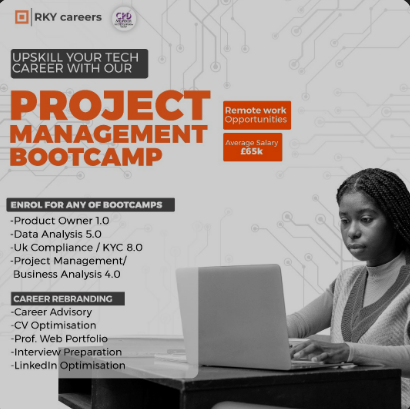
- Join a Bootcamp: Our RKY Bootcamp is built for busy people. We break down the hard parts into simple bits.
- Take Mock Exams: This is the most important part. You need to get used to the long test.
- Learn the “PMI Mindset”: The PMI wants you to be a proactive manager. You must learn to think like they do.
- Use UK examples: If you are looking for project management professional certification UK roles, use UK case studies.
The PMP certification cost for 2026 is about £320 if you join the PMI first. It is a big spend, but it pays back quickly and helps you to Get a Job Fast in 2026. Most of our students see a return on their investment within six months of getting a new role.
See Also:
- The Best UK Cities for Immigrants to Work in 2026
- Job Search Mistakes That Are Limiting Your Chances
PMP Certification vs Other Project Management Certifications
In the UK, you have many options when it comes to training. You will likely see names like PRINCE2, Scrum Master, and APM qualifications.
It can be confusing to know which one will give you the best return on your investment. While all have value, the project management professional certification remains the most versatile. Since it can help you in Other Careers Project Managers Can Do.
It doesn’t tie you to a single country or industry. It provides a broad foundation that you can build upon throughout your career, making it the most future-proof choice for most professionals.
PMP vs PRINCE2
PRINCE2 is very common in the UK government.
- PRINCE2 is like a manual. It tells you exactly which forms to fill out.
- PMP is like a toolbox. It gives you many ways to solve a problem.
Most big global firms prefer PMP. If you want a job that could take you to the US, Asia, or Europe, PMP is the best choice. However, if you only want to work in the UK public sector, PRINCE2 is good too.
PMP vs Agile and Scrum certifications
Agile certifications like the CSM (Certified Scrum Master) are fantastic for those who work exclusively in software development. They focus on the Scrum framework and how to facilitate a team’s work.
However, they are quite narrow. The PMP, on the other hand, now includes about 50% Agile content. This means that by getting your PMP, you are essentially proving you have the knowledge of a Scrum Master plus the broader skills of a Project Manager.
It is a “two-in-one” credential that makes you much more attractive to employers who need leaders, not just facilitators.
In 2026, the trend is toward “Hybrid” project management. This is where a company uses Waterfall for the big picture and Agile for the day-to-day tasks.
The PMP is the only major certification that prepares you for this reality. It gives you the tools to switch between these methods depending on the needs of the project.
This adaptability is what keeps your career stable even when the market changes. It allows you to move between different types of companies from a stable insurance firm to a fast-growing tech startup, without missing a beat. This might be your one way ticket to Land a Project Manager Role in London.
See Also:
The Road to Your New Career
Getting your project management professional certification is a big step. It takes time and effort. But the reward is a career that is stable and high-paying.
In the UK, the demand for skilled managers is growing. Whether you are in London or working from home, this certificate opens doors. It proves you are a leader. It shows you can handle the pressure of big projects.
At RKY Careers, we turn the hard rules of the PMP into practical skills you can use on day one of your new job.
We give you:
- Real Experience: You work on real-life projects. This builds your confidence.
- Expert Mentors: You learn from people who do the job every day in the UK.
- CV Help: We show you how to list your new skills to attract UK recruiters.
- A Community: You study with others who are on the same path.
This practical focus is why our students succeed. We don’t just want you to pass a test. We want you to get a job. This is especially helpful for immigrants who need to build a UK-based portfolio from scratch.
START WITH PROJECT MANAGEMENT TRANSITIONING WITH RKYCAREERS TODAY
FAQs: Project Management Professional Certification
Is the PMP certification worth it in 2026?
Yes. In a world with more AI, the human part of leading projects is more valuable than ever. The PMP proves you have those human skills.
How hard is the PMP certification exam?
It is very hard. It is not about memory; it is about logic. But if you take a good course and practice, you can pass.
Can beginners take the PMP certification?
No, you need experience first. If you are a beginner, start with the CAPM. Or, join our Bootcamp to gain the project experience you need to qualify later.
How long does PMP certification remain valid?
It lasts for three years. To keep it, you just need to keep learning. You earn “credits” by taking classes or working.