How to Use ChatGPT for Job Search and CV Writing
Learning how to use ChatGPT for job search and CV writing can completely transform the way you present yourself to employers. As someone navigating career changes or aiming for advancement, using AI tools like ChatGPT can help you create professional outputs.
What makes ChatGPT so powerful is its ability to personalise, adapt, and support you through every step of your job search journey.
Whether you’re polishing your professional story or targeting new roles, mastering this AI-driven approach gives you a modern edge.
So, come along with your ChatGPT and get ready to prompt your way to career advancement.
Why Use ChatGPT for Job Search and CV Writing?
Suppose you’ve ever wondered how to use ChatGPT for job search and CV writing without losing your personal touch. I’ve found AI tools can help you streamline repetitive tasks, brainstorm ideas, and polish your documents.
LinkedIn’s Future of Recruiting (2024) summary reports that 62% of recruiting pros expressed optimism about AI’s impact on recruitment.
By using ChatGPT, you can generate cover letters, fine-tune your CV, plan job search strategies, and even practice interview questions. But it’s not a magic wand. You still need to review, refine, and inject your voice.
If you learn how to use ChatGPT for job search and CV writing well, it becomes your smart writing assistant, not a crutch.
How AI is transforming the job application process
Artificial intelligence is already reshaping how recruiters screen applications, often with Applicant Tracking Systems (ATS) that filter based on keywords. Smart candidates now use ChatGPT for job seekers to help them match their CVs to job descriptions.
According to Capterra’s 2024 Job Seeker AI Survey, 58% of nearly 3,000 job seekers across 12 countries reported using AI tools in their current job search.
It’s not a replacement for human effort, but AI can help you speed up drafts, explore alternative phrasing, and get new ideas.
AI also enables real-time feedback and idea generation.
If you ask, “draft a CV personal statement for a finance manager role in London,” ChatGPT will generate one you can tweak.
With AI CV writing tips, you’re not just copying, you’re refining. As more employers adopt AI-driven screening, job seekers who can use AI tools for job applications gain an edge.
Benefits of using ChatGPT for career development
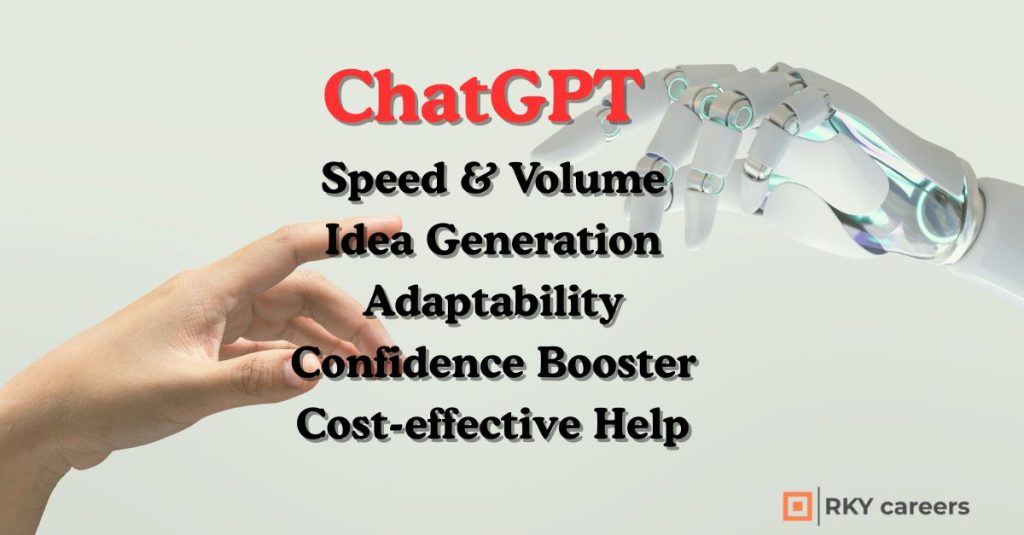
When you master how to use ChatGPT for job search and CV writing, you gain several benefits:
- Speed and volume: You can produce drafts, cover letters, LinkedIn summaries, and prompts quickly.
- Idea generation: Stuck on phrasing? ChatGPT inspires you.
- Adaptability: You can tailor content for multiple roles, industries, and regions.
- Confidence booster: With polished drafts in hand, you feel more confident sending applications.
- Cost-effective help: You don’t always need to pay a resume writer; ChatGPT becomes your on-demand facilitator.
For mid-career professionals or career changers, that flexibility is a serious advantage.
Common misconceptions about AI-assisted job searches
Some people worry that AI will produce bland, robotic writing or be detected as “AI content.”
That’s partially true. If you copy outputs blindly.
But when you treat ChatGPT as a collaborator, adding your voice, specificity, metrics, and personal stories, you avoid that pitfall. Another misconception is that AI replaces networking, human insight, and tailored strategy.
It doesn’t. AI assists; you decide.
The last misconception is that it’s too complex to use. In fact, with a few simple ChatGPT prompts for job search, you can get surprisingly useful outputs in minutes.

Unlock your potential with RKY Careers Bootcamps.
Where AI-driven insights meet real-world upskilling.
Transform prompts into progress through personalised career development, innovative job placement strategies, and a supportive community that empowers you to achieve lasting success.
How to Use ChatGPT to Improve Your Job Search
Knowing how to use ChatGPT for job search and CV writing can completely change the way you approach your career hunt. With smart AI prompts, you can discover new opportunities, craft engaging cover letters, and prepare confidently for interviews.
ChatGPT empowers you to plan strategically, refine your professional documents, and present yourself as the best candidate possible.
Generating tailored job search strategies
To begin searching effectively, ask ChatGPT for help:
“Give me a 6-week job search plan for a mid-career professional in project management, focusing on roles in the UK.”
This kind of ChatGPT prompt for job search gives you a structured timeline. When to update your CV, when to network, how to research companies, and how to follow up.
Then you iterate: “Adapt that plan for remote roles.”
You can also ask: “Suggest niche job boards for sustainability roles in Nigeria.”
That way, you’re learning how to use ChatGPT for job search and CV writing to build a strategy, not just documents.
Read also:
Creating cover letters that stand out
One of the trickiest parts is writing a cover letter that doesn’t feel generic.
For example, you can prompt ChatGPT: “Write a cover letter that connects my 8 years’ experience in operations with this job ad’s goals in process improvement, in a conversational tone.”
Then ask it to “identify three unique strengths and weave them into the letter.”
This method follows the logic of AI CV writing tips: use AI for structure, but add your unique insights.
Using ChatGPT to prepare for interviews
One advantage of AI is practising interviews. Capterra’s survey found 31% of respondents used AI for interview practice or mock interviews as part of their job search toolkit.
Ask: “Generate common behavioural interview questions for a product manager role in the UK.” Or “Simulate a mock interview and give me feedback.”
That is a direct way of how to use ChatGPT to prepare for interviews. You can also ask, “What are five scenario-based questions for software engineering roles?”
Then practice responding, and ask ChatGPT to critique. Combine this with your domain knowledge, and you’ll arrive confident and ready.
Networking and LinkedIn optimisation with AI
LinkedIn is powerful, but many professionals don’t maximise it.
Ask ChatGPT: “Write me 3 versions of a LinkedIn connection message to a hiring manager at a fintech firm, introducing my background.”
Or “Rewrite my LinkedIn headline to appeal to UK senior analyst roles.”
You can even ask: “Help me brainstorm 10 post ideas to show thought leadership in operations management.”
Through ChatGPT for job seekers, you can network effectively and stand out.
How to Write a Professional CV with ChatGPT
If you’ve ever wondered how to use ChatGPT for job search and CV writing effectively, this section shows how AI can help you design a CV that stands out.
ChatGPT assists with layout, phrasing, and accomplishment statements tailored to your field. The goal isn’t automation. It’s a collaboration between your experience and an AI-driven structure for the best professional impact.
Prompts to help ChatGPT write a strong personal profile
Your personal profile (or professional summary) is key.
Try this prompt:
“Write me a 4-sentence professional profile for a marketing manager with 7 years’ experience in Nigeria, focusing on digital transformation, team leadership, and measurable results.”
You can even prompt it: “Use power verbs and result metrics.”
That’s one of the best ChatGPT prompts for CV writing. The more specific your prompt, the better the result. Then you refine it manually.
Formatting and structuring your CV for UK standards
CV conventions differ by region. For the UK, you typically omit photos, use concise bullet points, reverse-chronological order, and limit to 2 pages (unless you’re senior).
Ask ChatGPT: “Structure my CV in UK style for project management. Suggest section headings and order.”
Then feed in your data to: “Rewrite my jobs into UK CV format using bullet points and metric phrases.”
Use AI tools for job applications smartly: you don’t just write, you format, strategise, and tailor.
Writing measurable achievements using AI
Achievements make your CV powerful. Don’t just list responsibilities.
Ask: “Turn this list of tasks into achievement statements with metrics: ‘managed team, improved process, reduced cost’.”
ChatGPT might output: “Reduced process costs by 15% over six months by streamlining vendor management and negotiating bulk contracts.”
That aligns with AI CV writing tips: specificity, action verbs, quantifiable results.
Again, you’ll tweak, ensure accuracy, and reflect your real impact.
Customising your CV for different job roles
You shouldn’t send the same CV everywhere.
For each job, prompt: “Adapt my CV for this job description: [paste JD]. Emphasise leadership, stakeholder management, and budget oversight.”
ChatGPT can help re-order bullet points, pick relevant skills, and adjust phrasing. That is one of the best ChatGPT prompts for CV writing.
The more you do this, the more you internalise how hiring systems score CVs, and the better your edits become.
Common Mistakes to Avoid When Using ChatGPT for CV Writing
Learning how to use ChatGPT for job search and CV writing also means knowing what not to do.Many users rely too much on generic outputs or forget to personalise their final drafts.
This section guides you through common pitfalls so you can use AI efficiently.
Read also:
Over-relying on generic AI outputs
One pitfall is accepting the first AI output without tailoring. If you copy-paste, you risk sounding generic, disconnected, or mistranslated.
A recruiter might spot boilerplate text. Constantly refine the output. Insert your real numbers, anecdotal stories, or industry-specific terms.
Relying too heavily defeats the purpose. I always say: use ChatGPT as a starting point, not the final word. That’s essential when learning how to use ChatGPT for job search and CV writing effectively.
Forgetting to proofread and personalise your CV
Even polished AI outputs can contain grammar hiccups, wrong word choices, or tone mismatches.
Always read every sentence. Check that each line reflects your reality. Use your judgment.
Add or remove sentences to align with your voice. Also, tailor salutations, company names, and role-specific nuances. Missing that step means your CV might feel impersonal.
Using outdated or incorrect job keywords
Many CVs get rejected not because of content but because they lack relevant keywords that ATS scans for. If you feed ChatGPT inaccurate or outdated key terms, your CV will suffer.
You must research current jargon in your field.
Then prompt ChatGPT: “Incorporate these keywords from the job description into my CV bullet points: [list].”
This way, you combine your keyword research with AI tools for job applications. Always cross-check that the keywords are current and relevant.
Advanced ChatGPT Prompts for Job Seekers
Once you understand how to use ChatGPT for job search and CV writing, the next step is mastering advanced prompts. These tailored instructions help you prepare interview questions, identify transferable skills, and build compelling LinkedIn summaries.
By using deeper prompts, you can unlock new ways to showcase your unique strengths and confidently navigate today’s competitive job market.
Prompts for generating interview questions
Once you have a target role, you can ask:
“Generate 10 behavioural and technical interview questions for a senior operations manager in UK fintech.”
Then follow up: “Flip them: give me sample strong answers and critiques.”
Or ask: “Role-play a mock interview with me based on those questions and give feedback.”
These are examples of how to use ChatGPT to prepare for interviews, leveraging ChatGPT prompts for job search.
You can even ask: “Generate brainteaser or problem-solving questions for consulting roles.”
Read also:
Prompts for identifying transferable skills
For career changers, especially, knowing how to showcase transferable skills is vital.
Try:
“I have 10 years’ experience in logistics. I want to move to supply-chain tech roles. What transferable skills do I have, and how can I phrase them for my CV?”
Or: “List five transferable skills from education to project management and draft bullet points using them.”
These help you uncover hidden strengths.
Prompts for crafting impactful LinkedIn summaries
LinkedIn is a companion to your CV. Use prompts such as:
“Write me a compelling LinkedIn summary of 150 words combining my experience in HR operations and passion for diversity & inclusion.”
Then refine: “Add a call to action and a line about my goals in the UK.”
Also: “Suggest ten keywords to include in my LinkedIn summary to catch recruiter searches.”
These are some of the best ChatGPT prompts for CV writing and LinkedIn. When combined with ChatGPT career advice UK, you position yourself for local opportunities.
Is ChatGPT Reliable for Career Advice?
You might wonder how reliable AI really is for guidance on how to use ChatGPT for job search and CV writing. The truth is, ChatGPT offers powerful insights and structure, but human oversight remains essential.
This section explores how to balance AI-generated suggestions with professional judgment to make informed, realistic, and well-grounded career decisions.
When to use AI vs. a professional career coach
ChatGPT gives you fast ideas, structure, and drafts. But it lacks context, deep industry nuance, and emotional intelligence.
If you’re navigating complex career transitions, salary negotiations, or mental blocks, a professional career coach can provide personalised insight, accountability, and human empathy.
Use ChatGPT for ideation and early drafts, and lean on human support when you need strategic direction.
Combining ChatGPT with human-led support for better results
The best results come when you pair AI with human feedback. Share your ChatGPT draft with mentors, professionals in your network, or editors for critique.
Ask colleagues in your industry: “Does this phrasing resonate?”
Use AI to iterate quickly, then let humans refine nuance.
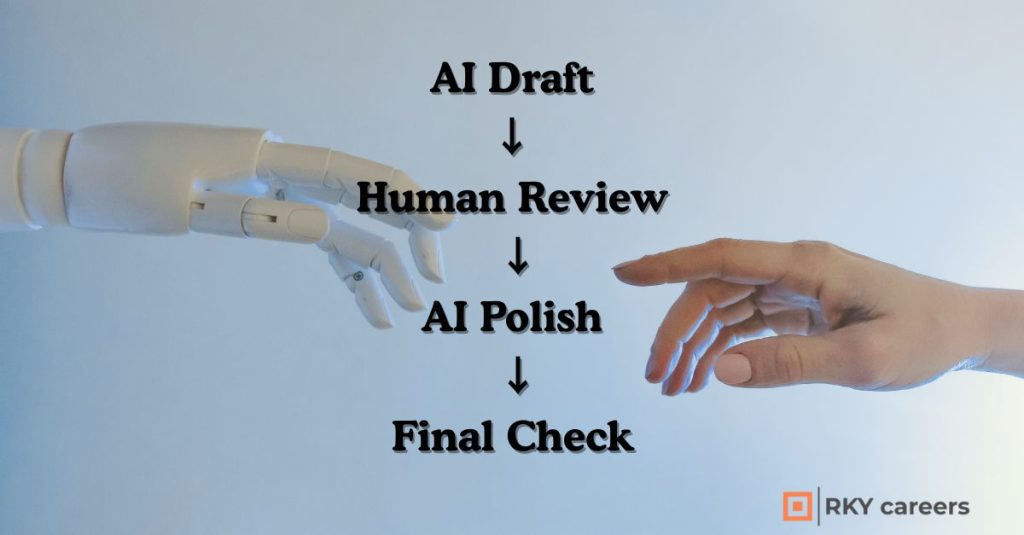
I often do two rounds: AI draft → human review → AI polish → final check.
This ensures quality while preserving speed. This approach keeps your job search grounded and credible.
How to fact-check and refine AI-generated career insights
ChatGPT can hallucinate facts or misstate industry norms, so always fact-check. If the AI suggests a job market trend, verify it via reliable sources (industry reports, LinkedIn insights, professional associations).
If it gives you a phrase with legal implications, cross-check. Use it as a brainstorming partner, not an authority.
As you do this, you refine your instincts and judgment. That’s how you truly master how to use ChatGPT for job search and CV writing, by combining creativity with critical thinking.
FAQs: How to Use ChatGPT for Job Search and CV Writing
How can I use ChatGPT to write a professional CV?
You can use ChatGPT to structure, format, and write tailored CV content. Provide your career details, achievements, and job goals, then refine AI-generated drafts to ensure they sound professional, authentic, and employer-ready.
What are the best ChatGPT prompts for job search?
The best prompts include requests like “Create a job search plan for my industry,” “Write a cover letter for this role,” or “Suggest LinkedIn profile improvements.” Clear, specific prompts yield personalised and actionable AI results.
Can ChatGPT help me prepare for job interviews?
Yes, ChatGPT can simulate interview questions, generate model answers, and offer feedback. You can practice behavioural or technical questions, strengthen your confidence, and improve your communication style before meeting actual hiring managers.
Is using ChatGPT for CV writing accepted by employers?
Yes, as long as you personalise the output. Employers care about authenticity and accuracy, not the tool used. Ensure your ChatGPT-assisted CV reflects your real achievements, voice, and professionalism to make a lasting impression.