

Getting a Business Analyst Job with No Experience
Getting a business analyst job with no experience can seem like a long shot, only to be dreamt about. However, embarking on a career as a Business Analyst without prior experience is feasible with the right approach and mindset.
Business Analysis is a rapidly growing career path that will remain relevant for years. According to the US Department of Labor, the demand for jobs related to business analysis is expected to increase by 11% by 2031. This means that plenty of job opportunities are available. The question is how to land a business analyst job and train for one.
This blog post will help you understand the role and acquire fundamental and transferable skills to break into the field. In short, this is the beginning of a rewarding journey for you.
Understanding the Business Analyst Role

A Business Analyst (BA) role bridges the gap between IT and businesses. They assess processes, determine requirements, and deliver data-driven recommendations and reports. BAs facilitate business solutions through data analysis, project management, and stakeholder engagement. Understanding a BA’s core responsibilities is the first step to gaining the necessary skills and experience.
Among famous quotes for Business Analysts, draw strength from Andrew Chen, the Head of Rider Growth at Uber, who states, “It’s important to leverage the data the same way, whether it’s a strategic or tactical issue: Have a vision for what you are trying to do. Use data to validate and help you navigate that vision and map it down into small enough pieces that you can begin to execute in a data-informed way”.
Acquiring Fundamental Skills
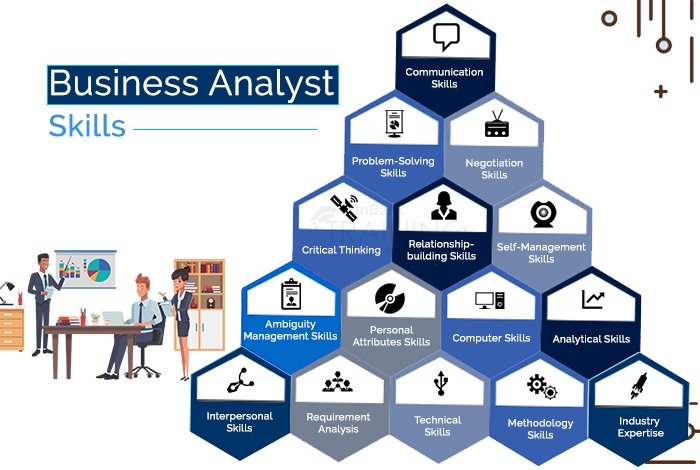
To begin your journey into business analysis, focus on building a solid foundation in the following areas:
- Analytical Thinking and Problem Solving: Ability to dissect complex issues and derive insights from data.
- Technical Proficiency: Familiarity with data analysis tools (e.g., SQL, Excel, Power BI) and basic understanding of databases.
- Business Process Understanding: Knowledge of how businesses operate, including the flow of information and organisational structures.
- Communication Skills: Strong written and verbal communication skills are vital for articulating insights and interacting with stakeholders.
- Online courses, workshops, and certifications can be invaluable in acquiring these fundamental skills. Find reputable sources offering business analysis, data analytics, and project management courses.
Leveraging Transferable Skills
If you’re transitioning from another field, you likely possess highly relevant skills for a business analyst role. Here’s how to identify and leverage them:
- Project Management: Experience managing projects, timelines, and resources can be directly applied to a BA role.
- Customer Service: Skills in understanding and addressing customer needs can be invaluable in stakeholder management.
- Technical Support: Experience troubleshooting and understanding technical issues can help bridge the gap between IT and business.
- Research and Reporting: The ability to conduct research and present findings is crucial for data analysis and reporting tasks.
Highlight these skills on your resume and cover letter, providing examples of how they can effectively be applied to business analysis tasks.
Gaining Practical Experience
Securing practical experience in business analysis can be challenging without prior experience in the field,. However, there are several strategies you can employ to build your portfolio:
- Volunteer or Internship Opportunities: Look for volunteer positions or internships that allow you to work on real projects. Non-profits, startups, or local businesses often need help with data analysis, process improvements, or technology implementations.
- Freelance Projects: Platforms like Upwork or Freelancer can provide opportunities to work on short-term projects that require business analysis skills. These projects can help you apply your knowledge in real-world scenarios and enhance your resume.
- Case Studies: Engage in self-directed projects by analysing publicly available data or creating business case studies. This approach allows you to demonstrate your ability to apply business analysis techniques and tools without needing an employer.
- Certification Projects: Some business analysis certifications require project work as part of the certification process. These projects can provide valuable, practical experience.
Building a Professional Network
Getting a business analyst job with no experience is much easier with the right network. Networking is crucial in business analysis, as it can open doors to opportunities and provide valuable insights.
Strategies for Networking with Professionals in the Field
Join Professional Associations: Join professional associations such as the International Institute of Business Analysis (IIBA) or local business analysis groups. These organisations offer networking events, workshops, and conferences where you can meet other professionals.
- Attend Industry Conferences and Workshops: Participating in industry events allows you to learn from experienced practitioners and meet potential mentors or employers.
- Leverage LinkedIn: LinkedIn is invaluable for connecting with business analysts and industry leaders. Participate in discussions, share relevant content, and contact professionals for informational interviews.
- Building a professional network requires consistent effort. Engage genuinely with others, offer help where you can, and don’t be afraid to ask questions. Networking helps you learn more about the field and puts you on the radar for potential job opportunities.
Crafting Your Resume and Cover Letter

Creating a compelling resume and cover letter is critical when you’re aiming to land a business analyst position. Here’s how to make yours stand out.
- Highlight Relevant Skills: Emphasise transferable skills and any business analysis-related knowledge you’ve acquired through courses, certifications, or personal projects. Use specific examples to demonstrate how these skills have contributed to your past roles or projects.
- Tailor Your Documents: Getting a business analyst job with no experience is not feasible without a good resume and cover letter. Customise your resume and cover letter for each job application. Highlight how your unique background and skills align with the job description. Ensure you focus on how to add value to the team and solve their challenges.
- Quantify Achievements: Use metrics to quantify your achievements in previous roles or projects, such as efficiency improvements or cost savings. This approach demonstrates your impact concretely.
Preparing for the Interview
Once you’ve secured an interview, thorough preparation can significantly increase your chances of success:
- Research the Company: Understand the company’s products, services, challenges, and industry position. This knowledge will help you tailor your responses and demonstrate your genuine interest in contributing to their success.
- Review Business Analysis Fundamentals: Be prepared to discuss basic business analysis concepts, tools, and techniques. You might be asked to explain how you would approach specific scenarios or solve business problems.
- Prepare examples that showcase your problem-solving skills, analytical thinking, and relevant project work. Practice articulating these examples clearly and concisely.
- Ask Insightful Questions: Prepare thoughtful questions to ask your interviewer about the company’s challenges, the team, and your expectations for the role. This shows your proactive thinking and interest in the position.
Conclusion
Transitioning into a business analyst role without direct experience is possible. You can position yourself as a strong candidate by understanding the role, acquiring fundamental skills, and making strategic moves. These strategic moves include gaining practical experience and networking. Crafting a tailored resume and cover letter and diligent interview preparation will further enhance your chances of success. A business analyst position is within reach with persistence and the right approach.
Why Rky Careers

Rky Careers makes a transformative opportunity your reality as an aspiring or established business analyst. Through our comprehensive Project Management and Business Analysis boot camp, alongside a suite of career advisory and support services. Here are the benefits that make Rky Careers an unparalleled choice for those on the path to becoming seasoned business analysts.
- A Detailed Boot Camp: The cornerstone of Rky Careers is its meticulously designed boot camp. It is an immersive program that covers project management and business analysis accompanied by resume optimisation services, career support, reference opportunities and other benefits.
- Skill Enhancement: The first part of the boot camp focuses on building core business analysis skills.
- Industry Insights: The second part focuses on applying these skills within various industries, offering insights into the nuances of business analysis across different sectors.
- Resume, Cover Letter, and LinkedIn Service: In today’s digital age, a compelling online presence and standout application materials are crucial. Rky Careers’ services extend beyond traditional training to include: Resume Crafting, Cover Letter Development and LinkedIn optimization, designed to make candidates irresistible to potential employers.
- Career Advisory and Support Services: We understand that career growth is a continuous journey. Our career advisory and support services provide ongoing guidance to ensure long-term success. These include:
- Networking Opportunities: Introduction to a community of like-minded professionals and industry leaders, facilitating invaluable connections that can open doors to new opportunities.
- Interview Preparation: Comprehensive coaching on interview techniques, including how to articulate your experiences and demonstrate your problem-solving abilities effectively.
Choosing Rky Careers means more than just enrolling in a boot camp; it’s about investing in a comprehensive career transformation.
FAQs
Navigating a career transition into business analysis often raises several questions, especially for those from non-traditional backgrounds. Here are answers to some common queries that might help guide your journey.
Can I Become a Business Analyst Without a Business or IT Degree?
Getting a business analyst job with no experience or business or IT degree is achievable. Business analysis primarily relies on analytical thinking, problem-solving, effective communication, and understanding of business processes. Many professionals successfully transition into business analysis from varied backgrounds. This is by focusing on acquiring essential skills, gaining practical experience, and leveraging skills.
What Certifications Can Help Me Stand Out When Applying for Business Analyst Positions?
Several certifications can bolster your resume and demonstrate your commitment to the business analyst role:
- IIBA Certifications: Entry Certificate in Business Analysis (ECBA), Certification of Competency in Business Analysis (CCBA), and Certified Business Analysis Professional (CBAP) are widely recognised.
- PMI-PBA: The PMI Professional in Business Analysis from the Project Management Institute is another esteemed certification that validates business analysis skills within a project management context.
- Agile Analysis Certification (IIBA-AAC): This certification is ideal for those working in agile environments. It shows a deep understanding of agile business analysis principles.
How Can I Build a Portfolio of Business Analysis Work Without Professional Experience?
Building a portfolio without direct professional experience involves showcasing your ability to apply business analysis skills through various means. Getting a business analyst job with no experience should not deter you. This is if you are willing to volunteer for projects, create case studies , and undergo personal projects. All these will allow you to apply business analysis tools and methodologies and comprehensively document your process and results.
Where Can I Find Opportunities to Gain Practical Business Analysis Experience?
Opportunities to gain practical experience can be found in several places, including internships, freelancing platforms, networking avenues, and professional associations.
Entering the field of business analysis is a viable path for many, regardless of their initial starting point. By focusing on skill development, certification, practical experience, and networking, transitioning into a business analyst role becomes a tangible goal.


