
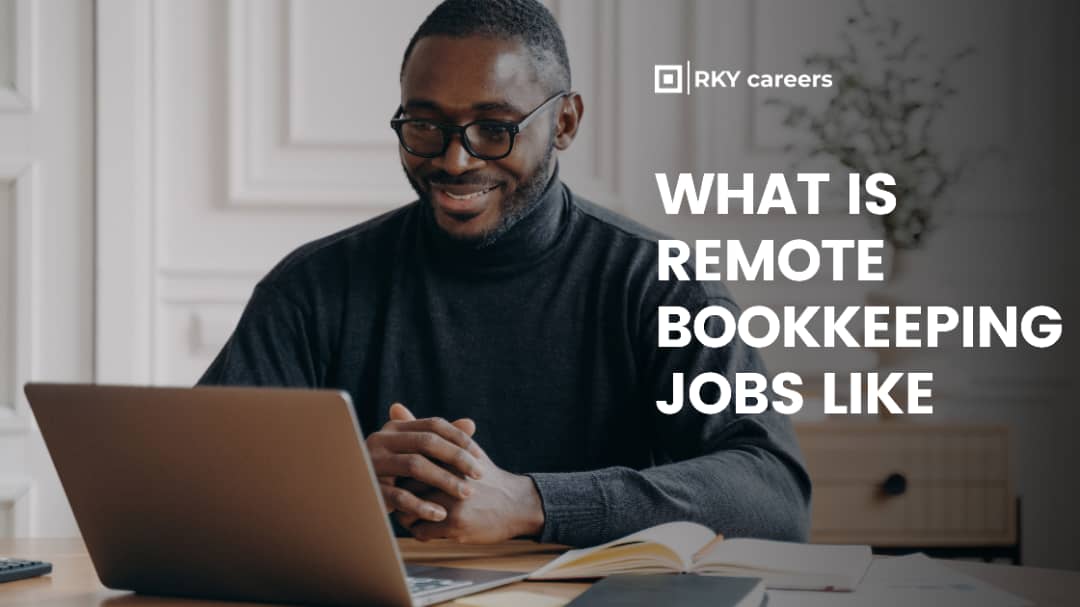
What Is Remote Bookkeeping Jobs Like?
If you have ever stared at a spreadsheet and felt a strange sense of satisfaction when the numbers finally balanced, you might have wondered: what is remote bookkeeping jobs like in today’s digital-first economy?
The world of virtual finance has undergone a massive transformation and the traditional image of a bookkeeper hunched over a dusty ledger in a windowless back office is dead.
In its place is a modern, tech-savvy professional who manages multi-million-pound accounts from a home office in Manchester, a café in London, or even a beach in Spain.
A remote bookkeeping career is one of the Legit Remote Jobs in the UK for Overseas Workers and offers a unique blend of analytical rigour and lifestyle freedom that few other professions can match.
Whether you are a career changer, an immigrant looking to enter the UK job market, or a finance professional seeking more balance, understanding the landscape of work from home bookkeeping jobs is your first step toward a rewarding new chapter.
In this blog, you will get a breakdown of everything you need to know about the daily reality, the earning potential, and the exact steps to land your first role.
What Are Remote Bookkeeping Jobs?
Before we dive into the how, we need to define the what. At its core, bookkeeping is the process of recording, tracking, and categorising the financial transactions of a business.
When we add the remote or virtual element, we are simply moving those tasks from a physical office into the cloud.
Definition of virtual bookkeeping roles
A virtual bookkeeper performs all the traditional duties of a bookkeeper but uses cloud-based technology to communicate with clients and manage data. This is one of the Best Remote Jobs in the UK.
You aren’t physically handling paper receipts or cheques anymore. Instead, you are managing digital data streams.
In the UK, remote bookkeeping jobs UK businesses offer are usually structured in one of three ways:
- In-house Remote: You work for a single company as a permanent employee but work from home.
- Practice-based: You work for an accounting or bookkeeping firm that handles multiple clients.
- Freelance/Self-employed: You run your own business, sourcing and managing your own client roster.
A 2025 ICB survey highlighted that roughly 83% of professionals in this space are now operating as contract bookkeepers or running their own practices, showcasing the massive shift toward independent work
See Also:
Difference between bookkeeping and accounting
You see people use these terms interchangeably, but they are distinct roles with different levels of responsibility.
Think of it this way: the bookkeeper builds the foundation, and the accountant builds the house.
- Bookkeepers focus on the daily administrative tasks. They record transactions, process payroll, and ensure the books are balanced and clean.
- Accountants take the data provided by the bookkeeper to perform higher-level analysis, tax planning, and business advisory.
As a remote bookkeeper, you are the financial gatekeeper. You ensure that when the accountant steps in at the end of the quarter or year, the data is accurate, compliant, and ready for HMRC submission.
What Is It Like to Work as a Remote Bookkeeper?
When people ask me, what is remote bookkeeping jobs like?, they are usually asking about the lifestyle. Is it lonely? Is it stressful? Can you actually work in your pyjamas?
According to a 2025 YouGov study, 14% of British workers now work from home all of the time, with nearly half the workforce engaging in some form of hybrid or remote arrangement. So the questions is no longer Will Remote Working Become the Norm?. It is now a norm.
Daily tasks and responsibilities
Your day usually starts with a digital check-in. Most successful bookkeepers begin by reviewing bank feeds.
Because modern software syncs with business bank accounts, your first task is often reconciling the previous day’s transactions.
You might spend your morning:
- Matching invoices to payments received.
- Chasing late payers via email (credit control).
- Categorising expenses (was that lunch a business expense or a personal one?).
- Communicating with business owners to clarify mystery transactions.
Typical work environment and schedule
One of the biggest draws of online bookkeeping jobs from home is the control over your environment. However, this isn’t a low-effort job. It requires intense focus.
Most remote bookkeepers set up a dedicated home office with dual monitors, one for the accounting software and one for bank statements or emails.
Your schedule can be highly flexible, especially if you are a freelancer. However, you must adhere to financial cycles.
The end of the month is always busier because of payroll and month-end reports. January is notoriously hectic in the UK due to the Self-Assessment tax deadline. If you are looking into Paid Remote Jobs, this is a great option.
Interestingly, a Guardian report from May 2025 found that UK workers average 1.8 days of remote work per week, but for those in finance and bookkeeping, this figure is often much higher, with many opting for 100% remote roles to maximise focus.
Tools and software used (e.g., QuickBooks, Xero)
You cannot do this job without being a cloud native. The industry is dominated by a few heavy hitters:
- Xero: Extremely popular in the UK for its user-friendly interface and vast app marketplace.
- QuickBooks Online: A global leader with robust reporting features.
- Sage Business Cloud: Often used by slightly larger UK SMEs.
- Dext (formerly Receipt Bank): A lifesaver for capturing and extracting data from receipts using OCR technology.
Learning these tools is non-negotiable. Any aspiring bookkeeper to get Certified in at least Xero and QuickBooks. Most of these certifications are free and look excellent on a CV.
Read Also:
Key Responsibilities of a Remote Bookkeeper
The virtual bookkeeper job description is more than just data entry. You are responsible for the financial integrity of a business.
As of April 2026, the HMRC “Making Tax Digital” for Income Tax rules have launched for individuals with a turnover above £50,000, making the bookkeeper’s role more vital than ever in helping sole traders stay compliant
Let’s look at the three pillars of the role.
Recording financial transactions
This is the bread and butter. Every time money moves in or out of the business, you must record it.
In a remote setting, this involves monitoring automated bank feeds and ensuring that every transaction is assigned to the correct Chart of Accounts.
If a client buys a laptop, you don’t just list it as an expense; you may need to record it as a fixed asset, depending on the company’s threshold.
Managing invoices and expenses
You are the bridge between a business and its cash flow. This involves:
- Accounts Payable: Ensuring the company pays its suppliers on time so the lights stay on and the supply chain remains happy.
- Accounts Receivable: Issuing invoices to customers and, crucially, making sure they pay.
Remote bookkeepers often use tools like GoCardless or Stripe integrations to automate this, but the human element of chasing a payment remains a key responsibility.
Reconciling accounts and preparing reports
Reconciliation is the process of ensuring the bank balance matches the bookkeeping software balance. If there is a £10.00 discrepancy, you are the detective who has to find it.
Once the accounts are reconciled, you produce reports like the Profit & Loss (P&L) and the Balance Sheet.
For a business owner, these reports are the health check of their company. Providing these accurately and on time makes you an indispensable partner, not just a data entry clerk.
Skills Needed for Remote Bookkeeping Jobs
While you don’t need a degree in mathematics, you do need a mind for numbers. Here are the essential skills needed for bookkeeping jobs in a remote context.
Attention to detail and organisation
In bookkeeping, a misplaced comma or a transposed digit can result in a £9,000 error instead of a £900 one. You must be someone who naturally double-checks their work. This is a relevant Skill To Put On A Job Application
Because you are working remotely, you also need top-tier organisational skills. You’ll be managing digital files, passwords, and deadlines for multiple clients simultaneously.
Basic accounting and financial knowledge
You need to understand the Double Entry system. Even though modern software handles much of this in the background, you must understand why a transaction is a debit or a credit.
According to the Financial Reporting Council (FRC) 2025 trends report, student numbers for accountancy and bookkeeping qualifications have risen by over 30%, showing that more people are recognising the need for formal training to stay competitive.
Proficiency in bookkeeping software
As mentioned, being tech-fluent is a requirement. You should be comfortable navigating cloud platforms, using Excel (for complex data manipulation), and using communication tools like Slack, Zoom, or Microsoft Teams to stay in touch with your team or clients.
Read Also:
Salary and Earning Potential for Remote Bookkeepers
Money matters. When considering a career change, you need to know if the bookkeeper salary UK market offers can support your lifestyle. The good thing is remote bookkeeping is one of the many Careers You Can Get Without a Degree in 2026.
Average salaries in the UK and globally
The salary for a remote bookkeeper in the UK varies based on experience and location (though location matters less for remote roles, some London-based firms still pay a premium).
According to Indeed UK data as of March 2026, the average base salary for a bookkeeper in England is £30,006 per year.
- Entry Level Bookkeeping Jobs: £22,000 – £28,000 per year.
- Mid-Level/Certified: £30,000 – £40,000 per year.
- Senior/Lead Bookkeeper: £45,000+ per year.
Globally, particularly in the US and Canada, rates are similar, often ranging from $40,000 to $65,000. The beauty of remote work is that you can sometimes live in a lower-cost area while earning a salary from a high-paying hub like London.
Freelance vs full-time earning potential
This is where the math gets interesting.
- Full-time employees get the security of a pension, paid holiday, and sick pay.
- Freelance bookkeeping jobs offer a higher ceiling. Many freelance bookkeepers in the UK charge between £25 and £50 per hour.
If you manage a portfolio of 10 clients paying a monthly retainer of £300 each, you are looking at a gross income of £3,000 per month for what is often less than 40 hours of work.
However, as a freelancer, you are responsible for your own taxes, software subscriptions, and professional indemnity insurance.
Pros and Cons of Remote Bookkeeping Jobs
No job is perfect. If I told you a remote bookkeeping career was all sunshine and spreadsheets, I’d be doing you a disservice.
Advantages (flexibility, remote work, steady demand)
- Flexibility: You can often structure your day around school runs, gym sessions, or personal errands.
- Steady Demand: Every business, from a local plumber to a tech startup, needs to keep records. Bookkeeping is recession-resistant.
- Low Barrier to Entry: You don’t need a four-year degree to start. Bookkeeping jobs no experience required are available if you have the right certifications (like AAT Level 2).
- Scalability: If you are a freelancer, you can grow your business into an agency.
Challenges (deadlines, accuracy pressure, isolation)
- Isolation: Working from home can be lonely. You don’t have the water cooler chat.
- The Pressure of Accuracy: If you make a mistake on a VAT return, the client could face HMRC penalties. That weight can be stressful.
- Deadline Density: At certain times of the month or year, the workload spikes significantly. You have to be good at managing crunch time.
How to Get Started as a Remote Bookkeeper
If you’ve read this far and you’re thinking, This is for me, here is your roadmap to success.
Required qualifications and certifications
While you can call yourself a bookkeeper without formal qualifications, I wouldn’t recommend it. To be competitive in the UK market, you should look at:
- AAT (Association of Accounting Technicians): Start with the Level 2 Certificate in Bookkeeping. It’s widely recognised by UK employers.
- ICB (Institute of Certified Bookkeepers): Another excellent body that provides specific bookkeeping tracks.
- Software Certifications: As I mentioned, get your Xero Advisor and QuickBooks ProAdvisor badges. They are free and highly regarded.
Building experience and a client base
If you are looking for entry level bookkeeping jobs, don’t be afraid to start small.
- Volunteer: Offer to do the books for a local charity or a friend’s small business.
- Internships: Many remote-first accounting firms offer internships or junior roles.
- The Shadow Method: Reach out to established bookkeepers and ask if you can assist with data entry tasks to learn the ropes.
Finding jobs on platforms like LinkedIn
LinkedIn is a goldmine for remote accounting jobs. To stand out:
- Optimise your profile: Learn How to Optimize Job Applications. Use keywords like Virtual Bookkeeper, VAT Specialist, and Xero Certified.
- Set Alerts: Set up job alerts for Remote Bookkeeper filtered by United Kingdom.
- Network: Join groups like UK Bookkeepers or ICB Members.
- Direct Outreach: Don’t just wait for jobs to be posted. Look for small accounting firms and send a speculative (but professional) email expressing your interest in remote work.
See Also:
Conclusion
So, what is remote bookkeeping jobs like? It is a career that rewards precision, rewards the tech-savvy, and offers a level of professional autonomy that is hard to find elsewhere. It isn’t just about doing the sums; it’s about being the financial heartbeat of a business.
At RKY Careers, we have seen hundreds of professionals successfully transition into the tech and corporate world by leveraging these types of high-value, remote-friendly skills. The path is clear: get certified, master the software, and start building your reputation.
The numbers don’t lie, the future of bookkeeping is remote. Are you ready to join it? Start now
FAQs
What does a remote bookkeeper do daily?
A remote bookkeeper’s day involves reconciling bank statements, processing invoices, categorising business expenses, and communicating with clients via email or video calls. They ensure all financial data is accurately recorded in cloud software like Xero or QuickBooks.
Can I become a bookkeeper with no experience?
Yes, it is possible to get bookkeeping jobs no experience if you have relevant certifications such as AAT Level 2. Many firms look for people with strong attention to detail and a willingness to learn the software, often starting them in junior or data-entry roles.
How much do remote bookkeeping jobs pay?
In the UK, entry-level salaries typically start around £22,000 to £28,000. Experienced or certified bookkeepers can earn between £35,000 and £45,000, while freelance bookkeepers can earn significantly more by managing multiple clients.
What skills are needed for bookkeeping jobs?
The core skills needed for bookkeeping jobs include high attention to detail, proficiency in cloud accounting software, a solid understanding of UK tax basics (like VAT), and excellent organisational skills to manage remote deadlines.
Are remote bookkeeping jobs in demand?
Absolutely. As more UK businesses move to cloud-based systems and HMRC’s Making Tax Digital initiative expands, the demand for tech-literate remote bookkeepers continues to grow.

Stop feeling “invisible” in the UK job market and secure a high-paying tech role with the RKY Careers Data Analysis & Business Intelligence Bootcamp.
Whether you are a career changer, a new immigrant, or a professional looking to future-proof your skills, our bootcamp is your bridge to a rewarding career.
We go beyond theory. You will master the industry-standard “Big Four”: SQL, Power BI, Tableau, and Advanced Excel. But the real value lies in our practical approach. You will work on live, commercial-grade projects that simulate real business challenges, providing you with a portfolio that proves your expertise to recruiters.
The biggest hurdle for many is the “no UK experience” trap. We solve this by providing a UK Job Reference upon completion of your projects (T&Cs apply).
Our comprehensive career rebrand includes professional CV and LinkedIn optimization, alongside intensive interview preparation.
Join over 1,500 success stories professionals who moved from retail, healthcare, and banking into six-figure tech roles.
Our next cohort kicks off, featuring five weeks of intensive, weekend-friendly virtual live classes. Don’t wait for someday.
Use code EARLYBIRD to secure your discount and join a community dedicated to your ultimate career success. Apply Now


