
Jobs in London with Visa Sponsorship
Dreaming of working in one of the world’s most dynamic cities? Jobs in London with visa sponsorship are your gateway to a thriving global career.
London’s job market boasts of countless UK visa sponsorship jobs 2025 across sectors.
The truth is, employers here value diverse talent and are actively recruiting from abroad, especially for roles on the shortage occupation list in the UK.
Landing a sponsored role not only secures your work visa but also signals your value to top London employers.
However, to succeed, you must understand where opportunities lie, which industries are leading the pack, and how to navigate the UK Tier 2 sponsorship jobs landscape.
In this post, you’ll be walked through why London stands out, what a visa-sponsored job entails, top sectors hiring international talent, plus practical tips to apply from abroad.
Why London is a Top Destination for Skilled Migrants
London is a global hub for finance, tech, healthcare, and more. But why is it so magnetic for skilled workers?
For starters, the city’s GDP exceeds £500 billion, making it Europe’s largest economy. What does that mean for job seekers? It translates into abundant skilled worker visa jobs London, competitive salaries, and world-class career development.
According to the ONS, net migration into the UK was 728,000 in the year to June 2024, with London accounting for a significant share. It gets better for you because many of these visas were for roles on the shortage occupation list UK, ensuring fast-track sponsorship.
The London’s multicultural ecosystem means you’re not just earning a paycheck, you’re joining a global network that accelerates your career growth.
Economic Opportunities and Global Workforce Demand
London’s economic vibrancy is driven by its status as a financial, tech, and creative capital. Finance alone employs over 1.1 million people, while tech giants and startups collectively make London Europe’s top tech hub, generating over £70 billion annually.
For instance, in 2023, the UK Home Office received 509,100 Skilled Worker visa applications, with a large chunk destined for London roles, ranging from fintech developers to AI specialists.
London’s employers, from banks to biotech firms, actively sponsor visas to fill skills gaps.
Between the numbers are massive opportunities. Fast-growing industries like green energy, cybersecurity, and digital media constantly seek global expertise.
That’s why “work in London with visa sponsorship” isn’t just a phrase, it’s a reality for thousands.
Multinational Companies Offering Sponsorship
Although there are some companies that don’t sponsor visas, many of London’s biggest names sponsor visas to secure top talent, Such as Google, Amazon, JP Morgan, and Barclays, all recognised as London companies hiring international workers.
To find out which firms offer sponsorship, look on their careers pages for mentions of “sponsor licence.”
- Google UK regularly lists roles eligible for “Tier 2 sponsorship jobs UK.”
- HSBC actively recruits international graduates under the Skilled Worker Visa Jobs London scheme.

- NHS Trusts: sponsor healthcare roles on the government’s Shortage Occupation List.
- BP & Shell: hire engineers and geoscientists with visa support.
Want to know the best part? If you target these multinationals, you leverage structured relocation packages, mentorship programs, and quicker visa processing times.
Align your job search with companies with “Sponsor Licence” badges, and you’re already halfway there.
What Is a Visa Sponsorship Job in the UK?
When you land one of these jobs in London with visa sponsorship, an employer takes on the legal responsibility to “sponsor” your work visa, officially known as the Skilled Worker visa (formerly Tier 2).
Simply put, eligible companies issue you a Certificate of Sponsorship (CoS), which you use to apply for a UK work visa.
Sponsorship is beyond a checkbox; it’s your ticket to work in London with visa sponsorship and dive into a market brimming with opportunity.
And the beautiful part is that most positions on the government’s UK work visa job list, especially those on the shortage occupation list, are eligible.
Understanding UK Skilled Worker Visa Requirements
To secure a sponsored job in London, you must meet the Skilled Worker visa criteria.
First, you need a valid Certificate of Sponsorship (CoS) from a licensed employer.
Second, your proposed role must pay at least £26,200 per year (or the “going rate” for that job), although roles on the shortage occupation list in the UK enjoy a 20% lower salary threshold.
You must also demonstrate English proficiency (CEFR level B1 or higher) and have enough funds to support yourself, unless your sponsor covers this cost.
And yes, these same rules apply whether you’re seeking Tier 2 sponsorship jobs UK or sponsorship jobs in London for non-UK citizens.
For example, if you’re targeting skilled worker visa jobs London in IT, the going rate might be £33,000, whereas a healthcare role on the shortage list could require only £25,200.
Knowing these requirements inside out will make your application process smooth and stress-free.
How Sponsorship Works for Employers and Employees
We both know that sponsorship is a two-way street.
Employers must first secure a sponsor licence from the Home Office, proving they’re a genuine business with genuine job vacancies.
Once approved, they assign a CoS to you, the prospective employee.
You use that CoS reference to apply for your Skilled Worker visa, paying the application fee and healthcare surcharge.
If approved, you can legally apply for jobs in London from abroad, relocate, and start work within weeks.
Sponsors also have reporting duties. They must monitor your attendance, salary payments, and any changes in your job role. If you leave or change jobs, your CoS becomes invalid, so you’ll need a new sponsor.
But once you’ve worked five continuous years, you can apply for Indefinite Leave to Remain.
Also, being sponsored by a reputable London employer often comes with relocation support, induction programs, and ongoing training, making your transition as a foreign professional smoother than ever imagined.
See Also:
- How I Landed a Visa Sponsorship Role With The Civil Service After The RKY Careers PM/BA Bootcamp: Funmilola”s Success Story
- How to Transition to a New Industry in the UK
Industries in London That Frequently Offer Visa Sponsorship
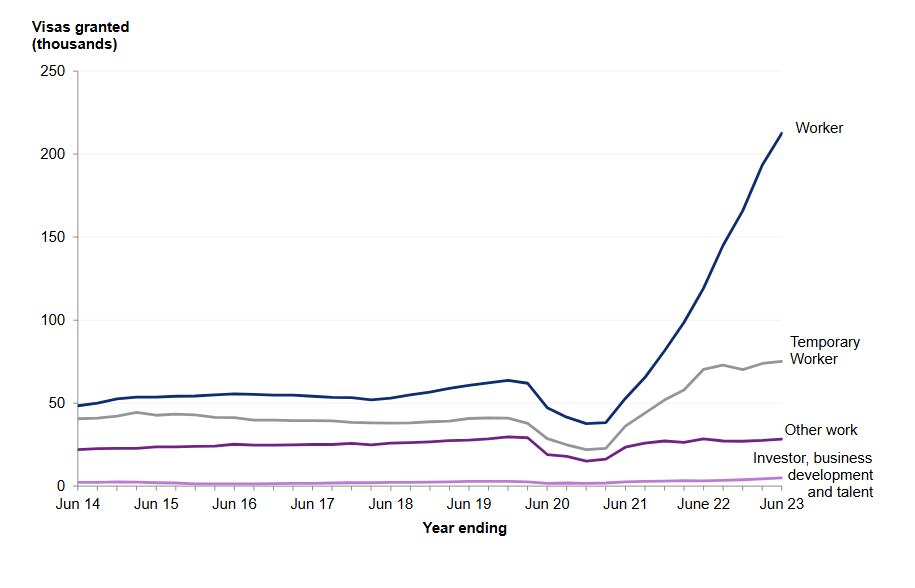
Source: GOV.UK
Some sectors in London are far more likely to back your job in London with visa sponsorship dreams than others.
In 2023, Skilled Worker – Health and Care visas nearly doubled (+91%) to 146,477 grants, primarily driven by NHS and social care roles.
At the same time, overall ‘Worker’ visas rose by 78% year-on-year, reflecting high demand for international talent across multiple industries.
This is because these sectors face chronic skills shortages and have the resources to sponsor. From hyper-growth tech startups to world-leading financial institutions, employers need specialists who can hit the ground running.
The thing is, if you target the right industries, you dramatically improve your chances of securing UK visa sponsorship jobs 2025 in London.
Tech and IT Jobs with Sponsorship
London is Europe’s fastest-growing tech hub, with over 9,000 startups employing more than 350,000 people.
The shortage of software engineers, data scientists, and cybersecurity experts means companies like Deliveroo, Revolut, and Sky actively recruit overseas.
And since many tech jobs now qualify for the new “specialist worker” route, making skilled worker visa jobs in London more accessible than ever.
If you code, analyse data, or architect cloud solutions, you’re in high demand, and sponsorship packages often include relocation support, training budgets, and fast-track applications.
Healthcare and NHS Roles for International Applicants
The NHS and private healthcare providers are among the UK’s biggest sponsors. Most roles on the shortage occupation list UK, from registered nurses to physiotherapists, are eligible for lower salary thresholds and faster processing.
If you hold qualifications recognised by the NMC or HCPC, you’ll find healthcare and NHS roles eager to sponsor you.
Here’s one for you: the government has pledged to recruit 50,000 additional nurses by 2025, many from abroad.
That means structured support, mentorship programs, and clear pathways to permanent status.
Want to know the best part? Working in London’s healthcare sector often requires relocation assistance and professional development allowances.
Finance, Consulting, and Legal Services
Finance reigns supreme in London, employing over 1.1 million professionals and generating almost £75 billion in revenue annually.
However, what’s even more remarkable is the eagerness of banks, consultancies, and law firms to sponsor visas. Think Tier 2 sponsorship jobs in the UK in risk management, compliance, and transactional law.
Global banks, such as HSBC and Barclays, maintain active sponsorship lists and run graduate schemes for international hires.
Management consultancies such as McKinsey, BCG, and PwC also sponsor experienced consultants in areas like digital transformation.
But why do they sponsor? Because regulatory and client demands require high-calibre expertise that local supply can’t always meet.
If you’re a chartered accountant, risk analyst, or corporate lawyer, London’s financial and professional services firms will partner with you on your visa journey, often covering application fees and immigration health surcharges.
Engineering and Construction Sector Roles
London’s skyline never stops evolving, and that means constant demand for engineers and construction specialists. Civil engineers, project managers, and quantity surveyors on the shortage occupation list UK are at the top of the sponsor-eligible list.
Many construction firms now bundle visa sponsorship with relocation packages, professional development, and accommodation support.
If you’re equipped with a recognised engineering degree and professional membership (e.g., ICE or RICS), London’s construction and infrastructure firms will line up to sponsor your visa
Read:
- How I Cracked the Visa Sponsorship Code to Land a Digital Marketing Executive Role After The RKY Careers Digital Marketing Bootcamp
- Get a Job in the NHS with Apply Buddy
How to Search and Apply for Visa Sponsorship Jobs in London
Finding jobs in London with visa sponsorship can be overwhelming if you don’t know where to start.
The right platforms and strategies streamline your search and bring sponsored opportunities to your fingertips.
First, bookmark targeted job boards focused on UK visa sponsorship jobs 2025, then set up job alerts to catch new postings immediately.
You can filter roles on LinkedIn by “Visa sponsorship” and location “London” to see up-to-date listings. Or try specialist sites like “Jobs for Foreigners in London,” which curate employer-sponsored roles.
Registering on multiple sites boosts your exposure and often unlocks exclusive listings.
Additionally, actively following London companies that hire international workers on social media channels, such as Twitter’s #VisaSponsorshipUK hashtag, can reveal unadvertised openings.
A structured approach to job boards, combined with real-time alerts, will keep you ahead of deadlines and close to your next CoS offer.
Best Job Boards and Platforms to Use
Not all job boards are created equal. Indeed remains king, with 63% of UK job hunters using it regularly
However, niche platforms like “Skilled Worker Visa Jobs London” and “Apply for Jobs in London from Abroad” often feature roles specifically tagged for sponsorship.
- TotalJobs (21 million CVs on file) for high-volume sponsored listings

- Reed.co.uk for direct employer postings.
- LinkedIn to leverage networking and “easy apply.”
First, create profiles on each, complete your skills list, and upload a London-tailored CV.
Then, use filters like “Sponsored” or “Skilled Worker” to narrow results.
Diversifying your job board presence maximises your chances of finding roles that offer employment and a Certificate of Sponsorship.
How to Tailor Your CV for Sponsorship Roles
Tailoring your CV for a Tier 2 sponsorship job in the UK is critical to pass ATS screenings and human review. ,
Matching keywords from job ads, such as “Skilled Worker visa,” “Shortage Occupation List,” or specific role requirements, is essential.
Here’s how you can do the same thing:
- Mirror language from the job description under “Professional Skills.”
- Highlight international experience under a “Global Exposure” section.
- Include measurable outcomes, e.g., “Increased system uptime by 20% as IT support lead.”
Use keywords to optimise your CV, but don’t stuff keywords randomly. Place them in context, demonstrating how you used them.
For example, instead of just listing “Visa Sponsorship UK,” illustrate: “Managed visa applications for two international hires, achieving 100% approval rate.”
A well-optimised, ATS-friendly CV enhances your application and increases your chances of being noticed by London sponsors.
Tips for Writing a UK-Ready Cover Letter
First, address the hiring manager by name, then open with enthusiasm for working in London’s dynamic market.
Use phrases like “I am excited about the opportunity to work in London with visa sponsorship,” which demonstrates your understanding of the process.
Structuring your letter to highlight your eligibility, mentioning your readiness for a skilled worker visa and relevant experience, signals to employers that you’re prepared.
You might be wondering how long should the cover letter be? Brevity wins. Keep paragraphs to 3–4 sentences, using bullet points to highlight key achievements.
Conclude with a clear call to action, such as “I look forward to discussing how my experience can support [Company]’s goals in London,” to demonstrate confidence and intent.
A UK-ready cover letter tailored for sponsorship roles bridges cultural expectations and technical requirements, setting you apart from generic applicants.
You Might Be Interested In:
Common Challenges and How to Overcome Them
Landing one of the coveted jobs in London with visa sponsorship isn’t without hurdles. From paperwork delays to fierce competition, these challenges can feel daunting.
The good news is that, with strategic preparation, you can turn obstacles into opportunities and secure your spot in London’s workforce.
Understanding common rejection reasons and outshining local talent enables you to navigate the process with confidence.
Knowing this, you can preempt errors and strengthen your application.
Visa Sponsorship Rejection Reasons
First, do you know why applications get refused? The top reasons include incomplete Certificates of Sponsorship, insufficient funds, and salary below the required threshold.
For roles on the UK shortage occupation list, employers sometimes misclassify job codes, which can trigger denials.
Meticulous preparation is your secret weapon. Always double-check your CoS details, ensure your bank statements prove maintenance funds, and confirm that your prospective salary meets or exceeds the going rate.
A clear checklist, peer reviews of your documents, and early communication with your sponsor can significantly reduce the risk of rejection.
Competing with Local Talent: What You Can Do
You’ll often compete against local candidates who already meet visa criteria. So, how do you stand out? Start by emphasising transferable skills examples and global perspectives that many local applicants may not possess.
Utilise your CV and cover letter to highlight your involvement in cross-cultural projects, language proficiencies, and adaptability in diverse teams.
You can also pursue roles on the UK work visa job list that are undersubscribed by locals, such as data science, AI ethics, or specialised engineering fields.
These shortage roles often come with streamlined sponsorship processes.
First, do your research on niche markets and emerging sectors in London. Then, tailor your applications to highlight how your unique background solves specific business challenges.
By playing to your unique strengths and targeting less-contested positions, you’ll outpace local talent and secure your sponsorship role.
Check Out:
- Register of Licensed Sponsors for Migrant Students
- How to Identify Your Career Goals and Find a Fulfilling Path
Ready to Stand Out?

If you’re serious about landing one of these coveted roles, consider the RKY Careers Bootcamp, where you’ll refine your job-search strategy, perfect your CV, and practice visa-specific interview scenarios.
Join the RKY Careers Bootcamp, a hands‑on, 6‑week program that helps you:
- Master CV and cover letter writing for UK sponsors
- Hone interview techniques with mock panels
- Navigate UK job boards and secure your CoS
- Get 1:1 mentorship from industry pros
Alumni are seeing a 45% faster job placement rate in visa‑sponsored roles. Ready to fast‑track your London career? Learn more about RKY Careers Bootcamp
FAQs
- Which companies in London sponsor work visas?
Major multinationals, such as Google, Amazon, HSBC, and Barclays, maintain active sponsor licences. Additionally, the NHS, consulting firms (McKinsey, BCG), and tech scale-ups (Revolut, Deliveroo) frequently hire and sponsor visas.
- Can I get a job in London from abroad with sponsorship?
Absolutely. By applying online to licensed sponsors, securing a Certificate of Sponsorship, and meeting visa requirements, such as English proficiency and salary thresholds, you can land jobs in London with visa sponsorship from overseas.
- What is the minimum salary for a UK work visa in 2025?
For most Skilled Worker visas, the general minimum salary is £26,200 annually or the specific “going rate” for the role. Shortage Occupation List jobs enjoy a 20% reduced threshold.
- Is visa sponsorship guaranteed after a job offer?
No. An offer must come from a licensed sponsor issuing a valid CoS, and you still need to satisfy visa criteria, salary, English proficiency, and maintenance funds before your visa is formally granted.