
Entry Level Business Analyst Certification
Ready to take hold of the buzzing and dynamic world of business analysis, especially here in the UK? Then you can start small by bagging an entry level business analyst certification.
Whatever your background, navigating the initial steps can feel overwhelming. But here’s the deal: getting an entry-level business analyst certification can be your secret weapon.
It’s a fantastic way to validate your foundational knowledge and demonstrate to potential employers that you are serious about the profession. This isn’t just about getting a piece of paper; it’s about strategically positioning yourself in a competitive job market.
When you’re trying to figure out how to develop a high-value digital content strategy UK, understanding the core principles of business analysis is incredibly valuable.
Why? Because a good business analyst helps bridge the gap between business needs and technical solutions, which is crucial for any successful digital initiative.
Why Entry-Level Business Analyst Certifications Matter
You may be wondering, “Do I really need a certification to become a business analyst?”
While some argue that experience trumps all, in today’s landscape, a certification offers distinct advantages, particularly for those just starting or looking to make a transition.
Boosting Employability in a Competitive UK Job Market
Let’s be honest: the UK job market is buzzing, but it’s also highly competitive. Employers are often sifting through numerous applications for every role.
Now, imagine two candidates with similar backgrounds, but one holds an entry-level business analyst certification, while the other doesn’t. Who do you think stands out?
Here’s an example: A study by the Project Management Institute (PMI) indicated that employers highly value certifications.
While not solely focused on BAs, it highlights a broader trend: credentials signal commitment and a verified skill set. It gets better.
For aspiring BAs, these certifications provide a recognised benchmark, indicating to employers that you have mastered the basics.
This is particularly relevant when considering how to become a business analyst with no experience; certifications offer that much-needed formal recognition.
Building a Strong Foundation for a BA Career
Think of an entry-level business analyst certification as the sturdy foundation of a skyscraper. You wouldn’t build a tall building on shaky ground, would you? The same applies to your career.
These certifications ensure you grasp the core concepts, methodologies, and techniques essential for practical business analysis.
This includes everything from requirements elicitation to process modelling and solution assessment.
This foundational knowledge is critical, especially when you’re aiming to understand how to develop a high-value digital content strategy UK.
A business analyst, equipped with this strong base, can effectively translate business objectives into actionable digital solutions, ensuring the content created truly delivers value. It helps you speak the language of both business and IT, making you an invaluable asset.
Read Also;
- Landing a Deputy Business Analyst Role After Honing My Leadership Skills in RKY’s Business Analysis Bootcamp; Kelvin’s Success story
- From Bootcamp Graduate to Business Analyst: How RKY Careers PM/BA Bootcamp Paved My Way to the NHS
Best Entry-Level Business Analyst Certifications
Choosing the “best” certification often depends on your specific goals and whether you’re targeting a global or predominantly UK-based career.
However, a few stand out as excellent starting points for beginners.
ECBA (Entry Certificate in Business Analysis)

The ECBA, offered by the International Institute of Business Analysis (IIBA), is specifically designed for individuals new to business analysis. It focuses on foundational knowledge as outlined in the BABOK® Guide (Business Analysis Body of Knowledge).
Why it’s great for beginners:
- No prior experience required: This is a massive plus for career changers and recent graduates.
- Covers core concepts: It familiarises you with key terms, ideas, and techniques.
- Globally recognised: The IIBA is an international body, so an ECBA holds weight worldwide.
Many individuals pursuing beginner business analyst courses find the ECBA a logical first step. It provides a solid understanding of the BA role without requiring years of practical experience. For those looking at ECBA certification UK, numerous training providers offer preparation courses to help you pass the exam.
BCS Foundation Certificate in Business Analysis (UK-focused)

For those firmly planted in the UK or aspiring to work in its unique business environment, the BCS (British Computer Society) Foundation Certificate in Business Analysis is a highly respected credential.
Why it’s a strong contender in the UK:
- UK-centric: The content is often tailored to the practices and terminology standard in the UK.
- Industry recognition: BCS is a prominent professional body in the UK, making its certifications well-regarded by employers.
- Practical approach: It often includes practical techniques relevant to real-world scenarios.
If your aim is squarely on junior business analyst jobs UK, then the BCS Foundation Certificate could give you an edge. It demonstrates your understanding of BA principles within a UK context, which can be a significant advantage.
This also helps in understanding regional nuances when trying to how to develop a high-value digital content strategy UK.
Read Also:
CAPM™ or Industry-Recognised Alternatives
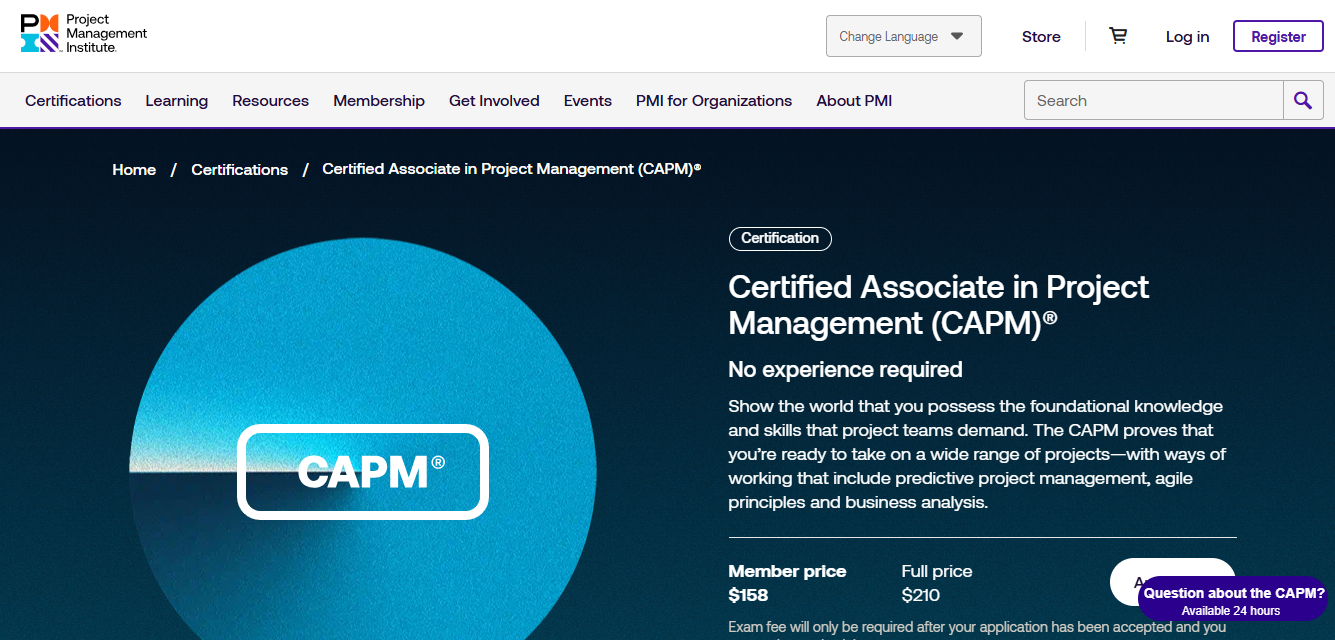
While not strictly a “business analyst” certification, the Certified Associate in Project Management (CAPM)™ from the Project Management Institute (PMI) is an excellent alternative for those who might find themselves straddling both project management and business analysis roles.
Business analysts often work closely with project managers, and understanding project methodologies can significantly boost your value.
Other industry-recognised alternatives or complementary skills include:
- Agile certifications (e.g., Scrum Master/Product Owner): Many BA roles operate in Agile environments.
- Data analysis fundamentals: Understanding data can significantly enhance a BA’s capabilities.
Choosing the best certification for business analyst beginners may involve looking beyond purely BA-specific options to those that broaden your skill set. This is particularly true for BA training for career changers UK, where a multi-faceted approach can make you more attractive to employers.
How to Choose the Right Certification for Your Career Goals
Selecting the perfect entry-level business analyst certification isn’t a one-size-fits-all decision. It requires a bit of introspection about where you see your career heading.
Considering Global vs UK Recognition
This is crucial. If you envision working internationally or for global companies with offices in the UK, a globally recognised certification like the ECBA from IIBA might be your best bet. It offers portability and a universally understood standard of knowledge.
However, if your ambition is firmly rooted in the UK market, and you want to ensure your certification resonates strongly with local employers, the BCS Foundation Certificate in Business Analysis could be more impactful.
It shows a specific alignment with UK industry practices.
Think about it: a UK employer looking for how to develop a high-value digital content strategy UK might appreciate a candidate with locally relevant expertise.
Balancing Cost, Duration, and Career Outcomes
Certifications are an investment of time, effort, and money.
- Cost: Fees can range from a few hundred to over a thousand pounds, including exam fees and training materials.
- Duration: Preparation can take anywhere from a few weeks to several months, depending on your study habits and prior knowledge.
- Career Outcomes: Research what types of roles your chosen certification typically leads to. Look at junior business analyst jobs UK postings to see which certifications are most frequently requested.
For example, a report by the Open University highlighted that investment in upskilling, including certifications, is increasingly vital for career progression and meeting skills gaps in the UK workforce.
This underscores the value of strategic certification choices.

Source: Gov.uk Media
What to Expect After Getting Certified
So, you have put in the hard work, passed your exam, and now you have your entry-level business analyst certification.
Congratulations! What’s next on your journey to understanding how to develop a high-value digital content strategy UK?
Entry-Level Job Roles in Business Analysis
With your certification in hand, you’ll be well-positioned for various entry-level roles. These can include:
- Junior Business Analyst: This is the most direct path, working under the guidance of more senior BAs.
- Trainee Business Analyst: Similar to a junior role, often with a structured training programme.
- Business Change Analyst: Focusing on the people and process aspects of change initiatives.
- Requirements Analyst: Specialising in eliciting, documenting, and managing requirements.
Many of these roles can be found among junior business analyst jobs UK, and your certification will certainly help your application stand out.
Remember, the goal is to get your foot in the door and start gaining practical experience.
Read Also:
Average Salary for Junior BAs in the UK
Salaries for junior BAs in the UK can vary based on location, company size, and specific responsibilities. However, an entry-level business analyst certification can positively influence your starting salary.
According to Glassdoor data updated in early 2024, the average salary for an entry-level Business Analyst in London can range from £28,000 to £35,000, with variations across other UK regions.
While this is an average, having a certification demonstrates a commitment to the profession and a baseline of knowledge that can justify a higher starting point.
This is excellent news for career changers UK who might be concerned about salary drops during a transition.

Source: Glassdoor
Career Growth Pathways After Certification
An entry-level business analyst certification is just the beginning. The world of business analysis offers fantastic career progression opportunities.
- Mid-Level to Senior BA: As you gain experience, you can move into more complex projects and take on greater responsibility.
- Specialised BA Roles: You might specialise in areas like data analysis, cybersecurity, or UX.
- Product Owner/Manager: Many BAs transition into product-focused roles, leveraging their understanding of business needs and solution development.
- Consulting: Applying your expertise across various organisations as an external consultant.
- Leadership Roles: Moving into lead BA positions, managing teams, or heading up business analysis functions.
The journey starts with that crucial first step, and a certification truly accelerates your progress.
For those keen on understanding how to develop high-value digital content strategy UK from a business perspective, a strong BA foundation sets you up for success.

Let RKY careers be your starting points into business analyst certification, with our CPD Accredited certificates, our Bootcams give you the guidance and clarity you need.
Be the bridge between business and tech at Rky careers business Analyst Bootcamp in one click.
FAQs: Entry Level Business Analyst Certification
1. What is the easiest entry-level business analyst certification to get in the UK?
The ECBA (Entry Certificate in Business Analysis) from IIBA is often considered one of the most accessible as it requires no prior BA experience. The BCS Foundation Certificate in Business Analysis is also a very popular and achievable starting point within the UK.
2. How long does it take to complete an ECBA or BCS certification?
Typically, preparation for either the ECBA or BCS Foundation Certificate can take anywhere from 2 to 6 weeks of dedicated study, depending on your learning style and the intensity of any chosen beginner business analyst courses.
3. Can I get a business analyst job in the UK without certification?
Yes, it’s possible, especially if you have transferable skills, relevant experience in other fields, or a strong academic background. However, an entry-level business analyst certification significantly boosts your chances, particularly when you’re exploring how to become a business analyst with no experience.
4. What skills should I combine with certification to land a BA role faster?
Complement your entry-level business analyst certification with strong communication, problem-solving, analytical thinking, and interpersonal skills. Familiarity with tools like Microsoft Visio, Jira, or Confluence, and an understanding of Agile methodologies, will also make you more competitive in junior business analyst jobs UK.