

Project Management Employment Opportunities in the UK
If you have ever scrolled a job board and wondered where your background fits, this guide is for you. It shows how project management employment opportunities in the UK are opening up for mid-career professionals. And you do not need a tech degree to step in.
Project management sits inside almost every industry. Banks run projects, and so do hospitals, councils and construction firms. As a result, project management skills travel well from one sector to another.
Here’s the deal: you already plan, coordinate and solve problems at work, even if your job title says something else. Now you need to present those skills the way hiring managers expect.
Why the UK Market Keeps Hiring
Lets start with the numbers. The Project Management Institute (PMI) forecasts a need for up to 29.8 million more project professionals worldwide by 2035. PMI adds that the World Economic Forum ranks project management as the 12th fastest-growing role globally.
The UK picture also looks just as strong. Research from the Association for Project Management (APM) found that the profession added 190,000 full-time equivalent jobs since 2019. That takes the total to 2.32 million people.
Demand is not slowing down either. In that same research, 56% of surveyed businesses expect difficulty attracting new talent. For you, that gap is a real advantage. It also explains why project management employment opportunities in the UK stay open to newcomers.
What Project Management Roles Pay
Pay tells the same story. The APM salary survey for 2025 put the average project professional salary at £52,500, up from £47,500 in 2023. That is a rise of roughly 10%.
Sector matters a great deal as well. Energy and utilities, along with consultancy, average £62,500. Meanwhile, 30% of respondents in London earn £70,000 or more.
But you’re probably wondering: can you earn that level straight away? Not quite, although the climb is quicker than most people expect. Many people start in support roles before they move into project manager jobs.
Read also:
- How Much Project Managers Earn in the UK
- Is Project Management a Good Career? Salary & Job Prospects
Entry Points That Open the Door
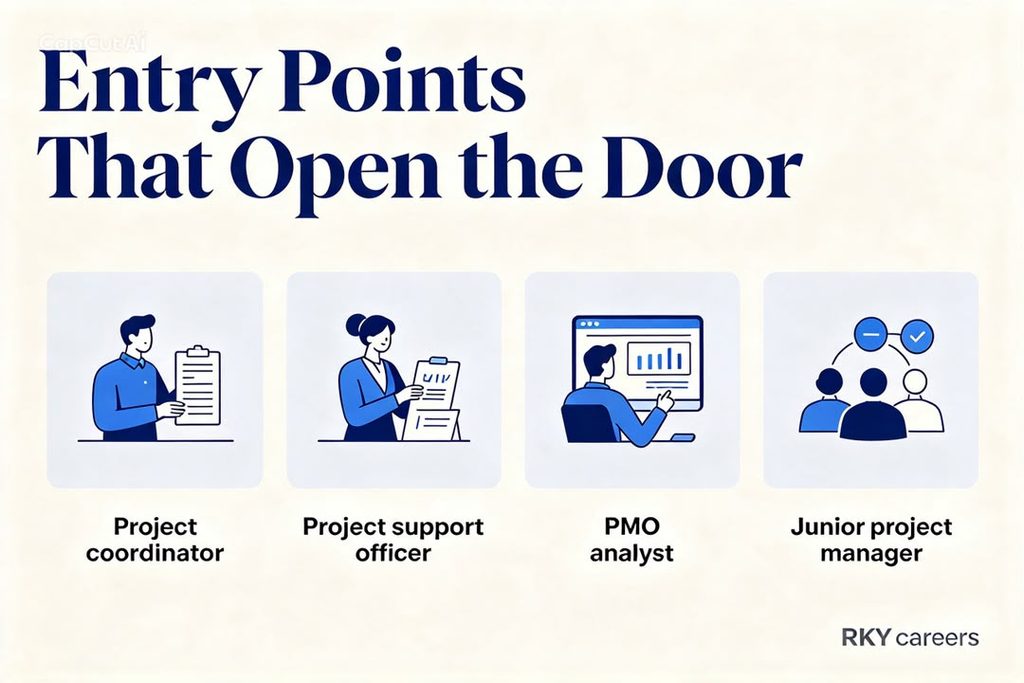
Now, where do you actually begin? Most newcomers start in project coordinator roles or support positions. These jobs teach you how projects really run.
| Starting point | Who it suits | What to build first |
| Project coordinator | Administrators and team leaders | Scheduling, reporting and stakeholder updates |
| Project support officer | Graduates and public-sector staff | Budget tracking, documentation and risk logs |
| PMO analyst | Data-minded professionals | Dashboards, governance and tool skills |
| Junior project manager | People who already lead small teams | Ownership of a small, defined project |
Here’s an example: picture Amara, an operations lead in retail who has run rotas, budgets and product launches for six years. She never wrote the word “project” on her CV. After she reframed each launch with a budget, a timeline and a result, recruiters began to reply.
This scenario shows what recruiters want. They look for proof of delivery rather than a specific job title. That is why project management employment opportunities in the UK reward people who can show results.
A Five-Step Framework to Land Your First Role
A simple sequence works best. Follow it in order, and each step makes the next one easier.
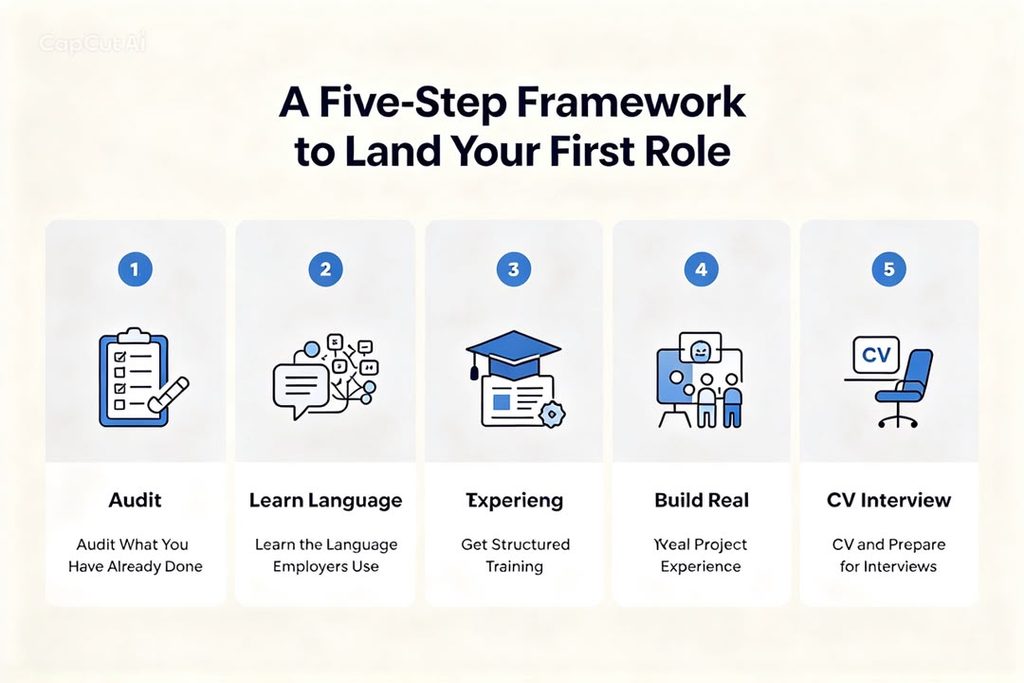
1. Audit What You Have Already Done
List three pieces of work where you managed people, time or money. Write down the goal, the deadline and the result. This exercise becomes the base of your project management career story.
2. Learn the Language Employers Use
Terms like scope, risk, stakeholder and sprint appear in almost every job advert. Learn what they mean before you apply. Moreover, get familiar with Agile and PRINCE2, the two approaches you will see most often.
3. Get Structured Training
Self-study only takes you so far. A structured project management course gives you frameworks, tools and the confidence to talk like a practitioner. Furthermore, a recognised project management certification shows employers that you have met a clear standard.
Read also:
- How Do You Get Into Project Management? A Practical 2026 Career Guide
- Career Guide on How to Become a Project Manager in the UK
4. Build Real Project Experience
Employers want proof, not promises. But why? Because hiring managers cannot see potential on paper. Look for live projects where you plan, report and deliver with a team. For example, you could lead a small improvement at work or join a volunteer project.
5. Rebrand Your CV and Prepare for Interviews
Rewrite your CV around outcomes and show budgets, timelines, team sizes and results. Tailor it to the project coordinator roles you want, and mirror the wording of each advert. That approach helps your CV match the project management employment opportunities in the UK that suit your sector.
Then practise behavioural and competency questions with the STAR method. Prepare short stories about risk, conflict and delivery. Moreover, rehearse them aloud until they sound natural.
Read also:
- Project Management Behavioural Interview Questions
- Project Management Competency-Based Interview Questions
Skills That Make Recruiters Take Notice
Recruiters for project manager jobs rarely expect perfection. However, the strongest candidates for project management employment opportunities in the UK show these five strengths.
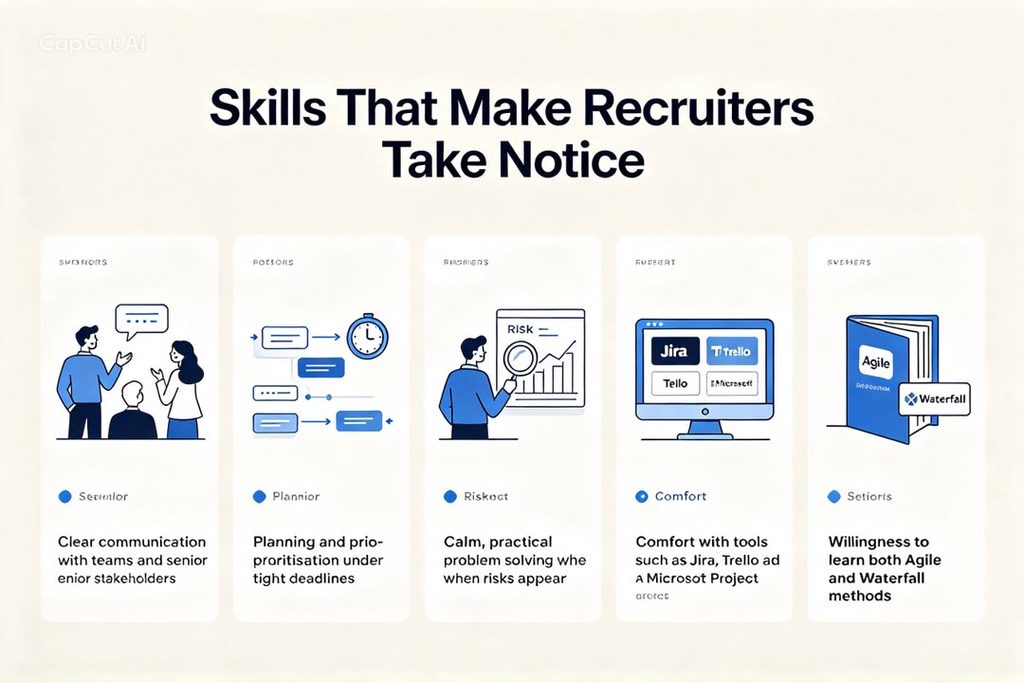
- Clear communication with teams and senior stakeholders
- Planning and prioritisation under tight deadlines
- Calm, practical problem solving when risks appear
- Comfort with tools such as Jira, Trello and Microsoft Project
- Willingness to learn both Agile and Waterfall methods
The bottom line? You can build every one of these before your first application. Hiring teams also value a recognised project management certification, and practical experience still matters just as much.
Read also:
- Project Management Technical Interview Questions And Answers
- How to Optimise Your CV to Get Interviews in the UK
The market is open, the pay is strong and the skills are learnable. Now you need a plan and a little momentum. Start with your audit this week, then work through the steps in order. Every project you have delivered already counts. Bold promise? Definitely. Follow this framework, and you can turn project management employment opportunities in the UK into a lasting project management career.
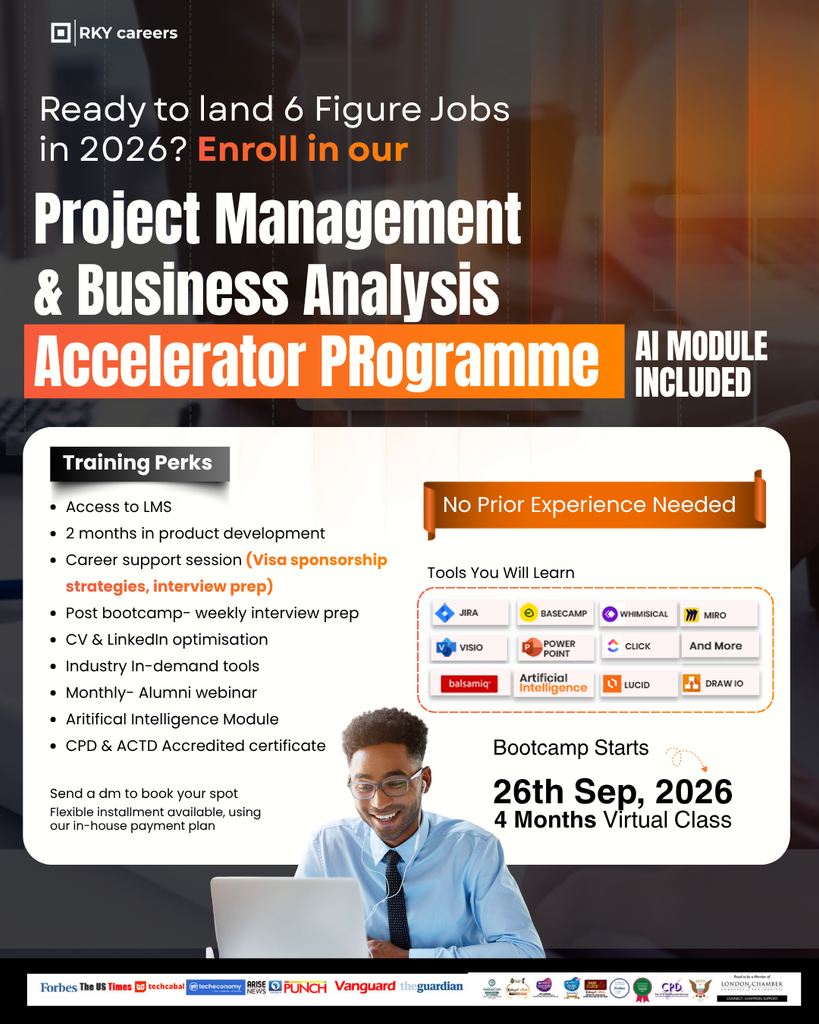
Turn Your Plan Into an Offer With RKY Careers
Structure, feedback and real practice make the biggest difference. Landing project management employment opportunities in the UK becomes far easier with that support.
Ready to turn project management employment opportunities in the UK into a real offer? The RKY Careers project management course pairs live project experience with personalised coaching, CV and LinkedIn rebranding, and mentorship during and after training. Join more than 1,500 success stories, and build the skills UK employers want.
Explore Our Project Management Bootcamp
Beyond the training itself, RKY Careers supports you with career branding, interview preparation and career mapping. Together, these services give you a clear route from your current role to your first offer. Our approach is personalised, so your plan reflects your background and your goals.
Frequently Asked Questions
Do I need a degree to start in project management?
No, a degree is not strictly essential. Many employers care far more about proof that you can plan, organise and deliver. Relevant training, transferable experience and a well-written CV often carry more weight. However, some large employers still list a degree, so always check each advert carefully before you apply.
How long does it take to land a first project role?
Timelines vary, but many career changers need a few months of focused effort. That time covers training, practical experience, CV rebranding and interview practice. Applying while you train can shorten the wait, since interviews also teach you what employers want. Consistency matters more than speed, so aim for weekly progress.
Should I learn PRINCE2 or Agile first?
It depends on your target sector. PRINCE2 is common in government, finance and large organisations. Agile suits technology, digital and fast-moving teams. Check five recent job adverts in your field and note which method appears most often. Then start with that one, and add the other as your confidence grows.
Are there enough openings for career changers?
Yes, there are. Demand for project talent is rising. Project management employment opportunities in the UK span finance, construction, health, technology and the public sector. Career changers succeed most often when they show transferable results. Focus on the sectors you already understand, because domain knowledge gives you a real edge.


