Career Guide on How to Become a Project Manager in the UK
Wondering how to become a project manager in the UK without wasting years on the wrong route? Perhaps you have experience, yet no project title, qualification plan, or proof employers value. Maybe changing careers makes you fear starting again means losing hard-earned progress.
I have good news: project management rewards transferable experience when you package it with the right skills. This guide shows you qualifications, tools, experience, applications, and training routes that UK employers recognise. By the end, you will have a roadmap for moving from interest to interview-ready candidate.
What a UK Project Manager Actually Does

Before chasing certificates, you need a picture of the work itself. A project manager career in the UK centres on turning goals into controlled delivery.
You coordinate people, budgets, risks, deadlines, and stakeholder expectations from start to finish. Once you understand that responsibility, you can judge whether your strengths fit.
What a Project Manager Is Responsible For
Project managers turn a defined outcome into work that people can deliver. You clarify scope, build schedules, assign resources, track risks, control changes, and report progress. You also keep stakeholders aligned when priorities collide or new problems appear.
Look: the job is not simply organising meetings with a better title. A strong project manager career in the UK needs judgement, communication, planning, and commercial awareness.
The National Careers Service describes the role around organising people and resources for timely, affordable delivery. That is central to how to become a project manager in the UK: convert uncertainty into controlled action.
Where a Project Manager Career in the UK Can Take You
Project managers work across construction, technology, finance, healthcare, energy, government, marketing, and professional services. Therefore, your existing industry knowledge can become an advantage rather than career baggage. A nurse, engineer, marketer, or administrator may already understand stakeholders, deadlines, compliance, customers, or operational pressure.
Meanwhile, APM’s 2025 salary survey places average pay for project professionals at £52,500. That figure is not a starting-salary promise because sector, seniority, location, and responsibility still matter.
However, it shows the progression available within a project management career. When researching how to become a project manager, compare roles inside sectors you already understand first.
How Your Existing Experience Supports Becoming a Project Manager
Many career changers already manage small projects without using the title. You may have led a system rollout, office move, event, campaign, service launch, or process improvement. Those examples can support your project manager career path when you describe them properly.
Here’s the deal: employers need evidence, not creative relabelling of routine duties. For each example, record the goal, deadline, stakeholders, risks, actions, and measurable result.
Then compare those stories with project management qualifications for UK professionals and live job adverts. If you keep asking how to become a project manager in the UK, begin by auditing what you already deliver.
Related reading: Signs It’s Time to Change Your Career | How to Highlight Transferable Skills in Job Applications.
Choose the Right Project Management Qualifications for UK Professionals

Once the role feels right, your next task is choosing learning. Project management qualifications for UK professionals can strengthen knowledge, but employers still want evidence.
Therefore, treat certificates as tools rather than shortcuts to employment. The best project manager training for UK professionals should build practical judgement alongside recognised methods.
Compare Project Manager Qualifications Before You Commit
Project manager qualifications should match your current experience and target roles. Different credentials solve different problems, so avoid collecting badges without a plan.
Start with APM PFQ if you need fundamentals because it requires no previous project experience. APM PMQ suits broader knowledge development and often fits people with some project experience.
PRINCE2 Foundation Version 7 suits any career stage, while PMP targets experienced project leaders. Therefore, your experience should guide which credential you pursue first.
From 1 December 2026, PMI will tighten eligibility rules for live PMP training providers. Therefore, verify current requirements before booking project management courses in the UK. This is part of how to become a project manager in the UK without wasting money.
Understand the Main UK Entry Routes
Formal qualifications are only one route into the profession. The National Careers Service lists university study, apprenticeships, internal progression, and direct applications as recognised routes. Prospects also notes that postgraduate project management study is not required for employment.
Therefore, choose a route that fits your finances, experience, and timeline. A Level 4 Associate Project Manager apprenticeship can combine paid work with structured learning. Experienced professionals may instead move from project support, operations, engineering, IT, or similar roles.
For career changers, project manager training for UK professionals should support the route rather than replace it. Becoming a project manager becomes faster when learning and experience grow together.
Build a Project Manager Training Plan Around Real Demand
Before paying for training, reverse-engineer the market you want to enter. Review about 20 current adverts and record repeated tools, methods, duties, and preferred project manager qualifications. This quickly exposes patterns that generic course shopping can hide.
For example, APM’s 2024 SME research found 46% of respondents favoured training and upskilling existing staff to improve project skills. Use that logic personally: train against a measured gap, then practise it.
RKY Careers’ Career Advisory can help you audit transferable experience and target realistic roles. Good project manager training for UK professionals should leave you more employable, not simply more certified.
Match Project Management Courses in the UK to Job Adverts
Create a simple requirement matrix before you choose your next credential. Split every target advert into must-have, preferred, and learnable requirements. Then score yourself honestly against each group and identify the gaps blocking interviews.
Now: separate qualifications from evidence. A PRINCE2 certificate may prove method knowledge, but it does not prove stakeholder leadership. Likewise, project experience cannot always replace a qualification explicitly required by an employer.
Use job adverts to decide which project management qualifications for UK professionals matter in your niche. This disciplined approach explains how to become a project manager in the UK without copying someone else’s career plan. Your route should mirror the roles you actually want.
Related reading: 2026 Career Paths | Tech Career Pivot Series II: Complete Business Analyst Guide
Build the Project Management Skills UK Employers Expect

Qualifications give you structure, but daily delivery depends on what you can do. Strong project management skills connect planning with clear communication and sound decisions.
You also need confidence with digital tools, reporting, risk tracking, and changing priorities. This is where project management courses in the UK should become practical.
Strengthen Communication, Leadership, and Risk Judgement
Strong project managers make work easier for other people to understand and deliver. Therefore, communication, leadership, negotiation, time management, adaptability, and conflict handling deserve deliberate practice. APM’s 2026 Business Leader Index also identified data literacy as the leading skill for project professionals.
But why? Tools can display a late task, yet people must resolve the cause. Practise chairing short meetings, writing clear updates, challenging assumptions, and escalating risks early.
Ask colleagues for feedback on how you communicate under pressure. These project management skills strengthen your project manager career in the UK because employers need calm delivery and sound judgement.
Learn the Delivery Methods Behind Modern Project Work
Methods give teams a shared way to organise work, but no method fits every project. Learn Waterfall for sequential delivery, Agile for adaptive work, Scrum for iterative team delivery, and Kanban for visible workflow. PRINCE2 adds structured principles, practices, processes, and governance.
However, do not memorise definitions without practising decisions. Project management courses in the UK should teach when to adapt a method, not merely name it. Build one sample plan using a predictive approach, then rework it for Agile delivery.
That contrast develops judgement and helps you understand when different approaches work. Understanding multiple methods makes how to become a project manager in the UK less about labels.
Use Project Tools and AI With Confidence
Digital tools help you organise work, but they should never become the work itself. Learn a task tracker such as Jira, Trello, or Asana, then practise schedules, RAID logs, dashboards, and status reports. Excel, PowerPoint, Teams, and collaboration tools also remain useful across many organisations.
Do you want to know the best part? APM reported in 2025 that 70% of surveyed project professionals said their organisations were already using AI in projects.
Learn to use AI for drafting, summarising, scenario exploration, and routine analysis while checking outputs carefully. Modern project manager training for UK professionals should build digital confidence alongside judgement, privacy awareness, and stakeholder communication.
Add Business Analysis Skills to Your Project Manager Career Path
Project management and business analysis overlap because both disciplines turn business needs into organised change. A project manager focuses on delivery, while a business analyst digs deeper into needs, processes, requirements, and value. Together, those skills help teams solve the right problem before delivering the solution.
For example, practise stakeholder mapping, requirements gathering, process mapping, business cases, and acceptance criteria. These activities sharpen your questioning and reduce avoidable rework.
They also broaden your project management career and project manager career path options. If you are becoming a project manager, combining delivery knowledge with analysis can make your conversations more commercially useful.
Related reading: How to Get Your First Project Management Job | Project Management Behavioural Interview Questions
Turn Experience Into Evidence for Entry-Level Project Management

Now you must turn knowledge into proof that employers can inspect. Entry-level project management becomes easier when your CV shows delivery, not course completion alone.
You can build evidence through current work, volunteering, apprenticeships, or structured projects. Each experience should show what changed because you planned, coordinated, solved, or delivered.
Find Project Experience in the Work You Already Do
You do not need to wait for someone to hand you a project-manager title. Instead, look inside your current role for temporary work with a clear goal, deadline, stakeholders, and outcome. That could include onboarding improvements, software adoption, events, audits, relocations, reporting changes, or customer-process redesigns.
But here’s the kicker: document the evidence while the project is happening. Track baseline problems, actions, decisions, risks, and results you can verify later. APM reported in 2026 that only 38% of business leaders found recruiting suitably skilled project professionals easy.
Your practical evidence can help you compete in that demanding market. This is how to become a project manager in the UK through credible experience, not invented claims.
Build a Portfolio That Proves Your Project Management Skills
A portfolio turns invisible project work into evidence a recruiter can inspect. Build short case studies that explain the problem, your role, the approach, key decisions, challenges, and results. Remove confidential names, figures, customer data, and internal documents before sharing anything publicly.
Useful portfolio items can include a project charter, stakeholder map, schedule, RAID log, status report, change log, and lessons learned. However, explain why each artefact mattered instead of displaying templates alone.
RKY Careers’ Professional Portfolio service helps professionals present projects, skills, certifications, and outcomes online. This supports entry-level project management because hiring managers can see how you think, not only what you claim.
Target Entry-Level Project Management Roles Strategically
Your first role may not say “Project Manager”, and that is completely normal. Search for Project Coordinator, Project Support Officer, PMO Analyst, Assistant Project Manager, Junior Project Manager, Delivery Coordinator, and Associate Project Manager. These roles can expose you to governance, schedules, reporting, risks, budgets, and stakeholder work.
Apprenticeships offer another practical route, especially in England. Current GOV.UK listings show Level 4 Associate Project Manager apprenticeships combining paid work with structured training. Therefore, broaden your search before assuming entry-level project management means unpaid experience.
A sensible project manager career path often grows through responsibility in stages. That is another route for how to become a project manager in the UK while earning evidence.
Related reading: Tips to Make a Career Pivot and Land the Job You Want in 2024 | Project Management Technical Interview Questions And Answers
Position Yourself to Win a Project Manager Job in the UK

With credible evidence behind you, the next challenge is winning interviews. Learning how to become a project manager means learning how UK employers assess value.
Your CV, LinkedIn profile, networking, applications, and interview stories must reinforce one message. You can organise people and uncertainty well enough to deliver useful outcomes.
Write a UK Project Manager CV and LinkedIn Profile
Your CV should read like a delivery record, not a copied job description. Lead with the target role, relevant methods, tools, qualifications, and strongest project outcomes. Then quantify improvements where you can verify time, cost, quality, volume, risk, or customer impact.
Now: make LinkedIn tell the same story. Use searchable project terms naturally in your headline, About section, skills, and experience. RKY Careers offers and for professionals targeting UK opportunities.
Those services can help align your presentation with the roles you target. Learning how to become a project manager in the UK includes making your evidence easy for recruiters to recognise.
Search and Network With a Target List
Do not rely on one job board and hope volume creates luck. Search LinkedIn, employer websites, specialist recruiters, APM opportunities, and mainstream boards using several related titles. Set alerts, but also build a shortlist of organisations running the types of projects you understand.
Meanwhile, network around learning rather than asking strangers for jobs immediately. Ask project professionals about team structures, common entry roles, tools, and hiring expectations. APM’s Golden Thread research found ** of surveyed businesses predicted growth in project-based activity.
Therefore, follow growing sectors and project announcements, then approach relevant people intelligently. This makes how to become a project manager in the UK a targeted campaign rather than an application marathon.
Prepare Project Management Interview Stories That Show Results
Project interviews usually test what you did when delivery became difficult. Prepare STAR stories covering scope changes, late work, difficult stakeholders, competing priorities, risks, budget pressure, conflict, failure, and lessons learned. Keep each answer specific and show your own decisions clearly.
Here’s the deal: technical knowledge earns little credit if your examples stay vague. Practise explaining trade-offs, not just successful endings, because employers want judgement under pressure. RKY Careers’ Interview Preparation service can help you rehearse industry expectations and improve answer structure.
Strong project management skills become believable when your interview stories show behaviour, decisions, and results. That final step can turn project manager qualifications into actual job offers.
Related reading: Full Offer: Professional Profile Rebrand Package | How to Make a Career Change at 40
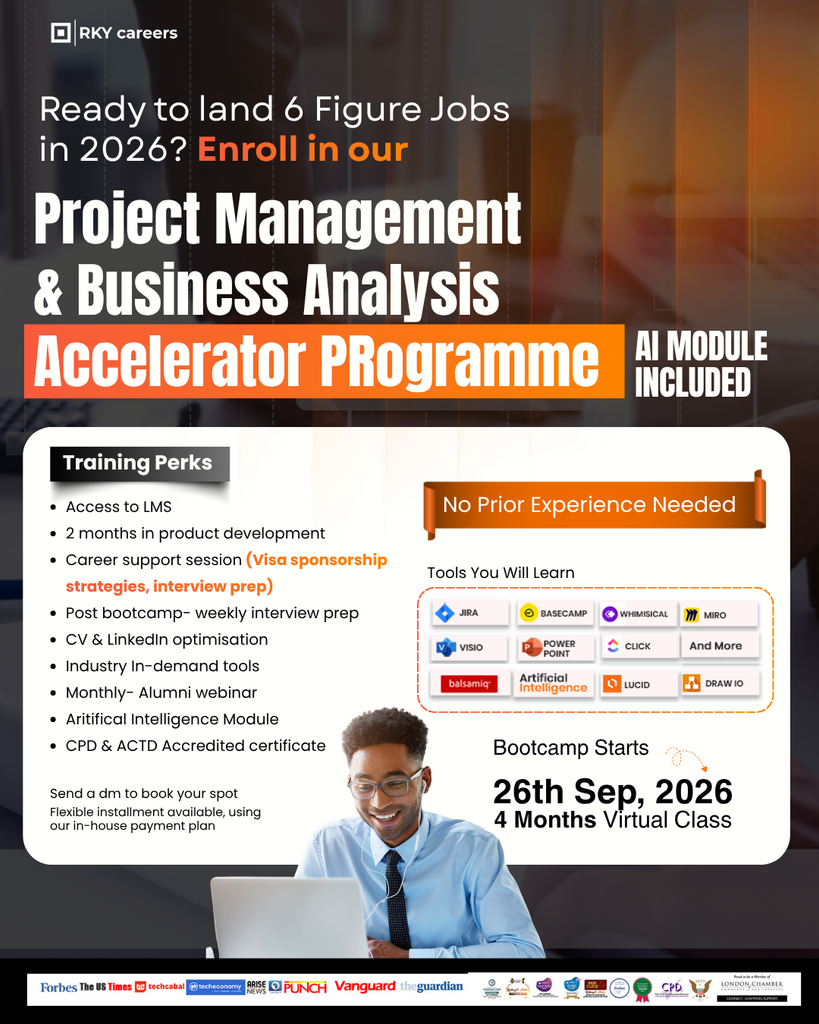
Accelerate Your Career With RKY Careers’ Project Management and Business Analysis Accelerator Programme
If your biggest gap is practical delivery, the RKY Careers Project Management & Business Analysis Accelerator Programme offers a structured bridge. Its current programme page describes a 15-week cohort with seven weeks of live classes and eight weeks of project work.
The programme combines project manager training for UK professionals with business analysis, live delivery, and hands-on tools. It covers Agile, Scrum, Kanban, Waterfall, and PRINCE2 while helping learners build practical evidence.
You can use the Accelerator experience to strengthen several parts of your professional story. Each activity gives employers clearer evidence of how you approach delivery:
- Practise working in cross-functional teams.
- Build portfolio-ready project evidence.
- Strengthen stakeholder and reporting skills.
- Understand delivery and business analysis together.
- Prepare for Project Manager, Business Analyst, or PMO pathways.
The bottom line: learning how to become a project manager in the UK should end with action, not endless research. Explore the RKY Careers Accelerator, identify your gaps, and start building evidence that employers can actually assess.