
New Rules For Immigration in the UK in 2025
Let me tell you the truth: the UK immigration system has never stood still, and 2025 is proving it more than ever. For thousands of workers, students, families, and employers, the New Rules for Immigration in the UK in 2025 are reshaping what’s possible and what’s not.
If you’re an international student hoping to stay after graduation, a professional planning to relocate, or a family member aiming to reunite with loved ones, these changes affect you directly.
And they’re not minor adjustments, and they’re structural shifts designed to redefine migration in one of the world’s most sought-after destinations.
I’ve also dug into the numbers, and trust me, the data tells a story of a country tightening its borders, while still needing international talent.
So, if you’re planning to work, study, join your spouse, or settle in the UK this year, you need the most straightforward possible guide. That’s what this blog delivers.
What Changed: Breaking Down the 2025 Immigration Rules
The immigration system has continuously evolved in response to economic needs and political priorities, but this year’s updates mark one of the most significant overhauls in decades, and the UK Visa Applications have Dropped After New Immigration Rules.
From work visas to family reunification, settlement, and even visitor visas, the New Rules For Immigration in the UK in 2025 touch almost every category.
Skilled Worker Visa: Higher Bar for Jobs and Salaries
Let’s start with the Skilled Worker route, since it has historically been the backbone of legal migration for professionals. Under the new rules:
- Skill Threshold Raised: From 22 July 2025, the skill threshold for the Skilled Worker visa has been raised to RQF Level 6 (roughly equivalent to a bachelor’s degree).
That means many roles that were eligible under RQF Levels 3-5 are no longer automatically accepted unless they’re on the new Temporary Shortage List.
In practice, this eliminates roughly 180 job categories that were previously acceptable at lower skill levels, including roles in construction, logistics, and social care.
- Salary Floor Increased: The minimum salary requirement has been lifted from around £23,200/year to £25,000/year (or £12.82/hour).
For many families, this means securing job offers that are harder to obtain and sponsors who can afford to meet the new requirements.
- Transitional Arrangements: Workers who were already in the UK under lower thresholds before July 2025 may continue under limited transitional protections, but new applicants must meet the stricter conditions.
Health and Care Worker Visa: A Tougher Reality
This category has seen perhaps the most emotional debate. Until recently, the UK’s health and social care sector relied heavily on overseas recruitment. So if you are looking to find a job as an immigrant in 2025, it’s a sector that you can go into.
But in July 2025, the government announced that the Health and Care Worker route would no longer accept new overseas applicants for certain roles, specifically care workers and senior care workers.
That means anyone outside the UK looking to fill those jobs will no longer be eligible. Existing workers already on this visa can apply for extensions or switch routes until July 2028; however, after that, the door will close.
This means a care home in Manchester that once recruited internationally will now struggle to fill staff shortages.
For a sector already stretched thin, this rule may create major staffing challenges. And for aspiring migrants, it shuts down what was once a popular and relatively accessible pathway.
Family Migration: Higher Financial and Language Hurdles
The dream of joining the family in the UK now comes with heavier responsibilities. Sponsors must meet higher financial requirements, often well above the median UK salary.
For example, sponsoring a spouse or partner now demands stronger proof of income and savings than ever before.
On top of that, the required English language level has been raised for those applying for settlement or indefinite stay.
Families who once could reunite on modest incomes now face significant financial strain, while applicants must demonstrate higher language proficiency.
Settlement and Indefinite Leave to Remain
For many, the ultimate goal is not just a temporary visa but settlement, Indefinite Leave to Remain (ILR), and eventually, British citizenship. The new rules stretch this timeline.
- In some cases, applicants must now complete 10 years of continuous residence rather than the previous 5.
- The government has also floated the idea of “earned settlement,” meaning applicants may need to prove more than just years lived; they might have to show meaningful contributions to work, taxes, or even community engagement.
This shift underscores the government’s message: settlement is no longer automatic; it has to be earned.
Visitor Visas and ETA Updates
Even short-term travel hasn’t been left untouched. As of March 2025, nationals of Trinidad & Tobago now require visas for visits and transits where they previously entered without them.
Meanwhile, British Nationals (Overseas) have been exempted from the UK’s Electronic Travel Authorisation (ETA) requirement.
Other updates include expanded lists of visa-free festivals and adjustments to what visitors can legally do while in the UK, closing loopholes that allowed some to work under visitor status.
Illegal Entry and Asylum Rules
Perhaps the most politically charged changes concern those arriving irregularly.
Under the New Rules For Immigration in the UK in 2025, anyone who enters via illegal routes, such as small boat crossings across the Channel, may now be permanently barred from obtaining British citizenship, even if they are later granted asylum.
This rule is aimed at discouraging irregular migration, but critics argue it punishes vulnerable groups fleeing conflict.
Study, Graduate, and Student Routes
After studying, the Graduate Route stay period has been reduced (e.g. many international graduates will now be allowed to stay for 18 months instead of two years).
Sponsorship/sponsor university compliance rules are tougher: institutions must meet enrollment/completion thresholds to continue admitting international students.
The policy may be national, but the impact is deeply personal. From stricter work visas to tougher family rules, and from settlement barriers to visitor tweaks, this year’s reforms impact nearly every type of migrant.
But the question remains: why did the UK government push these sweeping changes now?
See Also:
- Knowing Your Online Immigration Status in 2024: A Guide to Securing Your eVisa
- Highest Paying Student Jobs UK
Why the UK Introduced the New Rules for Immigration in 2025
If you’ve followed UK politics over the past few years, you’ll know immigration has been at the heart of every major debate. From general elections to late-night news panels, the question has been the same: Is the system working for Britain?
The New Rules For Immigration in the UK in 2025 didn’t appear overnight; they are the result of years of rising net migration, pressure on public services, and calls for a “high-skill, high-wage” economy. Let’s unpack the government’s reasoning.
Reducing Net Migration
SOURCE: GOV.UK
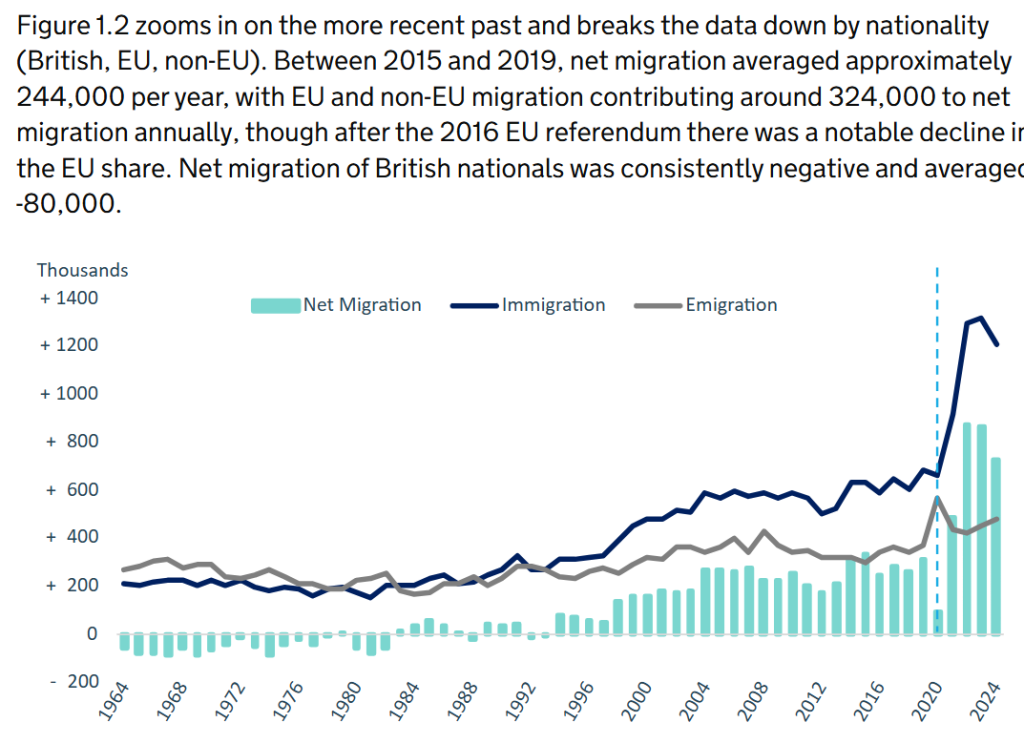
In the year ending June 2023, the UK saw a record net migration figure of 745,000, later revised closer to 906,000 after updated counts. That was the highest in modern history, and it sparked a wave of criticism.
By early 2025, independent analysts predicted that the reforms could bring down net migration by 100,000 to 250,000 people annually. For a government under pressure to “control the borders,” this is a clear win politically.
Prioritising Skilled Over Low-Skill Labour
The new skill threshold for work visas, RQF Level 6 and above, sends a clear message: the UK wants professionals with advanced qualifications.
There are jobs in the UK for immigrants, whether in finance, engineering, IT, or medicine. The government’s intent is to attract people who can fill high-value gaps and contribute to long-term economic growth.
The flip side? Industries like hospitality, agriculture, and social care, which traditionally relied on overseas workers in lower-skilled roles, may now struggle even more with shortages.
Protecting Public Services and Infrastructure
SOURCE: ONS
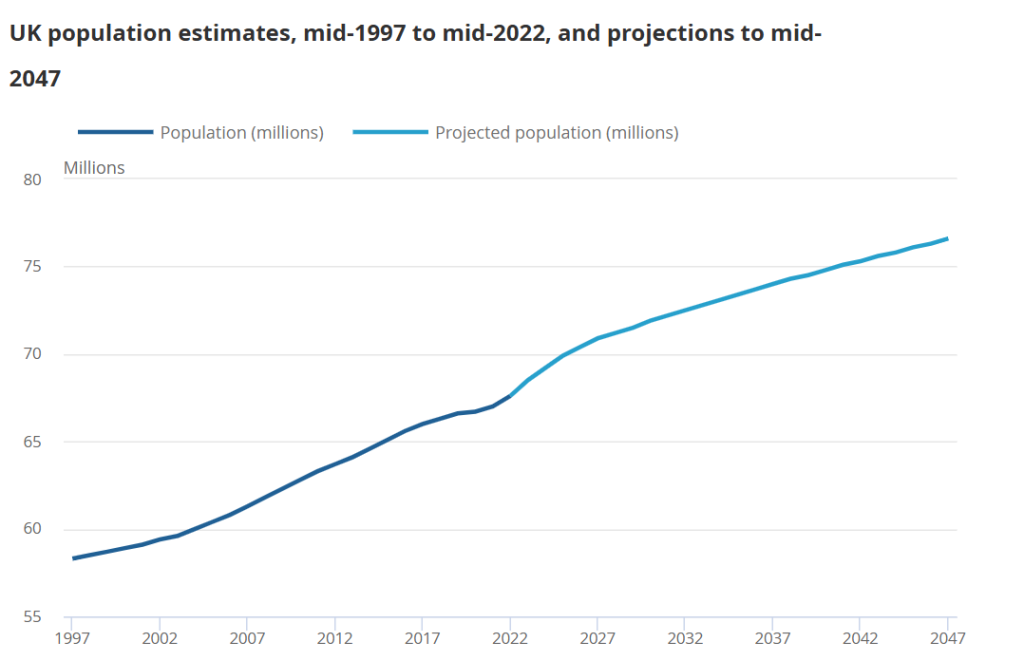
There’s no ignoring the numbers. The UK’s population is projected to reach 72.5 million by 2032, up from 67.6 million in 2022. A large part of that growth is driven by migration.
This population boom has stretched schools, hospitals, and housing markets thin. By tightening entry requirements, policymakers argue they’re giving the country room to breathe. Whether that actually happens, of course, remains to be seen.
Addressing Irregular Migration
The small boat crossings in the English Channel have been a lightning rod for political attention. This year, over 30,000 people crossed via this dangerous route.
The new rule that bars people who enter illegally from gaining citizenship is intended as a deterrent. The government wants migrants to “play by the rules” and use official channels, though refugee advocates warn this creates barriers for those fleeing life-threatening situations.
See Also:
Who These Changes Affect Most
While the headlines focus on “net migration,” it’s everyday people who feel these reforms most. So when you are setting career development goals, these are things to consider. Let’s take a closer look.
International Workers and Employers
If you’re applying for a Skilled Worker visa, the new thresholds may put your plans on pause. If you are finding a Job in the UK as a New Immigrant, Roles that used to be acceptable, like care workers, lorry drivers, or certain hospitality positions, are now off the list unless transitional rules apply.
Employers, on the other hand, face higher sponsorship costs, stricter compliance, and a reduced talent pool. Many businesses that rely on overseas recruitment are already voicing concerns that the rules could worsen labour shortages.
Students and Graduates
International students have long seen the UK as a top destination for higher education while Employers Use ATS in UK Grad Recruitment. But the New Rules For Immigration in the UK in 2025 add a layer of complexity:
- Graduate visas now come with tighter restrictions on dependents.
- Visa fees and health surcharges have risen, making studying in the UK significantly more expensive.
- Students hoping to switch to work visas after graduation face tougher eligibility hurdles, especially if their first jobs aren’t at RQF Level 6.
Families Reuniting in the UK
For families, the reforms have created emotional and financial challenges. Imagine this: a UK citizen earning £22,000 a year may no longer qualify to sponsor their spouse under the new income thresholds.
Families who once could reunite may now be split apart unless they can demonstrate higher earnings or savings.
For dependants already in the UK, the increased English language requirement also raises the bar. The idea is integration, but for some, it feels like yet another obstacle.
Settlement Seekers
For those on the path to Indefinite Leave to Remain (ILR) or citizenship, the road just got longer. The minimum residency period for some categories has increased from five years to ten.
Plus, the concept of “earned settlement” looms, meaning simply being present and law-abiding might not be enough. Proof of contribution could become a deciding factor.
Asylum Seekers
Those arriving via irregular routes are most harshly affected. Even if they are granted asylum, they may never gain the right to citizenship. Critics argue this creates a two-tier system where some people are protected but permanently excluded from full integration into British life.
See Also:
- Common challenges faced by Nigerian immigrants in the UK
- How to Tailor a UK Cover Letter for No Experience
What Applicants and Sponsors Must Do Now
If the New Rules for Immigration in the UK in 2025 affect you, preparation is everything. The system has become stricter, but that doesn’t mean opportunity is gone. It just means you need to be more strategic. Here are some steps to help:
1. Check Your Job’s Eligibility
Before you apply for a Skilled Worker visa, confirm whether your role still qualifies. The updated shortage list is much narrower, and jobs below RQF Level 6 are usually excluded. If your job no longer qualifies, consider whether further training, promotions, or alternative visa routes are available.
2. Review Salary and Contract Terms
Salaries must meet the new minimums, typically around £25,000 per year. If your employer’s offer falls short, you may need to renegotiate or explore whether your role qualifies under shortage exemptions. Employers will also need to be fully licensed to sponsor visas.
3. Prepare Stronger Documentation
Applications now face more scrutiny. That means detailed proof of qualifications, financial stability, English language skills, and continuous residence records. For those aiming for Indefinite Leave to Remain (ILR), start keeping thorough records early.
4. Plan for Higher Costs
Visa fees, the Immigration Health Surcharge, and sponsorship fees have all increased in 2025. For example, a Skilled Worker visa can now cost several thousand pounds in total, depending on the length and family members included. Budgeting is essential.
5. Family Migration: Act Early
If you’re reuniting with family, don’t delay. Income thresholds and language requirements are set to increase further in late 2025 and beyond. Submitting an application sooner could mean the difference between approval and rejection.
6. Stay Updated on Transitional Rules
For Health and Care Worker visas, transitional protections last until July 2028, but those deadlines will come quickly. Keep an eye on official announcements, as policies can shift mid-year.
Grey Areas and Unanswered Questions
Even with these sweeping reforms, some aspects remain uncertain:
- Earned Settlement: While the government has signalled that applicants may need to prove “contribution,” it’s unclear what counts. Will paying taxes suffice, or will community service and volunteering weigh in?
- Income Thresholds: For some family visas, income requirements have been announced but not fully implemented. These could rise again in 2026.
- Digital Immigration Status: The rollout of digital eVisas is ongoing, but technical issues have delayed full adoption. Some migrants worry about errors in the system affecting their legal status.
- Labour Shortages: Key industries like care and hospitality already report severe shortages. Will the government re-expand shortage lists, or will these sectors face long-term crises?
See Also:
- UK Restricting Student Visa Rules to Tighten Immigration in 2024
- Creative Ways to Follow Up UK Job Applications Without Being Pushy
Practical Tips for Applicants
- Use official government resources: Always cross-check your situation with the Home Office website before applying.
- Seek professional advice: Immigration lawyers and advisers can help clarify grey areas.
- Keep records safe: Employment contracts, payslips, utility bills, and proof of residence may be needed years down the line.
- Act quickly: If you’re eligible now, don’t wait until thresholds rise again.
What It Means for the UK
Supporters of the reforms argue they will reduce pressure on public services, improve integration, and ensure migrants contribute meaningfully to the economy. Critics counter that the rules risk creating labour shortages and separating families.
What’s undeniable is that the UK is pivoting towards a more selective immigration system, one where higher skills, higher pay, and stronger integration measures define success.
So, this might be your chance to start looking into gaining Transferable Skills Look Good for Career Change UK
Conclusion: Navigating the New Rules For Immigration in the UK in 2025
One thing stands out in the New Rules For Immigration in the UK in 2025: the UK is tightening access to lower-skilled roles while opening doors wider for high-skilled, knowledge-driven talent. Which area keeps topping that list? Technology.
From data analysis to cloud computing, cybersecurity, AI, and digital transformation, the UK labour market is crying out for professionals who can fill high-demand tech roles.
Employers are willing to sponsor, pay above threshold salaries, and fast-track candidates who bring these skills to the table. In other words, tech isn’t just an option anymore; it’s a gateway.

That’s why RKY Careers Bootcamps exist. Whether you’re looking at our Data Analysis & Business Intelligence Bootcamp, Scrum Master & Project Management Bootcamp, or our Tech Fundamentals programs, we’ve designed them to equip you with in-demand skills that fit perfectly with the UK’s immigration priorities.
At RKYCareers, our USP is clear: we don’t just train you, we prepare you for opportunities that align with global job markets and immigration requirements. Every bootcamp is practical, mentor-led, and focused on the exact skills employers are hiring for today.
If you want to build a career in the UK, or simply future-proof your skills, start with tech. Start with RKY Careers Bootcamps. Because in 2025 and beyond, tech skills aren’t just valuable, they’re essential.
FAQs
Do the new UK immigration rules affect remote workers or freelancers?
Yes, indirectly. While there isn’t a specific “freelancer visa,” remote workers looking to live in the UK must still qualify under existing routes like the Skilled Worker visa or Innovator Founder route.
How do the 2025 immigration rules impact employers in the UK?
Employers now face tighter compliance checks and higher costs to sponsor workers.
Are there changes for short-term visitors like tourists or business travellers?
Yes. Nationals from some countries, like Trinidad & Tobago, now require visas to visit or transit through the UK.
Will the new rules affect people applying for British citizenship through marriage?
Yes. The stricter family migration income and language requirements apply here as well.
How can I improve my chances of getting sponsored under the new rules?
Focus on developing high-demand skills that meet the UK’s shortage needs, especially in technology, healthcare (specialised roles), and engineering. Enrolling in an RKY Careers Bootcamp is a great way to build these skills and stand out to UK employers.