How to Launch a Product: Step-by-Step Guide
Stop hovering around the idea, or even the launch itself. If you’re genuinely curious on finding How to Launch a Product: Step-by-Step Guide then you’re in for a surprise as we’ve curated a post to help you from start to finish.
Launching a product can be thrilling. You’ve spent weeks or maybe months perfecting an idea.
You’re finally ready to share it with the world. But here’s the deal: without a clear product launch strategy, even the best products fall flat.
Whether you’re introducing a new product into a crowded market or launching a digital product from scratch, your approach must be strategic, structured, and laser-focused.
Let’s be honest: product launches can be overwhelming. So many moving parts. So many questions.
- What’s the right time to launch?
- How do I get customers interested?
- What if no one buys it?
But stay with me.
This guide breaks down the launch process into digestible, actionable steps. From defining your target audience to measuring post-launch performance, we’re covering it all, with real-world examples, insights, and yes, a bit of tough love.
Here’s something we can both agree on:
A well-executed launch is more than just a debut. It’s the difference between momentum and mediocrity.
Now, let’s explore exactly what launching a product really means, and how it’s different from just releasing one.
What Does It Mean to Launch a Product?
Launching a product isn’t just about going live. It’s a planned and strategic process that blends product development, marketing, positioning, and timing to create a strong market entry.
Product launch meaning in business
In business, a product launch is the structured process of introducing a new product to the market. This includes internal preparation, external messaging, marketing strategies, and customer readiness.
It’s often guided by a go-to-market plan that ensures every department, from sales to customer support, is aligned.
It’s more than just uploading the product to a website or announcing it on social media. The entire product development lifecycle, from concept to delivery, plays into the launch.
Here’s something we can both agree on:
No matter how great a product is, if the launch fails, adoption suffers.
According to Harvard Business School, around 30,000 new products are launched each year, and 95% of them fail.
That’s a staggering number. But stay with me.
The most successful launches are tied to smart planning, a compelling value proposition, and a clear understanding of the customer.
Difference between product launch and product release
But what is the difference between a product launch and a product release?
They sound similar, but they aren’t the same. A product release refers to the technical completion of the product, it’s when the product is ready and available, often from a development standpoint. It could be internal or external, and not always paired with marketing.
A product launch, on the other hand, is the external-facing effort. It includes public announcements, promotional campaigns, customer education, and the actual delivery of the product to the market.
Here’s an example:
Imagine a team finishes a mobile app. That’s the release. However, the actual launch encompasses PR, app store optimisation, influencer outreach, email marketing, and a comprehensive product launch checklist to ensure nothing is missed.
Now that we’ve clarified what a product launch truly means, let’s dig into how to launch a product step by step.
Because if you want your product to stand out and win users fast, each step matters.
Step-by-Step Guide to Launching a Product
Now that we’ve covered what a product launch is, let’s break down how to launch a product: step-by-step guide. This isn’t guesswork, each step is designed to set you up for success.
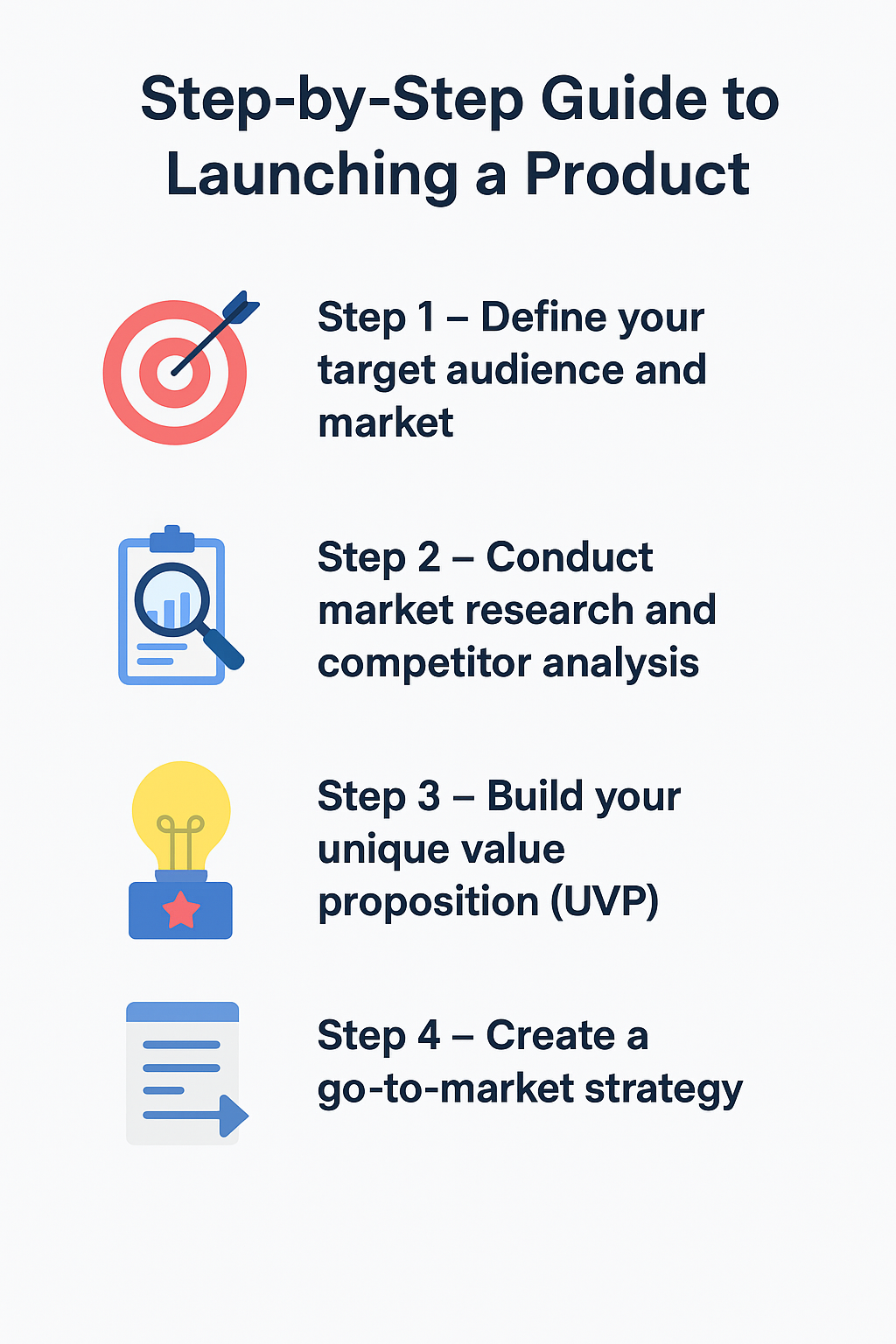
Launching without a clear roadmap can lead to wasted resources, missed opportunities, and confused customers. But here’s how you can do the same thing that top-performing companies do—launch with confidence and precision.
Step 1 – Define your target audience and market
This is the first “How to Launch a Product: A Step-by-Step Guide”. Before you build, brand, or promote, you need to know who you’re doing it for.
This is the foundation of any successful product marketing effort. Clearly identifying your target audience helps tailor your messaging, features, and pricing. Define buyer personas: age, job title, behaviour, pain points, and goals.
Here’s an example:
If you’re launching a digital product for freelance designers, your messaging should be different from one aimed at enterprise IT managers.
According to HubSpot, 93% of companies that exceed lead and revenue goals segment their database by buyer persona.
Bottom line? When you understand your audience, everything else becomes easier.
Step 2 – Conduct market research and competitor analysis
Want to know the best part? You don’t have to start from scratch.
Market research provides valuable insights into customer needs, existing solutions, and market trends. Meanwhile, competitor analysis shows you what’s already working and what gaps you can fill.
Start by answering:
- What problems does my product solve?
- Who are my direct and indirect competitors?
- What’s their pricing, messaging, and positioning?
Use this data to refine your product launch strategy and make informed decisions. Or even better, use it to craft a product that outshines what’s already out there.
Step 3 – Build your unique value proposition (UVP)
But why do people choose one product over another?
That’s where your unique value proposition comes in. A UVP explains what makes your product different and why customers should care.
It’s not just a tagline, it’s the promise you’re making to your audience. Strong UVPs are:
- Clear and concise
- Focused on benefits, not just features
- Targeted to your specific audience
For example, Slack didn’t just say, “We’re a chat app.” They promised to “make work life simpler, more pleasant, and more productive.”
Your UVP should speak directly to your target market. If it feels generic, it’s not ready.
Step 4 – Create a go-to-market strategy
Now comes the engine behind your launch: your go-to-market plan.
This is your action plan for reaching customers, generating buzz, and driving adoption. It includes:
- Marketing channels (email, social media, SEO, paid ads)
- Messaging framework
- Promotional calendar
- Content and asset creation
- Sales enablement
But what is a go-to-market strategy, exactly?
It’s the blueprint that ensures your team is aligned, your messaging is consistent, and your product enters the market with momentum.
Want to know the best part? A strong go-to-market strategy significantly reduces the risk of failure. According to McKinsey, products with a clear GTM plan grow revenue 2.3x faster.
Step 5 – Develop and test your product
Now it’s time to bring the product to life.
Whether you’re building a physical product or launching a digital product, development and testing are crucial. This is where the product development lifecycle kicks into high gear.
Focus on:
- Minimum Viable Product (MVP) creation
- Usability testing
- Beta testing with real users
- Iterative improvements
Here’s something we can both agree on:
Testing saves you from embarrassment later. Bugs, usability issues, or unclear flows? Fix them before launch day.
Step 6 – Set pricing and positioning
How much should your product cost?
This step is often underestimated, but it’s one of the most strategic decisions you’ll make.
Consider:
- Cost-based pricing
- Value-based pricing
- Competitor pricing
- Tiered or freemium models
Your product positioning is closely tied to pricing. Are you a premium brand or a budget-friendly disruptor? Positioning influences perception, and perception drives value.
Let me explain.
Customers don’t always buy the cheapest option. They buy the one that feels right. Your price should reinforce your product’s place in the market.
Step 7 – Prepare your sales and marketing channels
This is where everything starts to feel real.
You need to activate your sales team (if you have one), create launch campaigns, and prepare all channels to support a smooth launch.
Your product marketing team should focus on:
- Creating sales decks, landing pages, and email sequences
- Aligning messaging across platforms
- Engaging influencers or media if relevant
- Running pre-launch teasers or campaigns
Here’s one trick:
Use countdowns or VIP lists to generate excitement before the official launch.
Step 8 – Launch and monitor performance
Launch day is here. Take a deep breath. But the work isn’t over.
Here’s how you can do the same thing that top product teams do:
- Monitor traffic, sales, and customer engagement in real time
- Check your product launch checklist to ensure all systems are go
- Respond quickly to user feedback and questions
- Share across every channel but be strategic, not spammy
This is crazy, but some startups forget to track performance metrics during launch.
Make sure analytics are set up and working before you hit “go.”
Step 9 – Gather feedback and iterate
The launch isn’t the end, it’s the beginning of the next phase.
Collect feedback from every channel: surveys, reviews, NPS scores, and usage data. Then iterate fast.
Why? Because customers will tell you what to improve.
Use tools like Typeform or Google Forms to collect structured feedback. Analyse behaviour with tools like Hotjar or Mixpanel.
Here’s the kicker:
According to a report by PwC, 32% of customers will stop interacting with a product after just one bad experience.
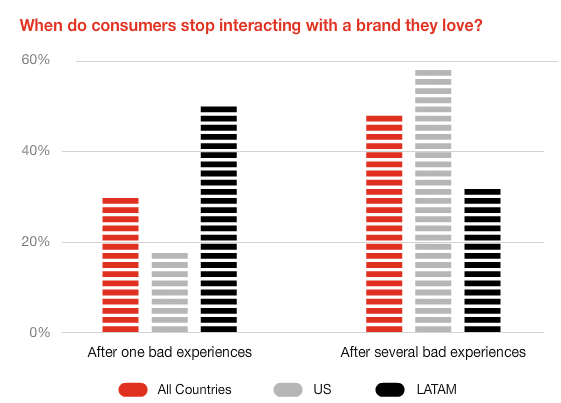
Don’t let that be your story. Improve quickly, and your users will stick with you.
Common Product Launch Mistakes to Avoid
Even the most brilliant ideas can stumble during execution. You’ve followed the steps on how to launch a product: step-by-step guide, great!
But here’s the kicker: avoiding common mistakes can be just as important as following best practices.
Let me explain.
Many product teams invest time and money in development only to overlook critical yet straightforward errors that can sink their launch.
Here are three of the biggest mistakes to avoid.
Ignoring customer feedback
It’s easy to fall in love with your product. But your perspective isn’t enough. If you’re not collecting or listening to feedback, you’re flying blind.
For example, launching a digital product without beta testers is a risky move. You may think everything works fine, but your users may experience bugs, confusion, or missing features.
Utilise surveys, support tickets, live chat, and usage data to stay connected with your audience.
The bottom line? Your customers are telling you exactly how to improve your product. Are you listening?
Underestimating marketing
You may be wondering:
If the product is great, won’t it sell itself?
Unfortunately, no.
Many product creators underestimate the amount of effort required to generate visibility and interest. A great product with poor marketing is like winking in the dark; you know what you’re doing, but nobody else does.
A successful product launch strategy must include:
- A clear messaging framework
- Campaigns across relevant channels
- Budget for paid media if needed
- A structured go-to-market plan
Without this, even the best solutions go unnoticed.
Launching without a strategy
Here’s something we can both agree on:
Winging it is not a launch strategy.
Skipping key launch steps, such as positioning, research, or performance tracking, puts your entire effort at risk. And this mistake is more common than you think.
According to CB Insights, 14% of startups fail because of poor marketing and launch planning.
The bottom line? Don’t just release your product and hope for the best. Launch with a purpose.
Measuring the Success of Your Product Launch
You launched your product, amazing. But how do you know if it worked?
Here’s the deal: success isn’t just about sales on launch day. It’s about impact, traction, and long-term growth. That’s why every effective product launch strategy includes a clear method for tracking results.
Let’s explore the key metrics that tell the real story.
Key Product Launch KPIs
Tracking the right key performance indicators (KPIs) can help you quickly identify what’s working and what needs tweaking. These KPIs often include:
- Customer acquisition rate
- Website traffic and conversion rates
- Product usage and retention metrics
- Revenue or bookings in the first 30/60/90 days
- Churn rate
- Customer satisfaction (NPS or CSAT scores)
Example:
If you’re launching a digital product and 5,000 people visit your website but only 50 sign up, your conversion rate is 1%. That’s a red flag that something in your messaging or UX needs work.
The bottom line? Don’t launch blindly. Track everything.
Using customer feedback and usage data
Customer feedback is one of your most powerful tools. And it doesn’t stop after launch.
Keep collecting insights through:
- Onboarding surveys
- In-app feedback prompts
- Support ticket analysis
- Social media and review platforms
Combine this with behavioural data, what users click, how long they stay, and which features they ignore. That’s how you learn what delights and what frustrates.
Here’s something we can both agree on:
When your product team listens closely to users, improvement becomes a continuous process.
Now, let’s take it a step further. To consistently launch great products, the key is to build your skills.
Become a Product Management Expert
Learning how to launch a product: a step-by-step guide is just the beginning. Mastering product management means consistently repeating successful launches, adapting to changing market conditions, and leading teams with confidence.
But where do you start?
Let’s explore two ways to take your product management skills to the next level.
Join Our Product Management Bootcamp and Learn From Experts
You don’t have to figure it all out on your own.
Our Product Management Bootcamp is designed for individuals seeking practical, hands-on experience. It’s not just theory. You’ll work on actual projects, use industry-standard tools, and get mentorship from seasoned product leaders.
Here’s what you’ll gain:
- Deep understanding of the product development lifecycle
- Step-by-step launch planning using proven frameworks
- Confidence to build a go-to-market plan that gets results
- Peer support, case studies, and access to live Q&A sessions
But you’re probably wondering, Is this for me?
If you’re an aspiring product manager, startup founder, business analyst, or anyone responsible for launching products, yes, it’s for you.
Launch Products With Confidence and Strategic Insight
Learning how to introduce a new product isn’t a one-time task. It’s a skill you’ll refine with every launch.
Through expert training, guided tools, and repeatable strategies, you can go from overwhelmed to in control.
Imagine having:
A product launch checklist that keeps your entire team aligned
Tools for prioritising customer feedback and applying it
Clear visibility into your launch performance, backed by KPIs
Here’s how you can do the same thing:
Invest in structured learning, surround yourself with product-minded individuals, and continually launch, learn, and evolve.
The bottom line?
Great products deserve significant launches. And great launches come from product managers who are equipped with the proper knowledge and mindset.
FAQs
What are the essential steps to launching a product?
Define your target audience, conduct market research, build your unique value proposition, create a go-to-market strategy, develop and test your product, set pricing, and launch. Afterwards, monitor performance and gather feedback.
How long does a typical product launch take?
It depends on the product and market, but on average, a full launch process can take anywhere from 3 to 6 months.
What tools do product managers use during a launch?
Popular tools include Trello, Asana, Jira, Google Analytics, Hotjar, Mixpanel, Typeform, HubSpot, and customer feedback platforms like Intercom or Zendesk.
Can I launch a product without a marketing team?
Yes, but it requires extra planning. You’ll need to leverage low-cost tools like social media, email automation platforms, and SEO, while possibly outsourcing creative and paid campaigns.