How To Manage Risk In Project Management
Project Management is exciting, but uncertainties lurk around every corner, The constant fear of the unknown can overshadow the thrill of a new Project. Unexpected delays, unforeseen events, and uncertainties can arise, threatening project objectives, timelines, and budget overruns, and even project failure can loom on the horizon.
For that reason, Effective risk management is essential for the successful execution of any project. Thus, a proactive approach to identifying, assessing, and mitigating risks is paramount.
This article will equip you to be proactive, not reactive, We’ll delve into strategies for identifying potential roadblocks, assessing their severity, and formulating plans to mitigate them before they become crippling issues. By learning to anticipate and navigate the unexpected, you’ll ensure your project reaches its full potential, not a frustrating dead end.
Identifying Risks
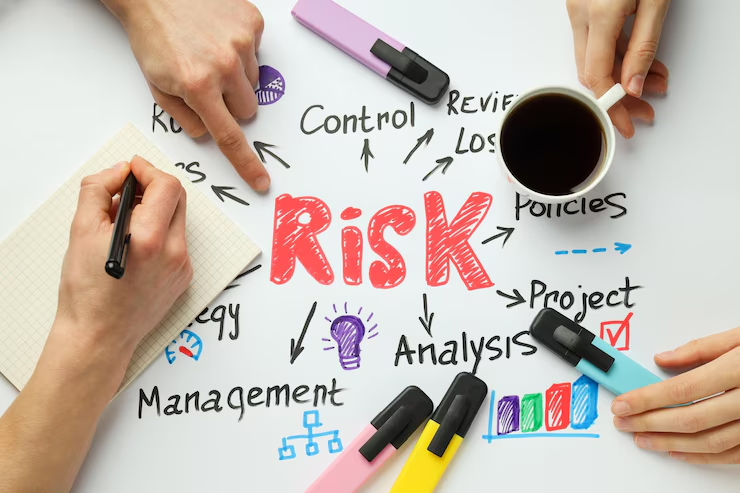
Risk identification is the crucial first step in effective risk management, By systematically examining potential issues at the outset, project managers gain a vital advantage in anticipating potential issues that may impact project objectives.
Techniques For Risk Identification
Brainstorming: Gather project stakeholders and team members to generate a list of potential risks through open discussion and idea-sharing. Encourage creativity and participation to uncover a wide range of risks.
Documentation Review: This includes project plans, requirements documents, lessons learned from previous projects, and risk registers to identify risks
SWOT Analysis: Conduct a SWOT analysis to identify potential internal and external factors that may pose risks to the project’s success.
Root Cause Analysis: Analyze past project failures or issues to identify underlying causes and potential risks that may arise
Risk Breakdown Structure (RBS): Create a hierarchical breakdown of project components to systematically identify risks associated with each component. This helps ensure a thorough examination of all project areas.
Risk identification is an ongoing process. As the project progresses, new information may come to light, necessitating revisiting your initial assessment.
Tools for Documenting Risks in Project Management
Having identified potential project roadblocks through brainstorming and scenario planning, the next step is effectively documenting them. This creates a central hub for all your risks, fostering clear communication, monitoring, and the development of mitigation strategies. Here are some key tools in your risk documentation arsenal:
Risk Register: This is a centralized document that records all identified risks along with relevant details
Project Management Software: Many project management tools, such as Microsoft Project, Asana, Trello, and Jira, include features for managing risks.
Risk Management Software: There are specialized risk management software tools designed specifically for documenting, analyzing, and managing risks. These tools offer advanced features such as risk scoring, risk heat maps, automated notifications, and reporting capabilities to support comprehensive risk management processes.
Risk Assessment Matrix: A risk assessment matrix is a visual tool used to prioritize risks based on their likelihood and impact.
Issue Tracking Systems: Some organizations use issue-tracking systems like Jira, Zendesk, or ServiceNow to document and manage risks
Regardless of the tool chosen, the key is to ensure that the risk documentation process is systematic, transparent, and accessible.
Read Also: Risk Mitigation in Project Management
Common Sources of Project Risks
Project risks can originate from various sources, both internal and external to the project. Here are some common sources of project risks:
Scope Creep: Changes or additions to project scope that occur without proper documentation or approval can lead to scope creep, causing delays, resource overruns, and increased project complexity.
Unclear Requirements: Incomplete, ambiguous, or changing project requirements can lead to misunderstanding project delay
Budget Overruns: Unexpected increases in project costs, budget constraints, or inaccurate cost estimations can result in budget overruns
Regulatory Compliance: Changes in regulatory requirements, legal obligations, or industry standards can impact project deliverables
Quality Issues: Poor quality of deliverables, products, or services due to inadequate testing, quality control processes, or resource constraints can result in project failure
Assessing Risks
Having identified potential threats through brainstorming and documented them effectively, the next step is assessing the severity of each risk. This allows project managers to prioritize their efforts and focus on mitigating the most critical issues. Here are some techniques to assess project risks:
Qualitative Risk Analysis
Qualitative risk analysis is a valuable tool that helps project managers evaluate risks based on their likelihood of occurring and the impact they could have on the project and urgency without relying solely on hard numbers.
The core of this approach involves assigning two key ratings to each identified risk: Likelihood and Impact
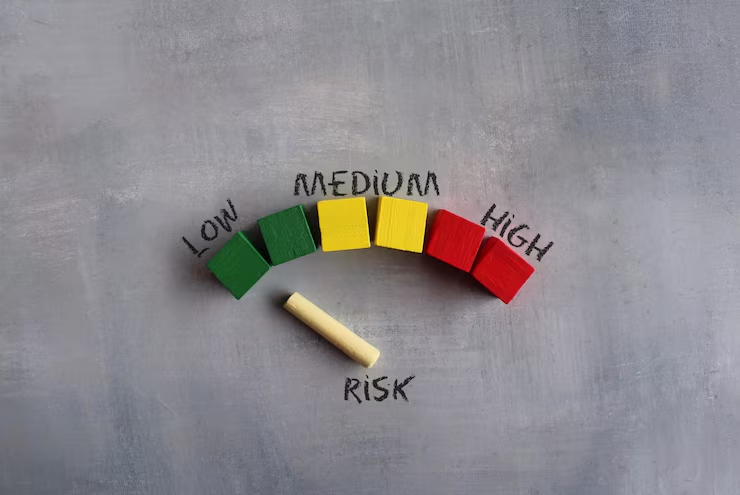
Likelihood estimates the probability of the risk occurring, and Impact assesses the potential severity of the risk’s consequences on the project. Similar ratings (High, Medium, Low) are used to indicate the degree of impact on factors like budget, schedule, quality, or project goals while Impact Assess the potential impact or consequences of each identified risk on project objectives such as scope, schedule, budget, quality, and stakeholder satisfaction.
In conclusion, qualitative risk analysis is a powerful technique for project managers to assess the severity of potential threats. While it doesn’t rely on complex calculations, it promotes communication, collaboration, and a shared understanding of project risks, ultimately aiding in informed decision-making and risk mitigation strategies.
Quantitative Risk Analysis
While qualitative risk analysis provides valuable insights, project managers often seek a more data-driven approach. This is where quantitative risk analysis comes in.
Quantitative risk analysis involves assessing project risks using numerical data and statistical techniques to quantify their potential impact on project objectives such as cost, schedule, and performance
Here’s how quantitative risk analysis helps measure risk severity:
- Probability Distributions: This method assigns a probability distribution (e.g., normal, binomial) to each risk. This distribution reflects the various possibilities of the risk occurring and their likelihood.
- Impact Quantification: Project managers attempt to quantify the potential impact of each risk using measurable units. For example, a schedule delay risk might be assigned a value based on the number of additional days it could cause.
- Expected Monetary Value (EMV): By combining the probability distribution of a risk occurring with its quantified impact, project managers can calculate the Expected Monetary Value (EMV). This represents the average cost (or benefit) the project can expect to incur if the risk materializes.
Other ways to conduct quantitative risk analysis include Probability Analysis, Cost Impact Analysis, Schedule Impact Analysis, and Performance Impact Analysis
Benefits of Quantitative Analysis Include but are not limited to Objectivity as this approach minimizes subjective judgment and promotes more objective risk evaluation, Improved Prioritization, and also Scenario Modeling
Strategies For Risk Avoidance, Mitigation, Transfer, and Acceptance
Risk avoidance, mitigation, transfer, and acceptance are four common strategies on How To Manage Risk In Project Management. Here’s how each strategy works and some strategies for implementing them effectively:
Risk Avoidance: This strategy involves taking actions to eliminate the likelihood of a risk occurring or its impact on project objectives. Some strategies for risk avoidance include Reducing project complexity, Eliminating high-risk activities by Avoid engaging in activities or using technologies that pose significant risks to project success, and Creating contingency plans or alternative strategies to mitigate the impact of potential risks and avoid their adverse effects.
Risk Mitigation: Risk mitigation involves taking proactive actions to reduce the likelihood or impact of identified risks. Some strategies for risk mitigation include Implementing preventive measures to Proactively address potential risks by implementing controls, and safeguards, Allocating resources to address identified risks and mitigate their impact on project objectives, and Improving communication channels and collaboration among project stakeholders to facilitate early detection and resolution of potential risks.
Risk Transfer: Risk transfer involves shifting the responsibility for managing risk to a third party, such as an insurance company, subcontractor, or supplier. Some strategies for risk transfer include purchasing insurance policies that cover potential losses or liabilities associated with identified risks, Outsourcing activities by Transfer operational risks to external vendors
Risk Acceptance: Risk acceptance involves acknowledging and tolerating the potential consequences of identified risks without taking proactive measures to mitigate or transfer them. Some strategies for risk acceptance include Establishing risk tolerance thresholds, Setting aside contingency reserves to cover potential losses or cost overruns resulting from accepted risks, and Continuously monitor
By implementing these risk management strategies effectively, project managers can proactively identify, assess, and address project risks to minimize their impact on project objectives and increase the likelihood of project success.

Action Steps For Executing Risk Response Plans
Executing risk response plans involves implementing the actions outlined in the plans to address identified project risks effectively. Here are action steps for executing risk response plans:
Assign Responsibilities: Assign clear roles and responsibilities to team members for executing specific actions outlined in the risk response plans. Communicate expectations, timelines, and deliverables to ensure accountability and ownership.
Communicate the Plan: Ensure that all relevant stakeholders are aware of the risk response plans and understand their roles and responsibilities
Monitor Progress: Regularly monitor the progress of risk response plan implementation to ensure that actions are being executed as planned.
Document Changes: Document any changes to the risk response plans, including revisions to response strategies, responsibilities, or timelines
By following these action steps, project managers can effectively execute risk response plans, address identified risks, and minimize their impact
Monitoring and Controlling Risks
Monitoring and controlling risks in project management involves ongoing activities to track, assess, and respond to project risks.
Steps to effectively monitor and control risks include Identifying key risk indicators (KRIs) or triggers that signal changes in the likelihood or impact of identified risks. These indicators can include budget variances, schedule delays, resource constraints, or changes in project scope.
Conduct regular risk reviews to assess the current status of identified risks, review risk response plans, Keep the risk register up-to-date with the latest information on identified risks, including their current status, likelihood, impact, and response actions, Continuously monitor risk triggers, Monitor the progress of risk response actions to ensure they are being implemented as planned and are effective in mitigating identified risks and Integrate risk monitoring and control activities with other project controls such as cost management, schedule management, quality management, and change management. Ensure that risk management is aligned with overall project objectives and priorities
Read Also Is Project Management a Good Career?
Software and Tools for Risk Management
There are numerous software tools available to assist to Manage Risk In Project Management , Here are some popular ones:
Microsoft Project: this is a comprehensive project management tool that includes features for risk management such as risk identification, assessment, tracking, and reporting. It allows users to create risk registers, assign risk owners, and track risk response actions within the project plan.
Oracle Primavera P6: Primavera P6 is an enterprise project portfolio management tool that offers robust risk management capabilities. It enables users to identify, analyze, and prioritize project risks, as well as develop and implement risk response plans. It also provides advanced reporting and analytics features for monitoring project risks.
RiskyProject: RiskyProject is a specialized project risk management software that helps users identify, analyze, and mitigate project risks. It offers features such as Monte Carlo simulation, sensitivity analysis, and risk register management to quantify and prioritize project risks effectively.
ProjectManager.com: ProjectManager.com is a cloud-based project management software that includes risk management features such as risk identification, assessment, and tracking. It offers interactive risk dashboards, risk heat maps, and customizable risk reports to help users manage project risks efficiently.
Trello: Trello is a flexible project management tool that can also be used for risk management. Users can create boards to track risks, assign risk owners, and collaborate on risk response actions. It offers customizable card-based workflows and integrations with other project management tools for enhanced risk visibility and control.
These software tools offer a range of features and capabilities to support the risk management process.
Techniques for Effective Risk Communication
Effective risk communication is essential for ensuring that stakeholders are informed about project risks, their potential impact, and the actions being taken to address them. Here are some techniques for effective risk communication:
Risk Workshops: Conduct risk workshops with project team members, stakeholders, and subject matter experts to facilitate open and collaborative discussions.
Status Meetings: Include risk discussions as a regular agenda item in project status meetings. Provide updates on identified risks, their current status, and any changes or developments since the last meeting. Encourage team members to share updates on risk response actions and escalate any new risks or concerns.
Risk Dashboards: Develop risk dashboards or visualizations to provide stakeholders with real-time visibility into project risks and their status. Use dashboards to highlight critical risks, upcoming milestones, and trends in risk exposure. Customize dashboards to meet the specific needs and preferences of different stakeholders.
Two-Way Communication: Encourage two-way communication and feedback channels for stakeholders to raise questions, share insights, and provide input
By using these techniques for effective risk communication, project managers can ensure that stakeholders are well-informed about project risks and are engaged in the risk management process. This promotes transparency, trust, and collaboration, ultimately enhancing the project’s ability to identify and address risks proactively.
RKY CAREERS PROJECT MANAGEMENT AND BUSINESS ANALYSIS BOOTCAMP
Tired of the status quo? Become an in-demand professional with our immersive Project Management & Business Analysis Bootcamp. Master the skills to lead projects, bridge the gap between business and IT, and deliver results. Learn industry-standard frameworks, powerful business analysis techniques, and essential project management.
At RKY CAREERS Our expert-led Project Management Bootcamp covers everything from project planning and execution to stakeholder management and requirements analysis. Gain hands-on experience through interactive workshops, case studies, and real-world simulations. Whether you’re a seasoned professional looking to enhance your skill set or a newcomer eager to break into the field, our BootCamp will empower you to drive successful projects and deliver value to your organization

Conclusion
In conclusion, Knowing how to manage risk in project management is essential for project success, as it enables project managers to identify, assess, prioritize, and respond to potential threats and opportunities proactively. By following structured risk management processes and employing a range of tools and techniques, project managers can minimize uncertainty, mitigate potential negative impacts, and capitalize on potential opportunities.
Throughout the project lifecycle, project managers should prioritize risk management activities, integrate risk management into project planning and execution processes, and foster a culture of risk awareness and accountability among team members and stakeholders. This includes regularly reviewing and updating risk registers, conducting risk assessments, implementing risk response actions, and monitoring risk triggers and indicators.
Ultimately, successful risk management requires a proactive and systematic approach, supported by strong leadership, effective communication, and a commitment to continuous improvement. By knowing How To Manage Risk In Project Management, project managers can enhance project resilience, maintain stakeholder confidence, and increase the likelihood of project success, even in the face of uncertainty and adversity.
FAQs for How To Manage Risk In Project Management
1. What are the common techniques for identifying risks in a project?
Common techniques for identifying risks in a project are Brainstorming, Checklists, Interviews and surveys, Documentation Review, and SWOT Analysis
2. How do you prioritize risks in project management?
Prioritizing risks in project management involves assessing and ranking risks based on their significance and potential impact on project objectives, You can prioritize risks by Conducting a risk assessment based on objectives such as scope, schedule, budget, quality, and stakeholder, Other factors to consider includes Risk Impact, Risk Likelihood, and Risk Score.
3. What are the main strategies for responding to risks?
The main strategies for responding to risks in project management include Risk Avoidance, Risk Mitigation, Risk Transfer, and Risk Acceptance
4. What tools can be used for effective risk management?
Some of the tools that can be used to manage risk in project management are Risk Register, Probability and Impact Matrix, Risk Assessment Tools, Risk Heat Maps, Monte Carlo Simulation Software, and Issue Tracking Systems