
IT Project Manager Career
An IT project manager career offers one of the most rewarding paths in today’s digital economy.
With technology driving every industry, skilled professionals who can lead complex IT initiatives are in extraordinary demand.
At RKY Careers, we’ve seen countless professionals transform their careers through strategic project management roles.
The journey isn’t just about managing timelines and budgets, it’s simply about becoming the bridge between technical teams and business objectives.
What Is an IT Project Manager?
An IT project manager runs tech projects from start to finish. You lead teams, manage resources and make sure work meets business needs on time and on budget.
Recent research shows companies waste $97 million for every $1 billion spent. Poor project work causes this and consequently, it makes skilled IT project managers very valuable.
Your role goes beyond tech oversight. You’re a planner, a communicator and problem solver. Generally, you turn IT projects into business value.
Demand for IT project managers keeps rising. Tech projects are now critical and every sector needs them.
But what does the role actually involve?
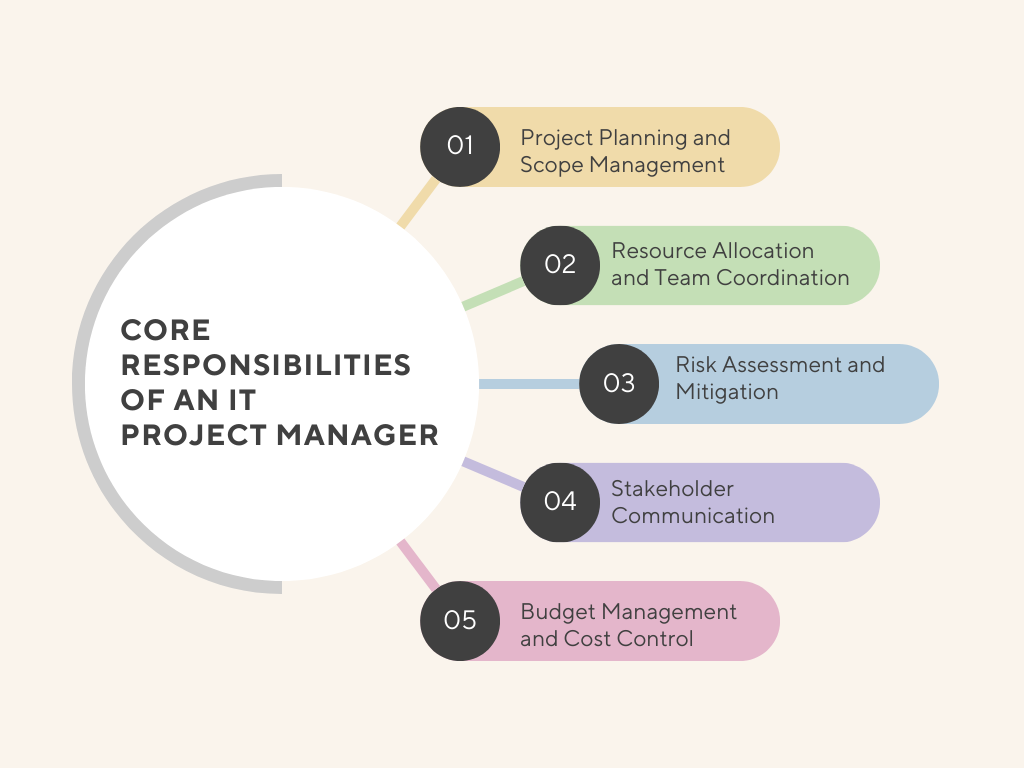
Core Responsibilities of an IT Project Manager
Your daily responsibilities encompass several critical areas:
Here’s what you’ll manage:
- Project Planning: You define project goals, set timelines and break down complex tech work into smaller parts. This becomes natural. You protect projects from expanding too much.
- Team Coordination: To build the right team, you need developers, analysts and specialists. You balance workloads, solve conflicts and keep morale high.
- Risk Management: As an IT project manager, you spot problems before they happen. This saves projects. Industry data shows only 29% of IT projects succeed without good risk management. You create backup plans.
- Communication: You translate tech talk into business language. This connects developers and executives. Regular updates keep everyone informed. They build trust.
- Budget Control: You watch project money to avoid overspending. In addition, you track costs, and predict future costs, while explaining budget changes when needed.
- Quality Control: You make sure work meets standards. This needs thorough testing. You have to coordinate QA work and approve final solutions.
Industries That Hire IT Project Managers
IT project management careers exist in every industry.
Here are the top hiring sectors:
- Financial Services: Banks need project managers, insurance companies also need them. This is because they handle system changes, manage security work and run digital projects.
- Healthcare: Health records need careful management, while telemedicine platforms need oversight. Data projects on the other hand also need expertise. Patient data security makes these jobs sensitive and rewarding.
- Retail and E-commerce: Recent analysis shows global e-commerce will hit $6.3 trillion by 2024. This growth creates huge demand. IT project managers handle platform upgrades. They manage multi-channel work.
- Manufacturing: Industry 4.0 creates great chances. IoT work needs managers. Supply chain work needs experts. You oversee tech that changes how things are made.
- Government: Digital services as well as security needs updates. Public portals also need skilled IT project managers. Job security and pensions make these jobs attractive.
- Tech Companies: You manage product work, handle infrastructure upgrades and run client setups. This gives you access to new technologies.
Read also:
IT Project Manager Career Path Explained
Understanding the path helps you plan well. Most successful IT project managers follow a clear route. They don’t stumble into the role.
The journey usually takes 5-10 years. You go from entry level to senior jobs. But targeted skill building can speed this up. Certifications help a lot.
Each stage builds key skills. You’ll gain tech knowledge, develop leadership skills and build business understanding step by step.
Here’s how the journey typically unfolds:
Entry-Level Roles Leading to IT Project Management
Most IT project manager careers begin in foundational technical or coordination roles:
Here are the most common starting points:
IT Support: Help desk work teaches you how systems work. You learn common problems. Understanding user issues helps you make better project choices later.
Business Analyst: You gather needs. You document processes. This builds communication skills. You learn to translate between tech and business people.
Junior Developer: Tech hands-on work builds trust. This helps when you manage dev teams. You understand what’s realistic. You know what’s too ambitious.
Project Coordinator: You support senior managers. This shows you how delivery works. Job projections show project management jobs growing 15% through 2031. This is faster than average jobs.
Scrum Master: You run team meetings. You remove blocks. This builds people skills. Agile methods dominate modern IT.
Spending 2-4 years in these roles creates a solid base. You develop tech skills. You learn project basics. These happen together.
Mid-Level and Senior IT Project Manager Positions
Career progression follows increasing responsibility and complexity:
Here’s the typical advancement ladder:
IT Project Manager (Mid-Level): You manage full projects from start to end. You handle budgets up to £500k. You lead teams of 5-15 people. Running multiple projects becomes normal.
Senior IT Project Manager: You lead big projects. These are critical to the business. Planning and executive management define this level. Project values often top £2 million.
Programme Manager: You coordinate many related projects. They work toward big goals. You oversee project managers. You make sure work aligns with company goals.
Portfolio Manager: You manage groups of programmes and projects. These span an entire company. Research shows that companies with good practices waste 38% less money. They avoid bad projects.
IT Director: This is the top career goal for many. You shape tech strategy. You oversee all IT work.
Each step up requires proof of success. You must show leadership. You need smart thinking. Is IT project management a good career? Yes. The path offers challenge and reward.
But here’s the kicker:
You don’t have to navigate this journey alone.
Transform Your IT Project Manager Career with RKY Careers
At RKY Careers, we help people move into IT project management. Our bootcamps combine hands-on work with certifications. We offer mentoring and job help. Whether you’re changing careers or moving up, our 1,500+ success stories show our commitment.
[Book a Free Career Consultation]
Essential Skills for an IT Project Manager Career
Success needs both tech skills and people skills. The best IT project managers are good at both.
Tech skills build trust with dev teams. People skills help you work with stakeholders. They help with company politics.
Always learning separates good managers from great ones. Tech changes fast. This means ongoing learning.
So what skills do you actually need?
Technical Skills — Systems, Software, and IT Frameworks
Your technical toolkit should include:
Here’s what matters most:
Project Software: Master tools like Jira, Microsoft Project, Asana, and Monday.com. These make work easier. They organize planning, tracking, and teamwork.
Development Methods: Know Agile, Scrum, Kanban, and Waterfall well. This lets you pick the right method for each project. Mixed approaches often work best.
IT Infrastructure: Know cloud platforms like AWS, Azure, and Google Cloud. Understand network basics. Learn security basics. This helps you judge what’s possible.
Software Lifecycle: Understand design, development, testing, and launch phases. This ensures realistic planning. You can spot links. You see potential blocks.
Data Tools: Know Excel, Tableau, or Power BI. Turn project data into useful insights. Studies show that data-driven work improves on-time delivery by 23%.
Security Basics: Basic security knowledge protects projects. You avoid weak spots. Include security needs from the start. Don’t add them later.
DevOps: Understand CI/CD pipelines. This fits with modern work practices. Automation speeds up delivery.
Read also:
Leadership, Communication, and Stakeholder Management
Soft skills often determine whether projects succeed or fail:
Here’s the deal:
- Leadership: Inspire teams toward shared goals. This needs emotional smarts and vision. Create places where people feel valued. Motivate them to do their best.
- Communication: Express complex ideas clearly to different people. This is a must. Reports, talks, and tough conversations all need good communication.
- Stakeholder Work: Balance competing interests. This tests your people skills. Build teams. Manage fights. Keep relationships strong throughout projects.
- Problem Solving: Break down tough challenges into smaller parts. This moves things forward. Creative answers appear when normal methods fail.
- Negotiation: Get resources. Manage scope changes. Solve disputes well. Win-win results keep relationships good. They also reach goals.
- Time Management: Handle many demands without dropping key tasks. This separates good managers from stressed ones. Sharp focus becomes key.
- Flexibility: Projects rarely go as planned. Stay calm during setbacks. Change strategies when needed. This shows professional growth.
Certifications That Boost an IT Project Manager Career
Professional certifications prove your skills. They boost job chances a lot and show you’re committed to growing. Certifications also provide clear learning paths and keep you current with industry norms.
The right credentials speed up career growth while boosting your earning power. Salary surveys show PMP-certified managers earn 33% more than others.
PMP, PRINCE2, and Agile Certifications
These foundational certifications establish your project management credibility:
Let me break it down:
- PMP: This is the gold standard from PMI. You need 35 hours of training. You need either 3 years of work (with a degree) or 5 years (without). It covers all methods fully.
- PRINCE2: Popular in UK government and private sectors. This method emphasises business value. It does this throughout projects.
- Certified ScrumMaster: This two-day training covers the Scrum system. You learn roles, events, and tools. In addition, it is very valuable for software projects.
- PMI-ACP: Shows Agile skills across methods. These include Scrum, Kanban, and Lean. It needs 2,000 hours of general project work and 1,500 hours on Agile teams.
- SAFe Program Consultant: This focuses on scaling Agile. It works across big companies and is vluable for programme managers.
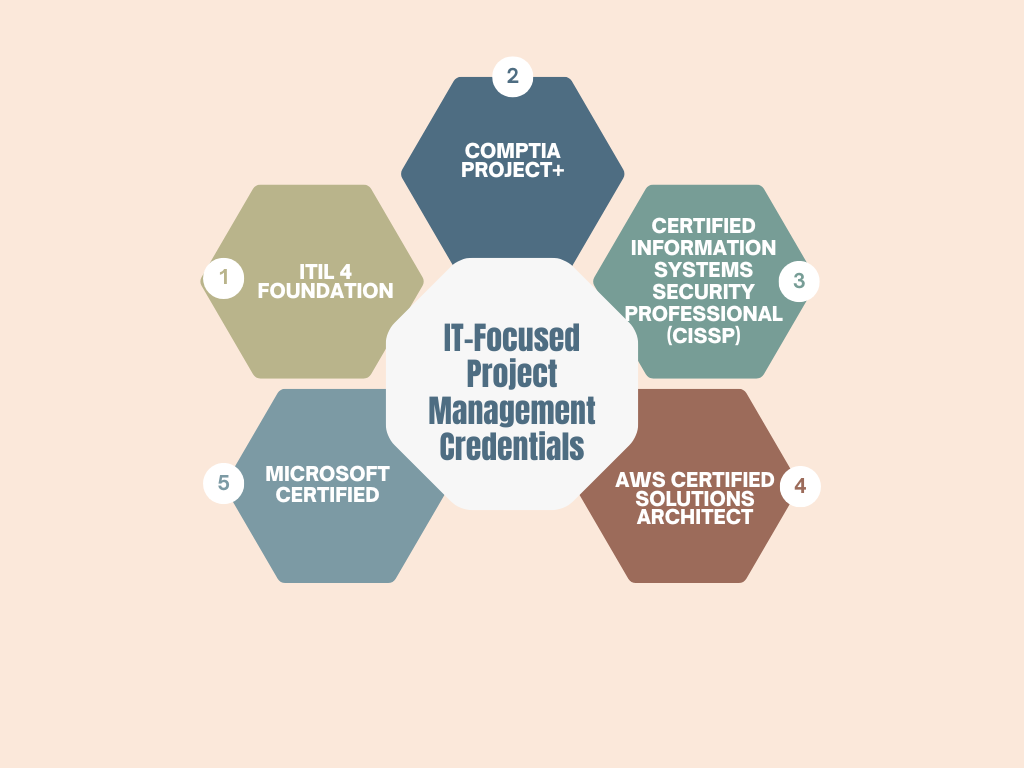
IT-Focused Project Management Credentials
- ITIL 4 Foundation: Covers IT service management best practices. Understanding ITIL frameworks improves how you manage IT project delivery and ongoing operations.
- CompTIA Project+: This is an entry-level certification covering project management fundamentals with IT focus. It is a good starting point before pursuing PMP or PRINCE2.
- Certified Information Systems Security Professional (CISSP): Although CISSP is primarily security-focused, this credential enhances your ability to manage security-sensitive IT projects. The risk management components align perfectly with project management.
- AWS Certified Solutions Architect: Understanding cloud architecture improves oversight of cloud migration and infrastructure projects.
- Microsoft Certified: Azure Fundamentals: Multi-cloud knowledge broadens your project management capabilities. There are similar benefits for organisations using Microsoft cloud services.
Read also:
Salary Expectations and Job Outlook for IT Project Managers
Pay reflects how critical IT project management jobs are. Salaries in IT project management vary by experience, location, industry, and certifications.
Knowing market rates helps you negotiate well. It also helps you plan career moves smartly.
Now, let’s talk numbers.
Salary Ranges by Region and Experience
UK salary expectations for IT project managers:
- Entry-Level (0-2 years): £30,000-£45,000 annually. Junior project coordinators and assistant roles establish your foundation. London typically pays 15-20% higher than national averages.
- Mid-Level (3-5 years): £45,000-£65,000 annually. Managing complete projects independently commands solid compensation. Financial services and technology sectors often exceed these ranges.
- Senior Level (6-10 years): £65,000-£90,000 annually. Leading complex, business-critical initiatives justifies premium salaries. Specialised industries like fintech or healthcare may offer additional premiums.
- Programme/Portfolio Manager (10+ years): £90,000-£130,000+ annually. Strategic oversight and multiple project coordination reach six-figure territory. Executive-level positions exceed £150,000.
Regional variations significantly impact earnings. According to Glassdoor, the average UK IT project manager salary sits around £55,000, with London reaching £65,000-£70,000.
Certifications boost earning potential considerably. PMP and PRINCE2 Practitioner credentials often add £5,000-£10,000 to base salaries.
Future Demand and Career Stability
The outlook for IT project management careers remains exceptionally strong. Digital transformation accelerates across all sectors, creating sustained demand.
Several factors drive continued growth:
- Cloud Migration Projects: Organisations continue moving infrastructure to cloud platforms. These complex initiatives require experienced project managers to minimise disruption and maximise value.
- Cybersecurity Enhancements: Rising security threats mandate ongoing security improvements. Project managers with security knowledge become particularly valuable.
- Artificial Intelligence Implementation: Market research predicts global IT spending will grow 9% in 2025, reaching $5.74 trillion. AI and automation projects fuel much of this expansion.
- Legacy System Modernisation: Outdated technology replacement projects will continue for decades. Your expertise transforms ageing infrastructure into competitive advantages.
- Remote Work Infrastructure: Hybrid work models require robust technology foundations. Collaboration tools, security solutions, and productivity platforms need expert implementation.
Career stability in IT project management surpasses many other professions. Technology remains central to business success, ensuring consistent demand for skilled managers.
Recession resistance adds appeal. Even during economic downturns, organisations maintain critical IT initiatives. Project managers who deliver value become indispensable.
Your IT Project Manager Career Starts Here
An IT project manager career represents one of the most strategic and rewarding paths in today’s technology-driven economy. You bridge the gap between technical innovation and business value, leading initiatives that transform organisations.
Technology will only grow more critical to business success. Positioning yourself as the person who can deliver complex IT initiatives successfully ensures your relevance for decades to come.
The IT project manager career you envision is entirely within reach with the right guidance, preparation, and commitment.
Start your transformation today.
Frequently Asked Questions
Is IT project management a good long-term career?
Absolutely. IT project management offers excellent long-term prospects with strong job security, competitive salaries, and continuous growth opportunities.
Can you become an IT project manager without a tech degree?
Yes, many successful IT project managers lack formal technology degrees. What matters more is gaining relevant experience through entry-level IT roles, developing technical literacy, and earning recognised certifications like PMP or PRINCE2. Business, management, or unrelated degrees combined with IT work experience create viable paths.
Which certification is best for IT project managers?
PMP remains the gold standard globally, particularly in corporate environments and large enterprises. PRINCE2 Practitioner excels in UK government and public sector roles. For Agile-focused organisations, CSM or PMI-ACP prove most valuable.
How long does it take to become an IT project manager?
Typically 4-7 years from entry-level positions to fully-fledged IT project manager roles. This includes 2-3 years building a technical foundation in support, analysis, or coordination positions, followed by 2-4 years as assistant or junior project manager.