What Salary Is Middle Class UK
What salary is middle-class UK? Many people ask this question when trying to understand their financial standing. In the UK, the middle class is typically defined by earnings, lifestyle, and financial stability.
However, determining a salary range can be tricky because various factors influence income classification, such as location, industry, and household structure.
While some consider middle-class earnings between £25,000 and £60,000 annually, others argue that rising living costs have increased this bracket.
London’s salaries, for instance, are significantly different from those in other regions. Moreover, the UK’s economic landscape constantly evolves due to inflation, wage growth trends, and government policies.
Understanding where one stands within UK salary brackets helps individuals plan their careers and finances effectively.
So, what salary is middle-class UK today? Let’s examine the numbers, regional variations, and influencing factors.

Understanding Middle-Class Income in the UK
The term “middle-class income UK” is often used, but what does it mean? Being middle class is traditionally associated with financial security, homeownership, and a comfortable lifestyle.
Office for National Statistics (ONS) reports suggest that middle-class salaries generally range from the UK’s median income to double that amount.
Factors such as inflation, cost of living, and regional wage differences contribute to determining middle-class status.
For example, an income that affords a middle-class lifestyle in northern England might not be sufficient in London.
So, while the definition may shift over time, middle-class earnings in the UK typically reflect a balance between income and affordability.
Read also:
What Defines a Middle-Class Salary in the UK?
What salary is middle-class UK? The answer depends on multiple factors, including statistical data and lifestyle expectations.
Many financial analysts suggest that middle-class income starts slightly below this figure and extends to about £70,000 annually.
This range allows individuals to afford a home, save for the future, and enjoy discretionary spending.
However, being middle class is about more than just earnings. It includes job stability, career development, and financial resilience.
Rising inflation and housing costs have altered what is considered middle class, making location a key factor.
For instance, a £50,000 salary in London may not provide the same quality of life as in other cities.
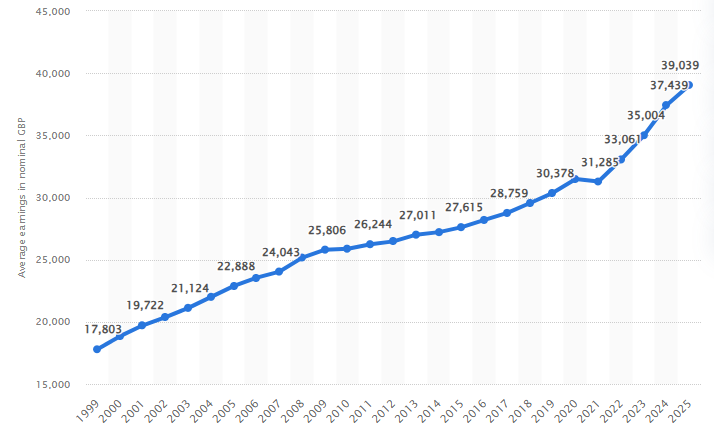
Image by Statista
How Income Brackets Vary Across Different Regions
UK salary brackets differ significantly across regions. In London, high-paying remote jobs are typical due to the city’s elevated cost of living.
Professionals in finance or tech may earn £60,000 or more, but this does not necessarily translate to a middle-class lifestyle due to high rent and expenses.
From 2020/21 to 2022/23, the West Midlands (£553) had the lowest median income before housing costs, while London (£735) had the highest.
Rural areas present an even wider disparity—while wages may be lower, housing and daily expenses are more affordable.
This regional variation highlights why defining what salary is middle-class UK is complex. While £40,000 in London might feel restrictive, the same salary in Newcastle could provide financial comfort.
The Impact of Inflation and Cost of Living
The cost of living UK has dramatically increased in recent years, affecting middle-class incomes.
Inflation impacts everything from housing to daily expenses, meaning a salary that once provided financial stability may no longer be sufficient.
Rising mortgage rates, rental costs, and utility bills have forced many households to adjust their budgets. Wage growth trends indicate that salaries are increasing but not in line with inflation.
Even those earning £50,000 or more might feel financial pressure, particularly in high-cost areas.
The middle class is traditionally associated with disposable income and savings, but rising living costs challenge this notion.
Read also:

Image by ONS
Average Salaries and Middle-Class Earnings in the UK
Average salary UK reports provide a valuable benchmark for determining middle-class earnings.
The Office for National Statistics reports that the median annual salary in 2024 was around £34,000. This means half of UK workers earn below this amount, while the other half earn more.
However, being middle class often means earning above the median, typically between £40,000 and £70,000. This range accounts for tax deductions, living costs, and disposable income.
The question remains: Does earning an average wage guarantee a middle-class lifestyle?
Not necessarily—location, personal expenses, and inflation all play a role in defining financial security.
What Is Considered a Middle-Class Income in 2024?
The answer to what salary is middle-class UK definition evolves due to economic conditions. In 2024, a salary between £40,000 and £70,000 is considered middle class. However, this depends on household structure.
A single person earning £40,000 may be financially comfortable, whereas a family with children earning the same amount might struggle.
The rise in living costs has increased the middle-class threshold, particularly in urban areas.
Wage growth trends show that salaries are increasing, but so are expenses. As a result, middle-class status is now more about financial security than just income levels.
People earning in this range typically own homes, have savings and can afford occasional luxuries.
Yet, even within these brackets, the definition of middle class varies based on personal financial obligations.
Read also:

Comparison of Salaries by Industry and Profession
London vs. UK salary comparison data shows that finance, IT, and law professionals tend to earn higher salaries.
A mid-level IT professional in London may earn £55,000–£70,000, while the same role in other parts of the UK may pay around £40,000.
Healthcare workers, teachers, and public sector employees often earn between £30,000 and £50,000, which places them at the lower end of the middle-class scale.
Tradespeople, engineers, and project managers frequently command salaries within the £40,000–£70,000 range, depending on experience and location.
These insights on salary differences will help professionals choose careers that align with their financial goals.
How Tax and National Insurance Affect Take-Home Pay
Tax and national insurance significantly impact middle-class earnings. While a gross salary of £50,000 might seem comfortable, deductions reduce actual take-home pay.
Income tax in the UK follows a progressive system, meaning that higher earners pay more.
According to reports, national insurance contributions further decrease net income, affecting disposable income, savings, and overall financial stability.
The middle class often finds itself in a challenging position—earning too much for government assistance but not enough to feel financially secure.
Factors That Influence Middle-Class Income
Middle-class income in the UK is affected by several factors, including regional cost-of-living differences, education levels, and household earnings.
While salary alone is a key determinant, other aspects such as housing expenses, job opportunities, and taxation play crucial roles.
London vs. UK salary comparison data reveals that a middle-class salary in one region might not provide the same quality of life in another.
Education also significantly impacts earning potential, with those holding degrees or professional certifications generally commanding higher wages.
Additionally, household income—rather than individual earnings—often determines a family’s financial stability. Let’s examine these factors in detail.
Cost of Living Differences Between London and Other Cities
The cost of living UK varies significantly between regions, affecting how far a middle-class salary can stretch. London is notorious for its high expenses, including rent, transportation, and daily essentials.
Recent wage growth trends show that salaries in London are higher but often offset by expensive living conditions.
In contrast, areas like Birmingham, Sheffield, and Glasgow offer lower housing and transportation costs, allowing a middle-class salary to go further.
Commuting options also influence financial stability, with many professionals choosing to live outside London to save money.
Read also:
The Role of Education and Qualifications
Education plays a significant role in achieving middle-class income UK. Studies show that individuals with university degrees earn, on average, £10,000 more annually than those without formal higher education.
Professional certifications and vocational training also impact salaries, particularly in IT, finance, and engineering industries. Remote work has shifted the job market, making tech-related skills increasingly valuable.
Apprenticeships and digital training programs provide alternative paths to high salaries without the burden of student loans. As industries evolve, continuous upskilling is necessary to remain competitive.
Investing in education—whether through formal degrees or certifications—remains one of the most effective ways to achieve and maintain middle-class earnings.
Household Income vs. Individual Salary
Household income UK is a crucial factor in determining middle-class status.
While an individual earning £40,000–£70,000 may be considered middle class, a family’s total income—including both partners’ salaries—often provides a more accurate picture.
A single-income household earning £50,000 might struggle in high-cost areas, while a dual-income household making £80,000–£100,000 may enjoy greater financial security.
Housing costs, childcare expenses, and lifestyle choices further impact financial stability.
Many middle-class families, particularly in urban areas, rely on dual incomes to maintain their standard of living.
While an individual’s salary might fit the middle-class bracket, financial comfort depends on household earnings.

Want to secure a higher middle-class salary?
Master trending digital skills to land top-paying roles and gain industry-recognised certifications and job-ready skills.
Advance your career and increase your income today!
🔥 Enroll now at RKY Careers!
How to Achieve a Middle-Class Salary in the UK
Achieving a middle-class salary UK requires strategic career planning, salary negotiation skills, and continuous upskilling. Choosing the right industry is essential, as salaries vary widely across professions.
High-paying finance, technology, and engineering jobs often provide the best opportunities for middle-class earnings.
Many professionals increase their earnings by pursuing additional qualifications, changing career paths, or seeking promotions.
Furthermore, developing in-demand skills—such as digital proficiency, leadership, and project management—enhances earning potential.
With careful planning, professionals can position themselves for middle-class earnings, securing financial stability and career growth in an ever-evolving job market.
Career Paths That Lead to Middle-Class Earnings
Specific career paths consistently lead to middle-class salaries in the UK. Industries such as technology, healthcare, and finance offer competitive pay, with mid-level professionals earning between £40,000 and £70,000.
IT professionals, for example, can expect salaries of £45,000–£80,000,, depending on experience. Civil, mechanical, and electrical engineering roles also provide strong earning potential.
In healthcare, roles like nursing specialists and pharmacists often command middle-class wages.
Public sector jobs, including teaching and law enforcement, offer stable salaries, though they typically fall at the lower end of the middle-class bracket.
Choosing a career with long-term earning potential is essential for achieving financial stability and securing a middle-class income in the UK.
Salary Negotiation Tips for Professionals
Negotiating your salary effectively can significantly impact your earnings and help you secure a middle-class salary in the UK. Here are key strategies to enhance your negotiation success:
1. Research Industry Salary Benchmarks
- Use salary comparison websites (e.g., Glassdoor, Payscale, LinkedIn Salary) to understand the market rate for your role.
- When assessing salary expectations, consider location, industry, experience level, and company size.
- Speak with industry peers or recruiters to gain insights into competitive salaries and negotiation trends.
2. Highlight Your Value and Achievements
- Prepare a list of accomplishments, such as successful projects, revenue contributions, or efficiency improvements.
- Quantify your achievements with data—e.g., “Increased sales by 20%” or “Reduced project completion time by 30%.”
- Emphasise unique skills, certifications, and expertise that distinguish you from other candidates or employees.
3. Choose the Right Timing
- Negotiate after a successful project or or performance review or when taking on additional responsibilities.
- If you’re changing jobs, negotiate after receiving an initial job offer.
- Be aware of the company’s financial health—timing negotiations during profitable periods increases the likelihood of success.
4. Leverage Competing Offers
- If you have multiple job offers, use them as leverage to negotiate a higher salary.
- Be tactful when discussing competing offers—focus on your market value rather than making demands.
- Even if you stay with your current employer, mentioning industry salary trends can strengthen your case for a raise.
Upskilling and High-Paying Job Opportunities
Upskilling is one of the most effective ways to secure a middle-class salary in the UK.
As industries evolve, professionals must continuously acquire new skills to remain competitive. Digital literacy, data analysis, and project management are in high demand across various sectors.
Certifications in IT, finance, and healthcare can significantly increase earning potential.
For instance, professionals with cloud computing or cybersecurity skills earn £50,000–£80,000. Short courses and online learning platforms provide accessible ways to gain new qualifications.
Many high-paying jobs do not require traditional degrees—trade skills, technical expertise, and vocational training can lead to substantial salaries.
Career shifts into growing industries, such as renewable energy or artificial intelligence, also offer opportunities for increased earnings.
Investing in continuous learning ensures career advancement and long-term financial stability.
FAQs: What Salary Is Middle Class UK
What is the minimum salary to be considered middle class in the UK?
The minimum salary to be considered middle class in the UK generally ranges from £26,000 to £45,000 for individuals and £50,000 to £90,000 for households.
How does the middle-class salary compare to the UK median income?
The UK median income for full-time workers is around £34,000 per year. Middle-class salaries typically range above this figure, with earnings between £26,000 and £45,000 for individuals. While the median represents an average wage, middle-class status also considers the cost of living, disposable income, and financial stability beyond basic earnings.
Is £40,000 a good salary in the UK?
A £40,000 salary is considered good in many UK regions, placing earners above the national median income. However, the high cost of living in London and other expensive cities reduces purchasing power.
How does household income impact middle-class status?
Household income determines overall financial stability and lifestyle affordability. A single-income household earning £40,000 may struggle in expensive cities, while a dual-income household making £70,000+ enjoys greater security.